The best multitrack recorders make it easier to capture ideas, build arrangements, and finish recordings without relying entirely on a computer. Today’s options range from pocket-sized songwriting tools to full mixer-recorders with USB connectivity and extensive track counts.
We selected 10 standout multitrack recorders for different workflows, including home studios, live sessions, rehearsals, podcasting, and mobile recording. Use the guide below to match features, inputs, portability, and budget to the way you actually create.
Best 10 Multitrack Recorders Picks for 2026
Best Integrated Studio

- 12-channel mixer and multitrack studio
- 12-in/10-out USB interface
- Built-in compression, EQ, and MIDI
Best For: Home studios and band recording setups
Best Touchscreen Workflow
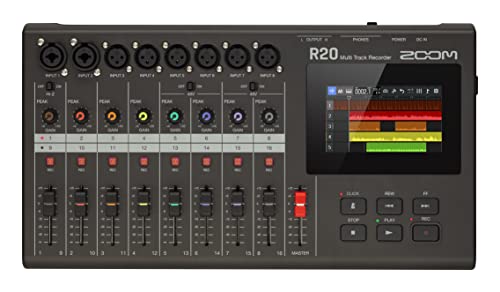
- Up to 16 tracks, eight simultaneous
- Six XLR and two combo inputs
- Touchscreen editing without a computer
Best For: Computer-free song production and demos
Best Pocket Songwriter

- Six-track portable recording
- Built-in stereo condenser microphones
- Battery operated with four AA batteries
Best For: Songwriting and mobile idea capture
Best Portable Touchscreen Recorder

- Eight-track touchscreen recorder
- Drum loops, synths, effects, and MIDI
- Battery powered with Hi-Z input
Best For: Mobile music production and portable songwriting
Classic Compact Workstation

- Eight playback tracks with 64 V-Tracks
- Built-in effects, rhythms, and stereo mic
- Battery-powered portable recording
Best For: Portable guitar demos and songwriting
Clip-Free Layering Recorder

- 32-bit float recording with two combo inputs
- Layer and bounce up to four tracks
- USB interface, rhythms, and battery operation
Best For: Portable multi-instrument recording
Versatile Practice Recorder
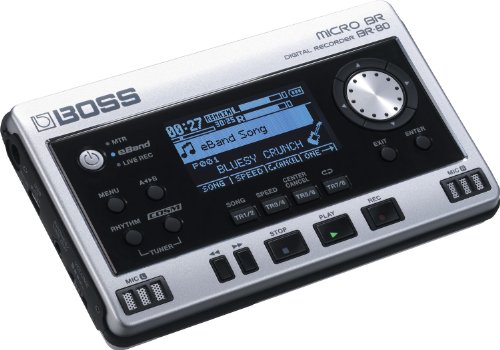
- MTR, eBand, and Live Recorder modes
- Eight playback tracks with 64 V-Tracks
- Built-in mic, rhythms, effects, and USB interface
Best For: Guitar practice and portable recording
Best Portable Mixer-Recorder

- 12-track recording at 24-bit/96kHz
- Four headphone outputs with three monitor mixes
- Simultaneous SD card and USB recording
Best For: Bands, podcasters, and compact live setups
Best Field Recording Flexibility

- Six tracks plus stereo mix in 32-bit float
- Microphones handle up to 140dB SPL
- Up to 15 hours on four AA batteries
Best For: Filmmakers, field recordists, and mobile musicians
Best Hands-On Multitrack Mixer

- 14-track recording at 24-bit/96kHz
- High-gain, low-noise preamps with phantom power
- Physical faders for direct live control
Best For: Bands and live production users needing mixer-style control
Best Integrated Studio – Tascam Model 12
The Tascam Model 12 is a strong choice among multitrack recorders for musicians who want recording, mixing, USB connectivity, and DAW control in one desktop unit. Its 12-channel layout and hands-on mixer design suit more involved recording setups.
Best For: Home studios, bands, and creators who want an all-in-one mixer and multitrack recording workflow.
Pros:
- 12-channel design with a 12-in/10-out USB audio interface
- Built-in MIDI functionality and tap-tempo click output
- Per-input one-knob compressor and three-band EQ
- Dual headphone outputs with individual controls
Cons:
- At 13.3 pounds, it is less portable than compact recorders
- Its larger mixer format may be more than simple songwriting setups require
The Model 12 stands out when physical controls and broader connectivity matter more than portability. It is a practical centerpiece for a computer-based recording rig.
Best Touchscreen Workflow – Zoom R20
The Zoom R20 is one of the more hands-on multitrack recorders, using a DAW-style touchscreen to record, edit, and mix without requiring a computer. It supports up to 16 tracks, with up to eight tracks recorded simultaneously.
Best For: Musicians who want computer-free recording with touchscreen editing and multiple microphone inputs.
Pros:
- Records up to 16 tracks and up to eight simultaneously
- Six XLR inputs plus two XLR/TRS combo inputs
- Touch controls support arranging and editing audio directly
- Includes EQ, compression, rhythm patterns, and an onboard synth
Cons:
- Maximum sample rate is 44.1 kHz
- Its feature-rich workflow may be more than basic demo recording requires
With its touchscreen interface, built-in sounds, and generous input count, the R20 is well suited to complete song projects that benefit from a computer-free workflow.
Best Pocket Songwriter – Tascam DP-006
The Tascam DP-006 is a compact option among multitrack recorders for capturing song ideas away from a studio. It offers six-track recording, built-in stereo microphones, and battery operation for a straightforward, portable workflow.
Best For: Songwriters who want a lightweight recorder for sketches, rehearsals, and location ideas.
Pros:
- Records up to six tracks with 16-bit/44.1 kHz WAV audio
- Built-in omnidirectional condenser microphones simplify setup
- Runs on four included AA batteries
- Supports two-track simultaneous recording and six-track playback
Cons:
- Its six-track capacity is lower than the other recorders here
- The supplied headphone jack is 2.5 mm
- Recording time is listed at nine hours
The DP-006 favors simplicity and portability over extensive connectivity. Its built-in microphones and battery power make it especially convenient for quickly preserving musical ideas.
Best Portable Touchscreen Recorder – Zoom R12
The Zoom R12 combines portable multitrack recording with touchscreen editing, effects, and built-in musical tools. Its eight-track capacity, USB-C interface, and battery operation make it a flexible option for recording ideas without a computer.
Best For: Mobile musicians who want touchscreen editing, drum loops, and direct instrument connectivity.
Pros:
- Records up to eight tracks with DAW-style touchscreen tools
- Two XLR/TRS inputs include 48V phantom power
- Input 1 offers Hi-Z for direct guitar and bass connection
- Includes effects, 150 drum loops, 18 FM synth instruments, and MIDI support
Cons:
- It has only two physical combo inputs
- Battery operation is listed at up to five hours
- It functions as a stereo USB-C audio interface rather than a multichannel USB interface
The R12 is a compelling middle ground between a pocket recorder and a full studio mixer. It is particularly useful when portability, built-in arrangement tools, and direct instrument recording are priorities.
Classic Compact Workstation – Boss BR-600
The Boss BR-600 is a practical choice among multitrack recorders for musicians who want a self-contained setup. It combines eight simultaneous playback tracks, 64 V-Tracks, built-in effects, a drum machine, and a stereo microphone in a compact, battery-powered unit.
Best For: Portable songwriting, guitar demos, and musicians who want built-in rhythms and effects.
Pros:
- Supports eight simultaneous playback tracks and 64 V-Tracks.
- Includes guitar, vocal, and pitch-correction effects.
- Built-in stereo microphone, drum machine, and battery operation support mobile recording.
Cons:
- Uses CompactFlash media and includes only a 128MB card.
- Requires four 9V batteries for battery-powered operation.
- Digital recording time is listed as 2 hours and 16 minutes.
The BR-600 suits players who prefer an older-style dedicated recorder with hands-on features. Its built-in tools are useful for quick demos, though the CompactFlash workflow and limited included storage may require planning.
Clip-Free Layering Recorder – Zoom R4
The Zoom R4 is a flexible multitrack recorder for capturing ideas, layering parts, and building arrangements without constant gain adjustments. Its 32-bit float recording, two XLR/TRS combo inputs, built-in microphones, effects, rhythms, and USB interface make it suitable for both mobile and computer-based workflows.
Best For: Musicians who want portable layering, flexible inputs, and clip-resistant recording.
Pros:
- Records, layers, and bounces tracks while leaving room to add more parts.
- 32-bit float recording helps avoid clipping without manual gain adjustments.
- Works as a USB 2-in/2-out audio interface and runs on four AA batteries or USB-C.
- Includes more than 80 built-in rhythm patterns.
Cons:
- Captures up to four tracks, which may be limiting for larger sessions.
- Its listed 14-hour digital recording time depends on the recording setup and media.
The R4 stands out for fast, forgiving recording and straightforward layering. It is especially appealing when portability and simple clip-resistant capture matter more than a high track count.
Versatile Practice Recorder – Roland BR-80
The Roland BR-80 is a versatile option among multitrack recorders, offering dedicated MTR, eBand, and Live Recorder modes. It records to SD or SDHC cards up to 32GB and adds a stereo condenser microphone, built-in backing patterns, COSM amps and effects, and USB audio interface functionality.
Best For: Guitar practice, play-along sessions, live capture, and compact multitrack recording.
Pros:
- Provides MTR, eBand, and Live Recorder modes in one portable unit.
- Offers eight simultaneous playback tracks and 64 V-Tracks.
- Includes a stereo condenser microphone, backing patterns, COSM effects, and USB interface use.
- Supports SD/SDHC cards up to 32GB.
Cons:
- Storage media is not included.
- Uses a single AAA battery for portable operation.
- The listed warranty period is 90 days.
The BR-80 is a strong fit for players who want recording and practice features in the same compact device. Its eBand mode and built-in backing library make it particularly useful beyond basic multitrack capture.
Best Portable Mixer-Recorder – Zoom LiveTrak L-8
For musicians and podcasters who need multitrack recorders with mixing controls, the Zoom LiveTrak L-8 captures up to 12 tracks simultaneously at 24-bit/96kHz directly to an SD card. It can also record to a computer over USB, making it practical for live sessions, rehearsals, and podcast production.
Best For: Bands, podcasters, and performers who need a compact mixer-recorder with multiple headphone mixes.
Pros:
- Records 12 tracks simultaneously at up to 24-bit/96kHz.
- Six preamps offer up to +54dB of gain, 3-band EQ, and onboard effects.
- Four headphone outputs and three independent monitor mixes support performers and guests.
- Records to an SD card and computer at the same time.
Cons:
- The eight-channel design may be limiting for larger setups.
- Battery power and portability may not replace a larger studio mixer for extended sessions.
The L-8 is a flexible choice when portability and hands-on mixing matter. Its combination of SD recording, USB connectivity, and personalized monitoring makes it especially useful for mobile productions and small live ensembles.
Best Field Recording Flexibility – Zoom H6 Studio
The Zoom H6 Studio is one of the most versatile multitrack recorders in this group, offering up to six individual tracks plus a stereo mix. Its 32-bit float recording, look-ahead limiters, and interchangeable-style stereo microphone setup are suited to filmmakers, musicians, and location recordists.
Best For: Filmmakers, field recordists, and musicians who need portable recording with wide dynamic range.
Pros:
- Records six individual tracks plus a stereo mix in 32-bit float.
- 19.4mm microphones handle sound levels up to 140dB SPL.
- Look-ahead limiters help prevent distortion before overloads occur.
- Supports recording rates from 44.1kHz through 192kHz.
Cons:
- It records fewer individual tracks than the mixer-style options here.
- Its portable design relies on four AA batteries for up to 15 hours of operation.
Choose the H6 Studio when portability and recording safety are more important than extensive live-mixer control. The 32-bit float workflow and high-SPL microphones give it a strong advantage for unpredictable dialogue, music, and location environments.
Best Hands-On Multitrack Mixer – Zoom LiveTrak L12next
The Zoom LiveTrak L12next combines a 12-channel digital mixer with a multitrack recorder, making it a strong option for bands and production spaces that want physical controls. It records up to 14 tracks at 24-bit/96kHz and mixes in 32-bit float for a detailed, clip-resistant workflow.
Best For: Musicians and live production users who want extensive routing, hands-on faders, and high-quality multitrack recording.
Pros:
- Records up to 14 tracks at 24-bit/96kHz and mixes down in 32-bit float.
- Low-noise preamps provide up to +70dB of gain with Hi-Z, PAD, and +48V phantom power.
- 60mm faders and channel encoders provide direct control over mixing functions.
- Supports wireless control with the L12next Control App when paired with the required BTA-1 adapter.
Cons:
- It is corded electric rather than battery powered.
- The larger feature set may be more than a simple recording setup requires.
- Wireless app control requires an additional BTA-1 adapter.
The L12next is the most mixer-focused choice of these multitrack recorders. Its physical faders, high-gain preamps, personal monitoring features, and 14-track capacity make it well suited to rehearsals, live performances, and studio-style sessions.
How We Picked These Multitrack Recorders
We focused on recording flexibility, input capacity, track count, portability, monitoring, ease of use, and connectivity. The selection includes dedicated pocket recorders, tabletop workstations, portable handheld units, and mixer-based systems. We also considered whether each model suits songwriting, live performance, podcasting, or computer-assisted production.
Track counts can be misleading, so we looked beyond the headline number. A recorder may offer many playback tracks but fewer simultaneous inputs, while a mixer-recorder may prioritize hands-on control over compact size. The right choice depends on how many sources you need to capture at once and how much editing you want to do later.
Quick Comparison
| Best For | What to Prioritize |
|---|---|
| Songwriting and demos | Fast overdubbing, built-in microphones, effects, and portability |
| Full-band recording | Several mic inputs, multitrack simultaneous recording, and reliable monitoring |
| Live mixing and recording | Physical faders, scene control, direct recording, and flexible outputs |
| Podcasting and streaming | Multiple inputs, easy routing, headphone outputs, and USB connectivity |
| Computer-based production | Audio interface support, DAW control, and straightforward file transfer |
Key Buying Factors for Multitrack Recorders
Inputs and Simultaneous Recording
Count the microphones, instruments, and stereo sources you need to record at the same time. Combination XLR/TRS inputs are useful for microphones, guitars, keyboards, and line-level equipment, while phantom power matters for condenser microphones. A high track count does not always mean every track can be recorded simultaneously.
Track Count and Workflow
More tracks provide room for layered arrangements, but simple controls can be more valuable than maximum capacity. Consider whether you prefer physical faders and dedicated buttons, touchscreen editing, or a compact recorder designed for quick overdubs.
Portability and Power
For rehearsals, travel, and location work, check weight, battery operation, built-in microphones, storage, and protection from accidental settings changes. A small recorder is easier to carry, but a larger tabletop unit may offer better connections and control.
Computer Connectivity and File Management
USB audio interface functionality lets you record into a DAW, while DAW-control features can improve hands-on mixing. Confirm supported memory cards, export formats, backup options, and whether the device transfers individual tracks or only a stereo mix.
Who Should Buy Which Multitrack Recorders?
Choose a compact pocket or handheld model if you primarily capture song ideas, rehearsals, acoustic performances, or mobile demos. These recorders are convenient when speed and portability matter more than a large mixing surface.
Choose a tabletop multitrack recorder if you want a more traditional studio workflow with hands-on controls, multiple inputs, effects, and overdubbing. Mixer-recorders are especially well suited to bands, live sessions, and creators who need several microphones connected at once.
For podcasting, streaming, or hybrid computer setups, prioritize flexible routing, multiple headphone connections, USB support, and easy level control. Before buying, list your maximum number of simultaneous sources and decide whether you need a finished stereo mix, separate track files, or both.