A reliable capture card can turn a DSLR into a sharper webcam or a capable streaming and recording camera. The right model sends clean HDMI video to your computer while matching your resolution, frame-rate, audio, and connection needs.
We compared 10 popular options for creators, streamers, educators, and remote presenters, focusing on compatibility, image quality, latency, connectivity, and practical setup requirements.
Best 10 Capture Card for Dslr Camera Picks for 2026
Premium Pick

- 1080p60 and up to 4K60 support
- Ultra-low latency HDMI-to-USB 3.0
- Works with PC, Mac, iPad, OBS, and Zoom
Best For: Creators seeking high-quality, low-latency DSLR streaming
Versatile Value

- 4K60 HDMI input with loop-out
- 1080p60 USB 3.0 capture
- Includes mic input and broad OS support
Best For: Mixed camera, gaming, interview, and streaming setups
Plug-and-Play Alternative
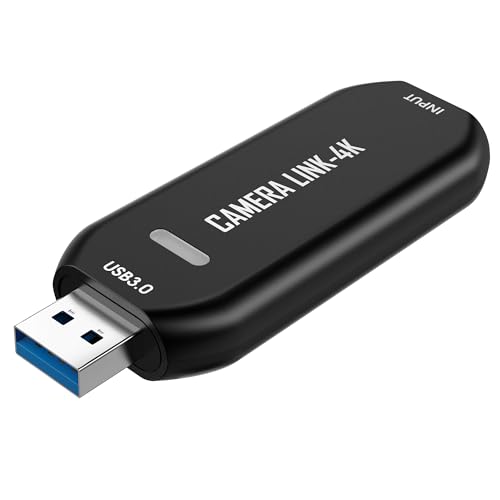
- Up to 4K60 capture and 1080p120 modes
- No drivers or external power required
- Supports cameras, microscopes, and consoles
Best For: Simple Windows or Mac HDMI camera streaming
Portable Budget Pick

- 1080p60 capture with 4K30 input
- Compact aluminum design for travel
- Works with USB-C, OBS, Zoom, and major OS options
Best For: Portable, budget-friendly DSLR streaming and recording
Best Value 4K Pick

- Captures up to 4K30 and 1080p120
- Plug-and-play USB 3.0 connectivity
- Works with cameras, consoles, OBS, and Zoom
Best For: Budget-conscious creators needing portable 4K capture
Best Budget Pass-Through Option

- Captures up to 1080p video
- Includes HDMI loop-out for monitoring
- Adds 3.5mm TRS microphone input
Best For: Entry-level 1080p streaming with pass-through
Best Premium 4K60 Choice

- Captures 4K video at 60 fps
- Offers low latency and audio synchronization
- Includes USB-C cable and shoe mount adapter
Best For: Professional 4K streaming with DSLR or mirrorless cameras
Best USB 3.0 Pick

- 1080p60 recording with 4K input
- USB 3.0 low-latency capture
- Plug-and-play USB-A design
Best For: DSLR streaming and smooth 60fps recording
Best Compact Option

- 4K input with 1080p30 output
- Compact USB 2.0 design
- No drivers or external power
Best For: Basic DSLR streaming and video conferencing
Best Simple Budget Pick
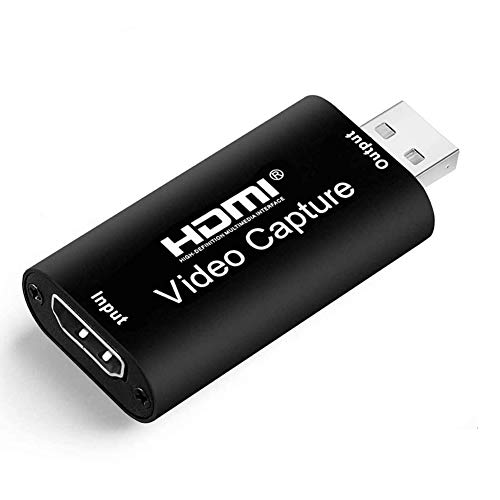
- 4K input and 1080p30 output
- Works with Windows, Mac, and Linux
- Plug-and-play USB 2.0 setup
Best For: Entry-level DSLR streaming and recording
Premium Pick – Elgato Cam Link 4K
If you want a dependable capture card for DSLR camera streaming, the Elgato Cam Link 4K offers a compact HDMI-to-USB 3.0 setup with support for high-resolution recording. It can connect compatible cameras, camcorders, action cameras, and even an iPhone to a computer, iPad, or compatible streaming setup.
Best For: Creators who want low-latency DSLR webcam conversion and up to 4K capture.
Pros:
- Supports 1080p60 and up to 4K60 with compatible equipment.
- Ultra-low latency helps keep video and audio synchronized.
- Works with PC, Mac, iPad, OBS, Zoom, and Discord.
- Compact design and included USB 3.0 extension cable.
Cons:
- 4K performance depends on the camera and the specific Cam Link model.
- Requires a compatible camera with HDMI output.
Choose this model when polished streaming performance and broad computer compatibility matter more than the lowest price. Its compact build and low-latency operation make it a strong fit for live video and remote presentations.
Versatile Value – VIXLW 4K HDMI Capture Card
This versatile capture card for DSLR camera use combines HDMI capture, loop-out, and microphone input in one device. It captures up to 1080p60 through USB 3.0 while accepting 4K60 HDMI input, making it useful for cameras, consoles, meetings, and live production.
Best For: Users who want one capture device for DSLR video, console streaming, and lag-free HDMI pass-through.
Pros:
- Accepts 4K60 input and provides HDMI loop-out.
- Captures up to 1080p60 and outputs up to 2K30 via USB 3.0.
- Includes a 3.5mm microphone input for external commentary.
- Supports Windows, macOS, Linux, Android, OBS, Zoom, and other software.
Cons:
- The listed warranty is only 60 days.
- Microphone input accepts a 3.5mm microphone headset and does not record party chats.
- USB 3.0 is recommended for the stated capture performance.
This is a practical choice if you need more than basic camera capture. The loop-out and mic input add flexibility for gaming, interviews, and presentations, while plug-and-play compatibility keeps setup straightforward.
Plug-and-Play Alternative – VIXLW Cam Link 4K
The VIXLW Cam Link 4K is a straightforward capture card for DSLR camera owners who want to turn an HDMI camera into a webcam. It supports Windows and macOS, requires no drivers or external power, and is designed for streaming, recording, video calls, and precision-work documentation.
Best For: Creators and professionals who prioritize simple setup, broad HDMI compatibility, and high-resolution capture.
Pros:
- Supports up to 4K60 capture and 1080p120 according to the listed modes.
- Plug-and-play operation without drivers or external power.
- Works with DSLRs, camcorders, action cameras, microscopes, and consoles.
- Includes ultra-low-latency performance and a lifetime warranty listing.
Cons:
- Actual resolution depends on the listed codec and supported mode.
- Requires an HDMI-equipped source device and a compatible USB port.
This model suits buyers who want a simple alternative to a traditional webcam workflow. Its broad HDMI compatibility is useful beyond DSLR streaming, especially for online teaching, repair documentation, and live content.
Portable Budget Pick – USB 3.0 HDMI Capture Card
For a compact capture card for DSLR camera use, this USB 3.0 HDMI model provides 1080p60 capture and up to 2K30 output. It supports USB-C and USB connections, works with common streaming software, and is designed for portable recording, online meetings, and live broadcasts.
Best For: Budget-conscious users who need portable 1080p DSLR capture for streaming or recording.
Pros:
- Captures up to 1080p60 from an HDMI source.
- Supports 4K30 input and up to 2K30 output.
- Compact aluminum body is easy to carry for outdoor streaming.
- Works with Windows, macOS, Linux, Android, OBS, VLC, and Zoom.
Cons:
- It is for capture only and cannot directly cast to a monitor or TV.
- USB 3.0 is needed for the best bandwidth and resolution.
- USB-C adapter behavior may require reconnecting or flipping the connection to achieve USB 3.0 recognition.
This is a sensible low-cost option when 1080p60 is sufficient and portability matters. Buyers should plan to use capture software and verify the USB connection, especially when using the included adapter.
Best Value 4K Pick – Mwin Cam Link 4K
If you want an affordable capture card for DSLR camera streaming, the Mwin Cam Link 4K combines high-resolution capture, USB 3.0 connectivity, and broad software support in a compact design. It can capture up to 4K30 or 1080p120 and works without drivers or external power.
Best For: Budget-conscious streamers and creators who need a portable DSLR, camcorder, or action-camera capture solution for OBS, Zoom, or live platforms.
Pros:
- Captures up to 4K30, with support for 1080p120 and 1440p60.
- USB 3.0 provides high-speed transfer and low-latency video sharing.
- Plug-and-play operation with Windows and Mac, without external power.
- Supports cameras, consoles, OBS, VLC, Amcap, and major streaming platforms.
Cons:
- HDMI cable is not included.
- Requires a computer with a USB 3.0 interface.
- Its 4K capture rate is limited to 30 fps.
The Mwin Cam Link 4K is a strong value choice when you want more than basic 1080p capture without paying for a premium setup. Its compact size and simple connection make it especially practical for mobile streaming.
Best Budget Pass-Through Option – VIXLW 4K HDMI Capture Card
For straightforward 1080p streaming, this capture card for DSLR camera setups offers USB 3.0 plug-and-play operation, HDMI loop-out, and microphone input. It is designed to work with cameras, consoles, and other HDMI sources on Windows, Mac, and Linux.
Best For: Entry-level streamers who want an affordable 1080p capture card with pass-through and external microphone support.
Pros:
- Captures video at up to 1080p and supports HDMI devices including DSLR cameras.
- HDMI loop-out is designed for low-delay gameplay and monitoring.
- No driver or external power supply is required.
- Includes a 3.5mm TRS microphone input for commentary.
Cons:
- Capture resolution is limited to 1080p.
- The microphone input accepts only a 3.5mm TRS standard microphone headset.
- Its listed weight is 0.3 kg, making it less lightweight than some compact alternatives.
The VIXLW model is a practical starter option for creators who do not need 4K recording. HDMI loop-out and microphone input add useful flexibility for live gaming, camera streaming, and commentary.
Best Premium 4K60 Choice – AVerMedia CamStream 4K
The AVerMedia CamStream 4K is a higher-end capture card for DSLR camera streaming, offering 4K60 capture, RGB24 color, and ultra-low-latency performance. Its plug-and-play USB-C design supports modern Windows, Mac, iPad, and Android setups without requiring extra power.
Best For: Creators, broadcasters, and presenters who want smooth 4K60 DSLR or mirrorless-camera video for OBS, Twitch, Zoom, and other professional streaming workflows.
Pros:
- Supports 4K60 capture with RGB24 true-to-life color.
- Designed for low-latency video and synchronized audio.
- Works with Windows, Mac, iPad, and compatible Android devices.
- Includes a USB-C-to-A cable and 1/4-inch cold/hot shoe mount adapter.
Cons:
- Requires relatively recent operating systems, such as Windows 10 x64 or macOS 14/15 and later.
- The host device must have a compatible USB-C port.
- Its advanced features may be unnecessary for basic 1080p streaming.
With 4K60 support, low latency, and broad modern-device compatibility, the CamStream 4K is the most capable option in this group. It is best suited to users who prioritize smooth, high-quality production and have compatible hardware.
Best USB 3.0 Pick – 1080p60 DSLR Capture Card
If you need a capture card for DSLR camera streaming, this USB 3.0 model is the strongest fit of the three for smoother motion and higher frame rates. It accepts up to 4K at 30Hz and records up to 1080p at 60fps, with plug-and-play USB-A connectivity for compatible Windows, Mac, Linux, and Android setups.
Best For: DSLR streaming, gaming capture, OBS recording, webinars, and creators who want 1080p60 performance.
Pros:
- Captures up to 1080p at 60fps with 4K input support.
- USB 3.0 interface is designed for low-latency capture and real-time preview.
- Works with DSLR cameras, OBS Studio, VLC, Zoom, and several operating systems.
- Native USB-A plug-and-play design requires no drivers or external power.
Cons:
- Requires a computer with an available USB 3.0 port for best performance.
- It is intended for capture and recording, not direct HDMI display output.
- Camera compatibility still depends on the DSLR providing a suitable HDMI output.
Choose this model if 60fps capture and USB 3.0 performance matter more than the lowest possible price. Its broad software compatibility also makes it a flexible option for mixed streaming and recording use.
Best Compact Option – Full HD DSLR Cam Link
This compact capture card for DSLR camera use provides a straightforward way to send HDMI video and audio to a computer or phone. It supports 4K input but outputs up to 1080p at 30fps, and its driver-free design works with OBS, VLC, and Amcap on supported Windows, Android, and macOS devices.
Best For: Budget-conscious DSLR users, teaching, video conferences, basic live streaming, and 1080p30 recording.
Pros:
- Supports up to 4K at 30Hz input and Full HD 1080p at 30fps output.
- Provides real-time preview for checking video during recording or streaming.
- Compact design and no-driver, no-external-power setup simplify installation.
- Compatible with DSLR cameras, camcorders, action cameras, and common capture software.
Cons:
- USB 2.0 limits output to 1080p at 30fps.
- Software and operating-system support is less broadly specified than some alternatives.
- It does not provide the 1080p60 capture available from the USB 3.0 option.
This is a sensible choice for simple camera-to-computer capture when 30fps is sufficient. Its small size and easy setup suit casual streaming, meetings, and classroom use without adding an external power requirement.
Best Simple Budget Pick – 1080p DSLR HDMI Capture
For a basic capture card for DSLR camera setups, this USB 2.0 adapter offers 4K input and Full HD 1080p output at 30fps. It connects HDMI cameras and other sources to Windows, Mac, or Linux computers for streaming and recording through software such as OBS, PotPlayer, and VLC.
Best For: Entry-level DSLR streaming, occasional recording, gaming capture, teaching, and video conferencing.
Pros:
- Accepts 4K at 30Hz and outputs up to 1080p at 30fps.
- Supports Windows, Mac, and Linux systems.
- Plug-and-play operation requires no external driver or power supply.
- Small, lightweight design is easy to add to a portable setup.
Cons:
- USB 2.0 connection is limited to 1080p at 30fps.
- The supplied details list compatible devices primarily as gaming consoles and computers, so verify DSLR HDMI compatibility before buying.
- It lacks the 60fps recording capability of the USB 3.0 model.
This model makes the most sense when you want an uncomplicated, lightweight capture adapter for standard 1080p30 workflows. Consider the USB 3.0 alternative if smoother motion or more demanding DSLR production is a priority.
How We Picked the Best Capture Card for Dslr Camera
We evaluated these capture devices by the features that matter most when connecting a DSLR, mirrorless camera, camcorder, or action camera to a computer. Our comparison emphasizes HDMI input support, USB connection type, maximum resolution and frame rate, latency, operating-system compatibility, audio handling, and ease of use with software such as OBS, Zoom, and other video applications.
Because product listings can describe similar hardware differently, check the manufacturer’s specifications before buying. A listed 4K input does not always mean 4K recording or 4K output over USB.
Quick Comparison
- Best-known brand option: Elgato Cam Link 4K is designed specifically for using compatible cameras as webcams and streaming sources.
- High-frame-rate choice: Models advertising 1080p at 120 fps may suit fast-moving content, provided your camera, software, and computer support that rate.
- 4K-focused option: AVerMedia and comparable 4K devices can be appealing for higher-resolution workflows and lower-latency monitoring.
- Budget-friendly choices: Basic HDMI-to-USB adapters can work well for 1080p streaming, but specifications, drivers, audio support, and build quality vary significantly.
Key Buying Factors for a Capture Card for Dslr Camera
Resolution and Frame Rate
Confirm whether you need 1080p60 or 4K. Full HD at 60 fps is usually sufficient for live streaming, video calls, and tutorials. Choose a 4K-capable model only if your camera outputs 4K through HDMI and your workflow benefits from the additional detail.
HDMI Signal Compatibility
Your camera should provide a clean HDMI signal without menus, focus boxes, or battery warnings appearing in the feed. Also verify the camera’s HDMI connector size and whether it needs a separate cable or adapter. Some cameras limit resolution or frame rate through HDMI.
USB Connection and Computer Support
USB 3.0 is preferable for high-resolution or high-frame-rate video. USB-C describes the connector, not necessarily the speed, so check the actual transfer standard. Confirm compatibility with your computer’s ports and your intended operating system.
Latency, Audio, and Power
Low latency matters for live monitoring, gaming commentary, and interactive broadcasts. Check whether audio is embedded through HDMI and whether the device passes it reliably to your software. A capture card normally does not power the camera, so plan for a fully charged battery, continuous power adapter, or dummy battery.
Who Should Buy Which Capture Card for Dslr Camera?
Choose a recognized 4K model if you want dependable software compatibility, higher-resolution capture, and a straightforward setup for professional streaming or production. Choose a 1080p60 USB 3.0 model if you primarily stream, teach, meet, or record at Full HD and want a sensible balance of quality and cost. Choose a basic HDMI adapter for occasional use, simple webcam conversion, or a secondary camera, but verify reviews and return policies carefully.
Before ordering, confirm your camera’s clean-HDMI capability, the required cable, your computer’s USB ports, and the capture software’s supported formats. Those checks prevent most compatibility surprises.