Choosing the right equalizer can make speech easier to understand, music more balanced, and a church sound system easier to manage. The best option depends on your mixer, amplifiers, speakers, room acoustics, and the amount of hands-on control your team needs.
We’ve gathered 10 graphic and digital equalizers with different band counts, connections, rack-mount designs, and tuning features so you can narrow the field before installation or an upgrade.
Best 10 Audio Equalizers for Church Sound Systems Picks for 2026
Stage-Ready Signal Hub
EQ8100 20-Band Graphic Equalizer
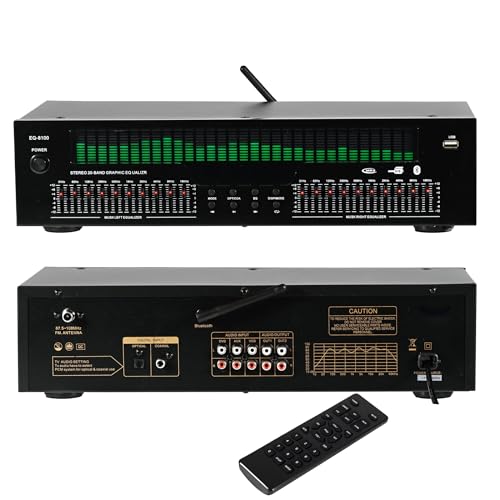
- 20-band EQ with 31-band spectrum display
- Optical, coaxial, USB, Bluetooth, and RCA connectivity
- Rack-ready chassis with presets and feedback reduction
Best For: Larger worship spaces and multi-source church audio systems
Compact Headphone Monitor

- Seven bands with ±12 dB adjustment
- Two-channel preamp and headphone amplifier
- Compact design with 3.5 mm and RCA connections
Best For: Personal monitoring and small audio workstations
Visual Mixing Assistant
31-Band Bluetooth Graphic Equalizer

- 31-band EQ with real-time spectrum monitoring
- 12 customizable modes and auto-save presets
- Optical, coaxial, USB, and Bluetooth connectivity
Best For: Church audio systems requiring detailed tonal control and source flexibility
Simple Personal EQ

- Seven bands with ±12 dB adjustment
- Dual-channel preamp with 14 dB gain
- Aluminum-alloy body and 3.5 mm connectivity
Best For: Church streaming, podcasting, and headphone-monitoring stations
Rack-Ready Control
15-Band Stereo Graphic Equalizer
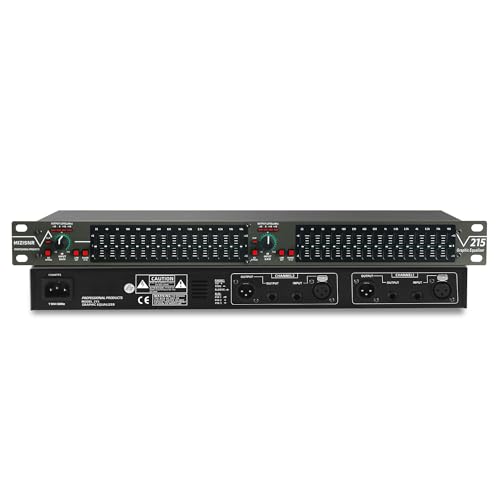
- 15 bands per channel with ±12dB adjustment
- Low-cut filter reduces rumble and hum
- XLR and 1/4-inch connectivity in a 1U rack chassis
Best For: Dual-channel church and live sound racks
Clean Signal Shaping

- Seven bands from 64Hz to 8kHz
- XLR and RCA inputs and outputs
- 104dB-plus SNR with low stated distortion
Best For: Compact systems needing simple EQ and flexible connections
Feature-Rich Digital Tuning

- 20-band adjustment with 31-band spectrum display
- Bluetooth, USB, optical, and coaxial inputs
- Noise gate, presets, and auto-memory function
Best For: Multi-source church systems and streaming or recording use
Precision Rack Control
15-Band Stereo Graphic Equalizer

- 15 bands per channel with ±12 dB adjustment
- Low-cut control and bypass switch
- XLR, TRS, and subwoofer connectivity
Best For: Churches wanting hands-on EQ control in a 1U rack unit
Digital System Tuning

- 31-band dual-channel digital EQ
- PC tuning, presets, and bypass mode
- Adjustable seven-band noise suppression
Best For: Churches needing detailed, repeatable digital system tuning
Flexible Low-Cut Filtering

- 15 bands per channel with ±12 dB control
- Low-cut switch targets hum and rumble
- 1U rack design with XLR and TRS I/O
Best For: Church systems needing simple manual EQ and noise filtering
Stage-Ready Signal Hub – EQ8100 20-Band Graphic Equalizer
For churches looking for audio equalizers for church sound systems, the EQ8100 offers detailed 20-band adjustment, multiple digital inputs, and real-time frequency monitoring. Its rack-friendly chassis and feedback-reduction features make it suited to larger worship spaces, live stages, and installed audio systems.
Best For: Churches needing broad connectivity, visible spectrum monitoring, and flexible live-sound EQ control.
Pros:
- 20-band graphic equalizer with a 31-band real-time spectrum analyzer.
- Supports optical, coaxial, USB, Bluetooth, and RCA connections.
- Includes customizable modes, auto-save presets, and feedback- and noise-reduction features.
- Ultra-thin 1U aluminum chassis is suitable for rack installation or mobile setups.
Cons:
- The listed dimensions appear unusually large and should be confirmed before rack installation.
- Its wide feature set may be more than a small church system requires.
The EQ8100 is the most versatile option here for a church running multiple sources or needing quick visual control during services. Confirm the physical dimensions and your system’s connector requirements before buying.
Compact Headphone Monitor – EQ-7 7-Band Audio Equalizer
The EQ-7 is a small two-channel preamp and headphone-focused equalizer for targeted monitoring rather than whole-room church reinforcement. With seven adjustable frequency bands, a 5x preamp gain stage, and support for headphones from 16 to 600 ohms, it can help with personal audio and compact production setups.
Best For: Personal monitoring, small recording or streaming stations, and headphone-based audio work.
Pros:
- Seven EQ bands provide ±12 dB adjustment from 60 Hz to 15 kHz.
- Two-channel design includes a preamp and headphone amplifier.
- Supports 3.5 mm three- or four-pole plugs and an additional RCA terminal.
- Compact package measures about 7.13 by 4.92 by 2.32 inches.
Cons:
- Its headphone-oriented design is not a substitute for a main church-system graphic EQ.
- Requires a separate 5V–12V DC power source or the included 12V adapter.
This EQ-7 makes the most sense where a worship team, technician, or streamer needs localized headphone control. For front-of-house speakers or a larger installed system, choose a unit designed as a rack signal processor instead.
Visual Mixing Assistant – 31-Band Bluetooth Graphic Equalizer
This 31-band graphic equalizer is a flexible choice among audio equalizers for church sound systems when detailed tonal shaping and visual frequency feedback are priorities. It combines independent band tuning, a real-time spectrum analyzer, multiple presets, and digital connectivity for systems that handle music, speech, and recorded playback.
Best For: Worship systems needing fine vocal shaping, noise and echo reduction, and easy switching between saved EQ curves.
Pros:
- 31-band monitoring enables precise adjustment across bass, midrange, and treble.
- Offers 12 customizable modes and auto-save presets.
- Optical, coaxial, USB, and Bluetooth connections support varied source equipment.
- Designed for home, studio, DJ, KTV, and live-stage applications.
Cons:
- The supplied notes do not specify rack dimensions or included accessories.
- Its broad multi-use feature set may require extra setup time for inexperienced operators.
For churches balancing spoken vocals, music playback, and live performance, the 31-band layout provides useful control and feedback about what is happening across the spectrum. Verify compatibility with the existing mixer and amplifier connections before integrating it.
Simple Personal EQ – 7-Band Dual-Channel Equalizer
This compact seven-band unit is a basic two-channel preamp and headphone equalizer for focused audio adjustment. It can be useful in a church podcast, streaming, or recording station, but its 3.5 mm-centered design is less suited to shaping the main output of a full worship sound system.
Best For: Small recording, streaming, podcasting, and personal headphone-monitoring setups.
Pros:
- Seven frequency bands cover 60 Hz through 15 kHz with ±12 dB control.
- Dual-channel design includes 14 dB preamp gain.
- Aluminum-alloy construction is described as strong and stable.
- Supports 3.5 mm input, microphone headset plugs, and an additional terminal connection.
Cons:
- It is not presented as a rack-mounted or full-system church audio processor.
- Power is limited to a 5V–12V DC supply.
- The compact interface may be less convenient for frequent live-service adjustments.
This model is best viewed as an affordable accessory for personal audio control rather than the central equalizer in a sanctuary. It can complement a church’s streaming or recording workflow when headphone and 3.5 mm connections are appropriate.
Rack-Ready Control – 15-Band Stereo Graphic Equalizer
For church sound systems that need hands-on control over two audio channels, this 15-band stereo equalizer offers adjustable frequency shaping, balanced connectivity, and a standard rack-mount format. Its low-cut filter can help reduce wind noise, floor rumble, and electrical hum in live or installed setups.
Best For: Churches and live venues needing dual-channel, rack-mounted EQ control.
Pros:
- 15 adjustable bands per channel with up to ±12dB range.
- Low-cut switch targets rumble, wind noise, and electrical hum.
- XLR balanced and 1/4-inch TRS unbalanced inputs and outputs.
- Bypass switch and 1U rack-mount design simplify installation and troubleshooting.
Cons:
- Provides manual graphic EQ control rather than automatic room correction.
- Its 1U rack format may be less convenient for compact, desktop-only systems.
As audio equalizers for church sound systems go, this model is a practical choice when the priority is flexible, tactile control of a stereo signal path. The low-cut function and varied I/O make it particularly useful for live speech and music systems.
Clean Signal Shaping – Douk Audio T7 7-Band EQ
The Douk Audio T7 is a compact preamp-style equalizer for church sound systems that need straightforward frequency adjustment and flexible XLR/RCA connections. Its seven fixed frequency bands provide focused tonal control, while the high signal-to-noise ratio and low distortion support clear audio reproduction.
Best For: Smaller audio setups and systems that need compact XLR/RCA EQ connectivity.
Pros:
- Seven bands cover key low, mid, and high frequencies from 64Hz to 8kHz.
- Offers ±6dB adjustment for each band.
- XLR and RCA inputs and outputs provide broad connection flexibility.
- Compact aluminum housing and stated 104dB-plus SNR suit clean signal paths.
Cons:
- No volume control knob; it outputs at the rated level.
- Seven bands provide less detailed shaping than larger graphic equalizers.
- Its compact home-audio format may require integration with additional church sound equipment.
This T7 is best considered a simple, compact tone-shaping component rather than a full live-sound control center. It can suit a church system where moderate EQ adjustment and XLR/RCA compatibility matter more than extensive band-by-band control.
Feature-Rich Digital Tuning – 20-Band Home Audio Equalizer
This 20-band equalizer brings extensive tone-shaping and digital playback features to audio equalizers for church sound systems. It includes a 31-band spectrum display, Bluetooth 6.0, USB, optical, and coaxial decoding, plus an intelligent noise gate and saved presets for repeatable operation.
Best For: Flexible multi-source setups, streaming, recording, and users who want visual tuning feedback.
Pros:
- 20 independent bands support detailed frequency adjustment.
- 31-band spectrum display provides real-time visual feedback.
- Bluetooth, USB, optical, and coaxial options expand source compatibility.
- Noise gate, 12 customizable modes, and auto-memory presets support convenient operation.
Cons:
- Its listed 16.9-inch-wide home-audio format may require careful rack or console planning.
- Only RCA audio outputs are specified, which may limit direct balanced-system integration.
- The broad feature set may be more than needed for a basic microphone-and-mixer setup.
This model stands out when a church needs one unit for detailed EQ, wireless playback, digital sources, and repeatable presets. Before choosing it, verify that its RCA output format fits the existing mixer, amplifier, or powered-speaker chain.
Precision Rack Control – 15-Band Stereo Graphic Equalizer
For church sound systems that need straightforward, hands-on shaping, this dual-channel equalizer provides 15-band control per channel. Its low-cut feature, bypass switch, and rack-mount design help operators manage room sound and unwanted low-frequency noise during services or events.
Best For: Churches seeking an affordable, rack-mounted analog-style EQ with balanced connectivity and dedicated low-end control.
Pros:
- 15 adjustable bands per channel with up to ±12 dB control.
- Low-cut control helps reduce unwanted low-end noise.
- Includes XLR and 1/4-inch TRS connections plus a subwoofer output.
- Standard 1U rack-mount form factor with bypass operation.
Cons:
- Provides fewer bands and less automation than the 31-band digital model.
- Manual front-panel adjustment may be less convenient for complex installations.
This is a practical choice when a church prefers direct physical controls and uncomplicated rack integration. Its dual-channel layout and low-cut function cover common system-tuning needs without requiring PC software.
Digital System Tuning – 31-Band DSP Equalizer
For church sound systems requiring detailed frequency shaping, this digital equalizer offers 31-band DSP control per channel and PC tuning. Presets, a bypass mode, noise suppression, and a display make it suited to setups where repeatable adjustments and flexible monitoring are important.
Best For: Churches with more involved audio systems that want fine-grained digital EQ, presets, and computer-based configuration.
Pros:
- 31-band dual-channel DSP equalization supports detailed tuning.
- PC software enables convenient configuration and adjustment.
- Ten EQ presets and bypass support quick comparisons.
- Seven-band noise suppression offers adjustable reduction from -3 dB to -9 dB.
Cons:
- May require more setup familiarity than a simple manual graphic EQ.
- Its larger feature set may be unnecessary for smaller, straightforward systems.
This model stands out when a church needs precise control across vocals, music, and speech. Its XLR and TRS balanced outputs and PC-tuning capability make it a flexible option for more demanding audio workflows.
Flexible Low-Cut Filtering – Dual-Channel 15-Band EQ
This dual-channel graphic equalizer is a practical option for church sound systems that need manual frequency adjustment and basic noise control. Each channel has 15 bands, while the low-cut switch targets wind noise, electrical hum, and floor rumble in a standard 1U rack design.
Best For: Church installations and live-service systems needing simple dual-channel EQ with low-cut filtering and broad voltage support.
Pros:
- 15-band control on each channel with up to ±12 dB adjustment.
- Low-cut switch helps attenuate rumble, hum, and wind noise.
- Bypass switch simplifies setup checks and troubleshooting.
- Supports XLR balanced and 1/4-inch TRS unbalanced connections.
Cons:
- Does not offer the PC tuning or presets found on a digital EQ.
- 15 bands provide less detailed adjustment than a 31-band unit.
- Supplied notes identify the US plug and wide-voltage operation, so local power compatibility should be checked.
With its focused controls and upgraded chipset, this EQ suits churches that want reliable manual shaping without a complex digital interface. The low-cut and bypass switches are particularly useful for basic system setup and noise troubleshooting.
How We Picked the Best Audio Equalizers for Church Sound Systems
We compared these models by looking at the features that matter most in worship venues: frequency-band control, channel layout, input and output connections, noise-reduction claims, installation format, tuning convenience, and likely compatibility with mixers, amplifiers, powered speakers, and existing rack equipment. We also considered whether each unit is better suited to a permanent sound booth, a portable setup, or a smaller system with limited processing needs.
Band count is only one part of the decision. A 31-band unit offers finer correction, while a seven- or 15-band equalizer may be quicker for volunteers to operate. Balanced XLR connections can also be important for longer cable runs, whereas RCA or 3.5mm connectivity may better suit compact consumer-style systems.
Quick Comparison
| Best For | Look For | Why It Matters |
|---|---|---|
| Large sanctuary or installed rack | 31 bands, dual channels, balanced I/O | Provides precise control and better integration with professional signal chains. |
| Small church or volunteer operators | 7 to 15 bands, simple controls | Makes routine adjustments faster and less intimidating. |
| Computer or home-style audio gear | USB, PC tuning, Bluetooth, RCA, or 3.5mm | Offers convenient connections, but may not replace balanced professional I/O. |
| Rack-based sound booth | 1U rack-mount construction | Keeps the processor secure and organized with other equipment. |
Key Buying Factors for Church Audio Equalizers
Band Count and Adjustment Range
More bands allow narrower problem-frequency cuts, which can help with room resonance and feedback. However, excessive adjustment can make a system harder to manage. Choose a band count your operators can use confidently.
Inputs, Outputs, and Signal Path
Check whether the equalizer belongs before the mixer, between the mixer and amplifier, or in an effects loop. Confirm connector types, balanced or unbalanced operation, channel count, and whether the unit supports the signal level used by your equipment.
Feedback Control and Noise
Equalizers can reduce frequencies that contribute to feedback, but they do not replace correct microphone placement, gain structure, speaker positioning, or acoustic treatment. Noise-reduction features may help, yet real-world results depend on the entire system.
Usability and Installation
Front-panel sliders are useful for live adjustments, while digital displays, presets, or PC tuning can simplify repeatable setups. For a permanent booth, verify rack depth, power requirements, ventilation, and access to controls.
Who Should Buy Which Audio Equalizers for Church Sound Systems?
Choose a 31-band digital equalizer if your church has a larger sanctuary, multiple speaker zones, experienced operators, or recurring feedback and room-response issues. These models offer the most detailed control.
Choose a 15-band rack equalizer for a practical middle ground in a professional-looking installed system. It can provide meaningful tonal shaping without the complexity of a full 31-band workflow.
Choose a seven-band or compact equalizer for smaller worship spaces, portable rigs, speech-focused systems, or teams that prioritize quick adjustments. Confirm that its connections and output level match your mixer or amplifier.
Before buying, map the complete signal chain and identify where equalization will be applied. The best unit is not necessarily the one with the most features; it is the model that matches your room, connections, operators, and long-term maintenance plan.