The right equalizer can make spoken audio sound clearer, fuller, and easier to understand without forcing you to rebuild your entire podcast setup. Whether you need simple bass and treble adjustment, a USB mixer with microphone support, or detailed multi-band control, the best choice depends on your recording chain and room.
We’ve rounded up 10 options spanning compact preamps, Bluetooth-enabled home-audio units, podcast-friendly mixers, and professional graphic equalizers. Use the guide below to compare features and match each type to your workflow.
Best 10 Audio Equalizers for Podcasting Picks for 2026
Compact 7-Band Control

- Seven bands with ±12dB adjustment
- Dual-channel 3.5mm connectivity
- Headphone-compatible output and up to 14dB gain
Best For: Compact recording, streaming, and podcasting setups
Wireless Tone Shaping

- Five-band stereo EQ with independent processing
- Bluetooth 5.0 wireless streaming
- Dual 45mm VU meters and bypass control
Best For: Home audio and podcast workspaces with Bluetooth playback
Podcast Recording Hub

- XLR input with 48V phantom power
- USB connectivity for Mac and PC
- Direct monitoring plus instrument input
Best For: Single-mic podcast recording and streaming
Rack-Mount Precision
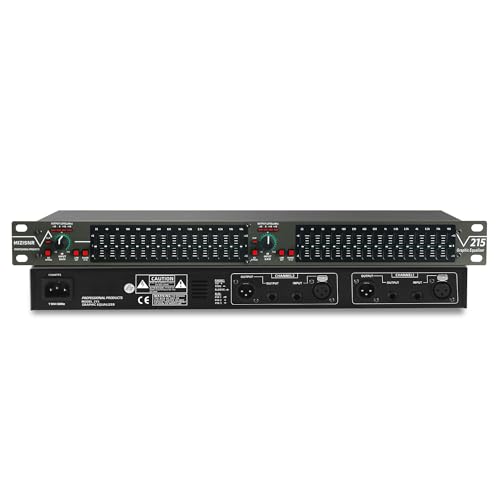
- 15 bands per channel with ±12dB adjustment
- Low-cut switch for rumble and hum reduction
- Balanced XLR and unbalanced TRS connections
Best For: Advanced rack-based podcast studios and live audio systems
Portable Tone Shaper

- Three-band bass, midrange, and treble control
- Up to 2,400mW output with gain adjustment
- Battery-powered design with 3.5mm and 6.35mm jacks
Best For: Portable headphone monitoring and straightforward tone adjustments
Studio Rack Precision

- 15 adjustable bands per channel
- Low-cut control for unwanted low-end noise
- XLR and 1/4-inch TRS connectivity in a 1U rack design
Best For: Permanent studio systems requiring detailed stereo equalization
Visual Home-Studio Control
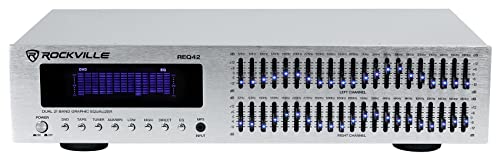
- Dual 21-band graphic EQ with 42 total bands
- Spectrum analyzer, VU meters, and LED indicators
- RCA source selection plus front-panel 3.5mm input
Best For: RCA-based home studios wanting detailed control with visual monitoring
Versatile Visualizer
TNZ SGE6 15-Band Graphic Equalizer

- 15-band, two-channel EQ
- RCA, 3.5mm, USB, and Bluetooth inputs
- Spectrum display with adjustable colors and brightness
Best For: Flexible home, DJ, or podcast audio setups
Rack-Mount Control
EQ315 Professional 31-Band Equalizer

- 31-band EQ with real-time spectrum display
- XLR and 1/4-inch TRS I/O
- 10 presets, EQ bypass, and noise reduction
Best For: Rack-based studios and professional audio installations
Compact Precision
Douk Audio T7 7-Band Balanced EQ

- Seven adjustable frequency bands
- XLR and RCA inputs and outputs
- Compact design with plug-and-play operation
Best For: Simple home podcast and stereo setups
Compact 7-Band Control – 7-Band Sound Equalizer
For shoppers comparing audio equalizers for podcasting, this compact two-channel unit offers hands-on tone shaping through seven adjustable frequency bands. Its 3.5mm connections, headphone support, and 5V–12V DC power range make it a flexible choice for simple recording, streaming, and voice setups.
Best For: Podcasters and streamers who want compact, manual EQ control with headphone monitoring.
Pros:
- Seven bands cover frequencies from 60Hz to 15kHz with a ±12dB adjustment range.
- Two-channel design includes a 3.5mm input and headphone-compatible output.
- Aluminum-alloy construction and support for 5V–12V DC power.
- Built-in gain stage provides up to 14dB of preamp gain.
Cons:
- Requires a suitable DC power source, which is not specified as included.
- Its compact 3.5mm-oriented layout may be less suitable for larger XLR-based studio systems.
This is a practical entry-level tone-shaping option when you need physical EQ controls without a full rack setup. Check your connector and power requirements before buying.
Wireless Tone Shaping – Douk Audio EQ5 Tone Equalizer
This Douk Audio model stands out among audio equalizers for podcasting when Bluetooth playback and visual level monitoring matter. Its five frequency bands, bypass function, balance control, and dual VU meters are aimed at convenient stereo listening and system tuning.
Best For: Home audio users and creators who want Bluetooth streaming, tactile EQ controls, and VU-meter monitoring.
Pros:
- Five independently processed bands target 75Hz, 400Hz, 800Hz, 4kHz, and 10kHz.
- Bluetooth 5.0 supports wireless audio streaming from compatible devices.
- Dual 45mm VU meters provide real-time visual signal monitoring.
- Includes bypass and balance controls in a compact all-metal case.
Cons:
- Its feature set is oriented toward home stereo and computer-speaker systems rather than dedicated microphone inputs.
- Only five EQ bands provide less frequency-by-frequency control than larger graphic equalizers.
The EQ5 Tone is a strong fit for a podcast workspace that also functions as a home listening station. Choose it if wireless playback and visible level activity are more important than microphone preamp features.
Podcast Recording Hub – FIFINE PC Audio Mixer
Although it is a mixer rather than a standalone graphic EQ, this FIFINE unit is one of the more directly podcast-focused choices in a comparison of audio equalizers for podcasting. It combines an XLR microphone input, 48V phantom power, instrument connectivity, USB output, and direct monitoring in a compact interface.
Best For: New podcasters who need a USB recording interface for an XLR microphone, headphones, and an instrument.
Pros:
- XLR microphone input supports condenser microphones with 48V phantom power.
- Dedicated gain and monitoring controls help manage recording and playback levels.
- Instrument input accommodates guitar or bass alongside the microphone connection.
- USB plug-and-play compatibility works with Mac and PC systems and software supporting USB audio.
Cons:
- The supplied notes do not specify built-in multi-band EQ controls.
- It provides one XLR microphone interface, so it may not suit multi-mic podcast panels.
For voice recording, this is the most purpose-built podcasting option in the group, even though its main role is mixing and interfacing rather than equalization. It makes sense when clean connection, phantom power, and direct monitoring are the priority.
Rack-Mount Precision – 15-Band Stereo Graphic EQ
For buyers seeking extensive control from audio equalizers for podcasting, this dual-channel 15-band graphic EQ offers detailed adjustment across each stereo channel. Its low-cut switch, bypass control, balanced XLR connectivity, and 1U rack-mount format make it better suited to installed, studio, or live audio systems.
Best For: Advanced podcast studios, live rigs, and rack-based systems that need detailed stereo tone control and low-frequency cleanup.
Pros:
- Fifteen bands per channel provide detailed stereo adjustment with up to ±12dB control.
- Low-cut switch helps reduce wind noise, floor rumble, electrical hum, and other low-frequency problems.
- Supports XLR balanced and 1/4-inch TRS unbalanced inputs and outputs.
- 1U rack-mount design and bypass switch suit permanent installations and troubleshooting.
Cons:
- Its 18.9-inch-wide rack format is less convenient for small desktop podcast setups.
- The supplied notes do not identify a dedicated microphone preamp or phantom-power function.
This is the most flexible EQ option here for shaping a stereo signal chain and controlling troublesome low frequencies. Plan for rack space and a separate microphone interface or preamp if your setup needs one.
Portable Tone Shaper – Fosi Audio SK01
The Fosi Audio SK01 is a compact choice for podcasters who want basic tone shaping alongside headphone amplification. Its three-band analog controls adjust bass, midrange, and treble, while the gain switch helps accommodate headphones with different impedances.
Best For: Podcasters who monitor from headphones and want portable, hands-on tone control.
Pros:
- Separate bass, midrange, and treble controls for quick adjustments.
- Up to 2,400mW output in high-impedance mode, with a gain switch for different headphones.
- Portable aluminum design with a built-in 2,500mAh battery and up to six hours of battery life.
- Includes 3.5mm and 6.35mm headphone connections plus a tone-defeat button.
Cons:
- Offers three tone bands rather than detailed graphic-EQ frequency control.
- Its listed compatibility and design are centered on headphones and instruments, so studio-routing needs may require additional equipment.
For simple monitoring adjustments, the SK01 is more practical than a full rack unit. It is best suited to a portable or headphone-focused setup rather than a multi-device podcast studio.
Studio Rack Precision – Stereo EQX-215S
The EQX-215S is a rack-style option for audio equalizers for podcasting when you need more detailed control over a stereo signal. It provides 15 adjustable bands per channel, a low-cut filter, and balanced or unbalanced connections for integration with broader audio systems.
Best For: Studio or installation-based podcast setups that need detailed stereo EQ and flexible connections.
Pros:
- 15 bands per channel with an adjustable range of ±12dB.
- Low-cut control helps reduce unwanted low-end noise.
- Provides XLR balanced and 1/4-inch TRS unbalanced inputs and outputs.
- 1U rack-mount form factor includes a dedicated bass output with adjustable frequency.
Cons:
- Its 18.9-inch rack-style chassis is less convenient for compact or mobile podcast rigs.
- It is corded electric and requires more setup than a small headphone-focused equalizer.
This model offers the most precise frequency-by-frequency shaping of the three options. Its rack format and connectivity make it a stronger fit for a permanent production chain than a simple desk-side monitoring setup.
Visual Home-Studio Control – Rockville REQ42-S
Rockville REQ42-S 2 x 21 Band Home Theater Equalizer w/Audio Spectrum Analyzer
Check Price On AmazonThe Rockville REQ42-S combines extensive graphic control with visual monitoring, making it a useful consideration among audio equalizers for podcasting in a home theater or desktop studio. Its dual 21-band layout provides 42 total bands, while the spectrum analyzer, VU meters, and LED indicators make level and frequency activity easier to observe.
Best For: Home-studio users who want dual-channel control, visual feedback, and RCA-based source selection.
Pros:
- Dual 21-band graphic equalizers provide 42 bands of total control.
- Built-in audio spectrum analyzer, VU meters, and slide-control LEDs offer visual feedback.
- Supports RCA stereo sources including DVD, tape, tuner, AUX/MP3, plus a front-panel 3.5mm input.
- Includes removable rack-mount brackets and RCA record output.
Cons:
- Its listed RCA-focused connections may be less convenient for balanced microphone or interface chains.
- The larger 19-inch component format is not intended for highly portable setups.
The REQ42-S stands out when visual feedback and many graphic bands matter more than minimal size. It is particularly suited to RCA-centered home systems, though users with modern balanced studio gear may need additional routing hardware.
Versatile Visualizer – TNZ SGE6 15-Band Graphic Equalizer
For shoppers comparing audio equalizers for podcasting, the Decibelvibe TNZ SGE6 offers practical connectivity and hands-on control in a slim component. Its 15-band, two-channel EQ can help tailor voice playback, while Bluetooth, USB, RCA, and 3.5mm connections make it adaptable to different home or studio-style setups.
Best For: Podcasters who want flexible wired and wireless connections plus a visual spectrum display.
Pros:
- 15-band equalization across two channels for detailed sound adjustments.
- RCA and 3.5mm inputs and outputs support multiple audio systems.
- Bluetooth 5.0, USB, built-in microphone, and adjustable spectrum display add versatility.
Cons:
- Its feature set is oriented toward broader home audio and DJ use rather than podcasting alone.
- The built-in display and color controls may be unnecessary for a simple voice-only setup.
The TNZ SGE6 is a flexible choice when you want an equalizer that also functions as a preamp and offers several input options. It is especially appealing for users building a multipurpose audio system rather than a minimal podcast chain.
Rack-Mount Control – EQ315 Professional 31-Band Equalizer
Among audio equalizers for podcasting, the EQ315 stands out for its extensive 31-band control, real-time frequency display, and rack-mount format. It supports balanced XLR and unbalanced 1/4-inch TRS connections, making it a strong fit for more structured studio, live, or installation-based systems.
Best For: Podcasters and audio creators using rack-mounted equipment who need detailed EQ and multiple connection options.
Pros:
- 31-band digital equalizer provides granular frequency adjustment.
- Offers 10 preset modes, EQ bypass, and independent high, mid, and bass adjustment.
- XLR and 1/4-inch TRS inputs and outputs support varied professional setups.
- Bluetooth 5.2 and USB playback add source flexibility.
Cons:
- Rack-mount design may be excessive for a compact home podcast desk.
- The broad feature set can require more setup than a simpler equalizer.
The EQ315 is the most installation-ready option of the three. Its 31 bands, bypass switch, noise-reduction feature, and balanced connectivity make it suitable when podcasting is part of a larger professional audio system.
Compact Precision – Douk Audio T7 7-Band Balanced EQ
For a straightforward approach to audio equalizers for podcasting, the Douk Audio T7 provides seven fixed frequency bands with adjustment from -6 dB to +6 dB. Its XLR and RCA inputs and outputs suit compatible home stereo or computer-speaker systems, while its compact aluminum enclosure keeps the setup tidy.
Best For: Podcasters who want a compact, plug-and-play EQ for compatible XLR or RCA equipment.
Pros:
- Seven frequency bands cover key low, mid, and high ranges.
- Provides simultaneous XLR and RCA output for connection flexibility.
- Compact aluminum housing and simple plug-and-play operation.
- Specified 104dB-plus SNR and 0.003% distortion support clean signal handling.
Cons:
- Seven bands offer less detailed control than 15- or 31-band models.
- No volume control knob; it outputs at the rated level.
- Its supplied connections may not match every podcast interface or mixer.
The T7 is a sensible option for users who value simplicity and a small footprint over extensive processing. It works best when your existing equipment already supports its XLR or RCA connections and you only need broad tonal adjustments.
How We Picked These Audio Equalizers for Podcasting
We focused on features that matter for spoken-word production: useful frequency control, clean signal routing, practical inputs and outputs, monitoring options, and ease of setup. The selection includes simple two-channel tone units, graphic equalizers with more precise shaping, and mixers that combine equalization with microphone connectivity. We also considered whether each design suits a desktop podcast station, a home stereo, a streaming setup, or a rack-mounted studio system.
Because an equalizer cannot fix every recording problem, we favored products that can fit sensibly into a complete signal chain. Good microphone placement, gain staging, room treatment, and noise control still have a major effect on final sound quality.
Quick Comparison
| Type | Best For | What to Look For |
|---|---|---|
| Compact tone equalizer | Simple desktop adjustments | Easy controls, low noise, compatible connections |
| USB audio mixer | Podcasting and streaming | XLR input, phantom power, headphone monitoring, gain control |
| 5–7 band preamp | Home audio and computer speakers | Bluetooth, RCA or 3.5mm routing, independent tone bands |
| 15–31 band graphic EQ | Detailed system tuning | Accurate sliders, spectrum display, balanced or rack connections |
| Headphone equalizer | Personal monitoring | Output power, tone controls, portability, headphone compatibility |
Key Buying Factors for Audio Equalizers for Podcasting
Frequency Control
For speech, adjustable midrange and presence frequencies are especially useful for improving intelligibility. A 5- or 7-band unit offers broad shaping, while a 15- or 31-band model provides finer control when you need to address room coloration, harshness, or muddiness.
Inputs, Outputs, and Signal Flow
Check how the equalizer connects to your microphone, interface, mixer, amplifier, or computer. RCA and 3.5mm connections suit consumer equipment, while XLR and balanced inputs and outputs are preferable for longer cable runs and more serious studio setups. A USB mixer may be a better choice than a standalone EQ if you need direct computer recording.
Podcast-Specific Features
For recording and streaming, prioritize microphone preamps, gain controls, 48V phantom power for condenser microphones, headphone monitoring, and convenient mute or level controls. Bluetooth can be useful for playback, but it is not a substitute for a proper wired recording path.
Noise, Headroom, and Setup
Look for a quiet signal path and enough headroom to prevent clipping. Avoid excessive boosting, which can raise hiss and make speech sound unnatural. A spectrum analyzer or VU meter can help with monitoring, but it does not replace careful listening and level checks.
Who Should Buy Which Audio Equalizers for Podcasting?
Choose a Compact Equalizer for Basic Tone Shaping
If you want straightforward bass, midrange, or treble adjustment for a small desktop setup, a compact unit is usually the easiest and least disruptive option.
Choose a USB Mixer for Recording and Streaming
Podcast hosts using XLR microphones and a computer should consider a mixer with USB connectivity, phantom power, gain control, and headphone monitoring. It combines several essential functions in one device.
Choose a Multi-Band Rack Equalizer for Detailed Tuning
For studios, home theaters, and complex audio systems, a 15- or 31-band graphic EQ offers much more precise control. These models make the most sense when you understand your signal chain and have a specific acoustic or tonal problem to solve.
Choose a Headphone Preamp for Personal Monitoring
If your priority is adjusting the sound you hear rather than processing the microphone feed, a headphone amplifier with tone controls can provide convenient listening control without changing the recorded track.