Finding the right compressor does not have to mean spending hundreds of dollars on boutique hardware. The best audio compressors under $200 can smooth vocal dynamics, add sustain to guitar, control peaks in a live mix, or provide practical studio signal management.
This roundup includes rack units, pedals, inline microphone processors, and an audio interface with built-in compression, giving you options for recording, streaming, performance, and mobile setups.
Best 10 Audio Compressors Under 200 Picks for 2026
Best Dual-Channel Control

- Dual-channel compression with auto attack and release
- Built-in noise gate and LED monitoring
- XLR/TRS I/O with sidechain insert
Best For: Vocal, live, streaming, and studio signal processing
Best All-in-One Rack Processor
Behringer Composer Pro-XL MDX2600

- Two-channel compressor, limiter, and gate
- Built-in de-esser for vocal processing
- Suitable for production, mixing, and mastering
Best For: Rack-based audio production and mix processing
Best Simple Stereo Limiter
Rolls SL33B Stereo Program Limiter

- Dedicated stereo program limiting
- Compact 5-by-5-by-5-inch design
- Lightweight one-pound construction
Best For: Compact stereo program control
Best Compressor Pedal

- Six selectable compression types
- Dual-compressor design
- Auto makeup gain in a 9-volt pedal
Best For: Pedalboard-based instrument compression
Rackmount Control
ART SCL2 Dual/Stereo Compressor/Limiter Expander/Gate
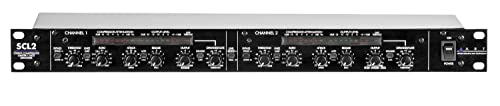
- Dual-channel or linked-stereo operation
- Balanced XLR and 1/4-inch TRS inputs
- Compression, limiting, expansion, and gating
Best For: Studio and live rack setups needing flexible dynamics processing
Recording All-Rounder
Universal Audio Volt 176 USB Audio Interface

- Built-in analog compressor based on the 1176
- UA 610-style preamp with Vintage mode
- USB interface with two channels and MIDI I/O
Best For: Recording, podcasting, and streaming with integrated compression
Compact Pedal Simplicity

- Classic DOD Compressor 280 circuit design
- Simple Comp and Level controls
- True bypass with 9V DC input
Best For: Guitar pedalboards needing straightforward analog compression
Compact Stompbox Pick
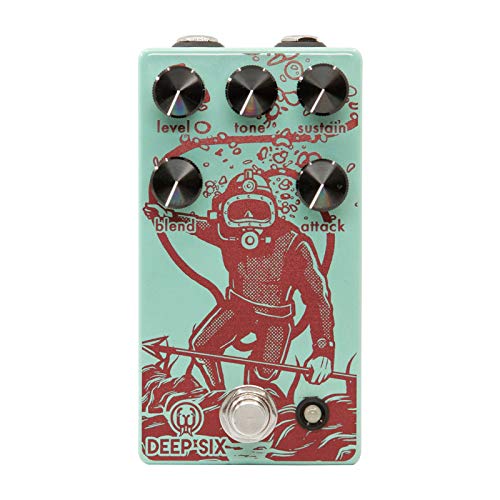
- Analog studio-grade compression
- Tone knob with bass-cut control
- Soft-switch bypass and top-mounted jacks
Best For: Guitar pedalboards
Rackmount Studio Choice

- Dual-channel compression and limiting
- XLR/TRS connectivity with LED metering
- Noise gate and sidechain insert included
Best For: Studio, live, and streaming racks
Microphone Inline Pick
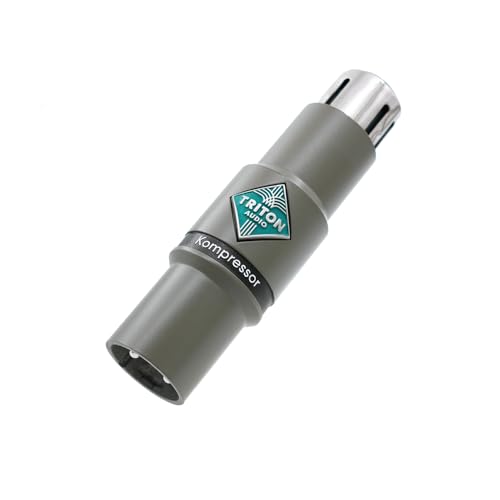
- 25 dB inline microphone gain
- Simple one-knob compression control
- Phantom-power protection for ribbon mics
Best For: Dynamic and ribbon microphone setups
Best Dual-Channel Control – Professional Audio Compressor
For shoppers comparing audio compressors under 200, this 1U rackmount model offers two-channel dynamics control with compression, gating, and sidechain routing. Its XLR/TRS connectivity and visual LED monitoring make it suited to studio, live, and streaming setups.
Best For: Vocal processing, live sound, streaming, and users who need dual-channel control with sidechain capability.
Pros:
- Dual-channel design with adjustable compression controls and auto attack/release settings.
- Includes a built-in noise gate and LED indicators for gain reduction, compression, and gate thresholds.
- Offers XLR and 1/4-inch TRS connections plus a sidechain insert for targeted frequency control.
Cons:
- Its 1U rackmount format is less convenient for compact pedalboard or desktop-only setups.
- The supplied notes do not specify included rack hardware or detailed control ranges.
This is a feature-rich choice among audio compressors under 200 when flexible routing, vocal presence, and noise reduction are priorities.
Best All-in-One Rack Processor – Behringer Composer Pro-XL MDX2600
The Behringer Composer Pro-XL MDX2600 is a practical option for audio compressors under 200 if you want more than basic compression. Its two-channel design combines compressor, limiter, gate, and de-esser functions for audio production, mixing, and mastering workflows.
Best For: Rack-based audio production, mixing, mastering, and users seeking integrated dynamics processing.
Pros:
- Combines two-channel compression, limiting, and gating in one unit.
- Includes a de-esser for additional vocal and high-frequency control.
- Designed for audio production, mixing, and mastering, with a portable rack-style format.
Cons:
- The supplied notes provide limited information about specific controls and connectivity.
- Its rack-oriented design may not suit users seeking a standalone pedal or minimal desktop device.
Choose this model when integrated dynamics tools and two-channel operation matter more than a simple, single-purpose compressor.
Best Simple Stereo Limiter – Rolls SL33B Stereo Program Limiter
The Rolls Stereo Program Limiter SL33B is a compact choice among audio compressors under 200 for buyers who specifically need stereo program limiting. Its small product dimensions and one-pound weight make it easier to place in space-limited audio setups.
Best For: Straightforward stereo program limiting where a compact unit is preferred.
Pros:
- Dedicated stereo program limiter design.
- Compact 5-by-5-by-5-inch product dimensions.
- Lightweight one-pound construction with a black finish.
Cons:
- The supplied notes do not list detailed controls, connections, or metering features.
- It is a limiter rather than a broadly specified multi-function compressor.
This is worth considering when your priority is compact stereo program limiting and you do not need the broader feature sets of rack compressors.
Best Compressor Pedal – Source Audio Atlas Compressor
For musicians comparing audio compressors under 200 in pedal form, the Source Audio Atlas Compressor offers six compression types and dual compressors in a digital 9-volt format. Its 1/4-inch audio interface is suited to instrument signal chains and pedalboard-style use.
Best For: Players who want multiple compression styles, dual-compressor operation, and a compact pedal workflow.
Pros:
- Provides six compression types for varied signal-shaping options.
- Features dual compressors for expanded compression configurations.
- Includes auto makeup gain and uses a standard 9-volt power specification.
Cons:
- The supplied notes do not specify whether a power adapter is included.
- Its pedal format and 1/4-inch interface are less suited to rack-based studio routing.
The Atlas is the most musician-focused option here, pairing flexible digital compression features with a pedal-style format rather than a rack processor.
Rackmount Control – ART SCL2 Dual/Stereo Compressor/Limiter Expander/Gate
For anyone comparing audio compressors under 200, the ART SCL2 stands out as a versatile rackmount processor with dual-channel or linked-stereo operation. It combines compression, limiting, expansion, and gating, while balanced XLR and 1/4-inch TRS connections suit studio and live setups.
Best For: Home studios, live racks, and users who need flexible stereo dynamics control.
Pros:
- Supports dual-channel or linked-stereo operation.
- Includes balanced XLR and 1/4-inch TRS inputs.
- Offers selectable automatic or manual attack and release controls.
- Provides precise LED level meters and a stereo-mode balance control.
Cons:
- Its 19-inch rackmount format is less convenient for compact pedalboard or mobile use.
- The broad compressor, limiter, expander, and gate feature set may be more than beginners need.
The SCL2 is a strong choice when you want more than basic compression in a single analog rack unit. Its connection options and stereo flexibility make it especially practical for structured studio or rack-based systems.
Recording All-Rounder – Universal Audio Volt 176 USB Audio Interface
The Universal Audio Volt 176 is a useful alternative for shoppers seeking audio compressors under 200 in a recording interface rather than a standalone processor. Its built-in analog compressor is based on the 1176, and the unit also combines a UA 610-style preamp, USB connectivity, and MIDI I/O for recording, podcasting, and streaming.
Best For: Vocalists, podcasters, and mobile creators who want compression built into a compact USB interface.
Pros:
- Includes an analog compressor based on the renowned 1176.
- Offers a Vintage mode modeled on classic UA 610 preamps.
- Supports Mac, Windows, iPad, and iPhone recording setups.
- Provides two channels and MIDI I/O for broader recording flexibility.
Cons:
- It is an audio interface, not a dedicated standalone compressor.
- Mobile iPad and iPhone use may require an external power supply and Apple Lightning adapter.
- Its compressor is integrated into the recording workflow rather than presented as a separate hardware unit.
The Volt 176 makes the most sense when compression is only one part of your setup. It streamlines recording by pairing an analog-style compressor with preamp features and USB connectivity in one interface.
Compact Pedal Simplicity – DigiTech DOD Compressor 280
For guitarists comparing audio compressors under 200, the DigiTech DOD Compressor 280 offers a straightforward pedal format based on the legendary DOD Compressor 280 circuit. Its Comp and Level controls, true bypass, compact aluminum chassis, and 9V DC input keep the setup simple.
Best For: Guitarists who want an uncomplicated analog compressor pedal for a pedalboard.
Pros:
- Based on the classic DOD Compressor 280 circuit design.
- Provides simple Comp and Level knob controls.
- Includes true bypass and a blue LED status indicator.
- Uses a lighter aluminum chassis with a 9V DC power input.
Cons:
- Offers fewer controls than a rackmount compressor or recording interface.
- Its 1/4-inch pedal connections are aimed at instrument setups rather than balanced studio routing.
- The supplied notes do not specify a warranty.
The DOD Compressor 280 is a focused choice for players who value pedalboard convenience over extensive parameter control. Its compact analog design and two-knob layout make it easy to add compression without complicating the signal chain.
Compact Stompbox Pick – Walrus Audio Deep Six V3
If you want audio compressors under 200 for a guitar pedalboard, the Walrus Audio Deep Six Compressor V3 offers studio-grade compression in a compact analog stompbox. Its tone knob adds bass-cut control, while top-mounted jacks help with pedalboard layout.
Best For: Guitarists who want flexible, analog compression in a durable pedal format.
Pros:
- Studio-grade compression in a stompbox design
- Tone knob helps shape the low end
- Soft-switch relay bypass and top-mounted jacks
Cons:
- Designed primarily for pedalboard use rather than multi-channel rack systems
- Requires a 9V power source
The Deep Six V3 is a focused choice for guitar signal shaping. Choose it when compact size, analog operation, and bass-cut control matter more than rack-style connectivity.
Rackmount Studio Choice – Dual-Channel Vocal Compressor
For buyers comparing audio compressors under 200 for studio, live, or streaming setups, this dual-channel rackmount compressor combines compression, limiting, and a noise gate. XLR/TRS connectivity, LED metering, and sidechain access make it suited to more involved signal-routing needs.
Best For: Users managing vocals or instruments through mixers, interfaces, PA systems, or rack equipment.
Pros:
- Two channels for flexible level management
- XLR and 1/4-inch TRS inputs and outputs
- Includes noise gate, LED metering, and sidechain insert
- Adjustable attack and release controls
Cons:
- Large 19-inch rackmount format may be excessive for compact setups
- Requires 110V AC power
This is the most feature-heavy option of the three for users who need rack integration and detailed dynamics control. Confirm that your setup has suitable rack space and connectivity before buying.
Microphone Inline Pick – Triton Audio Kompressor
The Triton Audio Kompressor is a compact option among audio compressors under 200, combining an inline FET-OPTO compressor with a 25 dB microphone preamp. Its single-knob design keeps setup simple for dynamic and ribbon microphones, including low-output models.
Best For: Podcasters, vocalists, and recording users who need inline gain and compression for an XLR microphone.
Pros:
- Provides up to 25 dB of gain
- One-knob control makes compression straightforward
- Designed for dynamic and ribbon microphones
- Blocks phantom power from reaching the microphone
Cons:
- Provides less hands-on control than multi-parameter compressors
- Requires 48V phantom power to operate
- Uses an inline XLR format rather than general-purpose line connections
Choose the Kompressor when simplicity and microphone-level signal control are priorities. It is particularly practical for low-output dynamic or ribbon microphones, but less suitable when you need extensive attack, release, or routing adjustments.
How We Picked the Best Audio Compressors Under 200
We selected products across the main compressor formats and use cases rather than treating every model as interchangeable. The lineup includes dual-channel rack processors for studio and live work, compact pedal compressors for guitar, an inline microphone preamp/compressor, a stereo program limiter, and an interface with onboard vocal compression.
Our comparisons focus on signal-control features, connectivity, practicality, likely applications, and value. Controls such as threshold, ratio, attack, release, makeup gain, level, and sidechain access can make a major difference when you need predictable dynamics control. Because compressor designs vary widely, the best choice depends on your source, workflow, and whether you need transparent control or noticeable tone shaping.
Quick Comparison
| Type | Best For | What to Look For |
|---|---|---|
| Dual-channel rack compressor | Studio, live sound, streaming | Flexible routing, metering, gating, and sidechain features |
| Stereo limiter or compressor | Program material and two-channel sources | Linked operation, level control, and clean peak management |
| Compressor pedal | Guitar and bass | Simple controls, usable sustain, low noise, and durable construction |
| Inline microphone processor | Vocals and dynamic microphones | Gain reserve, phantom-power compatibility, and easy placement |
| Audio interface with compression | Home recording and streaming | Input quality, monitoring, software compatibility, and quick control |
Key Buying Factors for Audio Compressors Under $200
Format and Signal Path
Choose a rack unit if you need multiple channels, balanced connections, and repeatable studio or live routing. A pedal is more convenient for instrument rigs, while an inline processor sits directly between a microphone and interface or mixer. An interface with built-in compression can be the simplest option for solo creators.
Controls and Metering
Basic level and compression controls can be enough for guitar or straightforward vocal work. For more demanding mixing, look for adjustable attack and release, ratio control, gain reduction metering, channel linking, sidechain inserts, and expansion or gating. Better metering helps you avoid over-compression.
Connectivity and Compatibility
Check whether the unit uses XLR, TRS, TS, USB, or inline microphone connections, and confirm that its levels match your equipment. If you use condenser microphones, verify phantom-power requirements. For stereo sources, confirm whether the channels can be linked.
Compression Character
Some compressors are designed for transparent peak control, while others add sustain, punch, coloration, or a more obvious effect. Guitarists often prioritize feel and sustain; vocalists may prefer smooth control; mixers may need fast limiting and flexible timing.
Who Should Buy Which Audio Compressors Under 200?
Home studios and streamers: Choose an interface-based or dual-channel solution if you want easy setup and vocal control.
Live engineers: A rack compressor with metering, gating, and sidechain connectivity offers the most routing flexibility.
Guitarists and bassists: A dedicated compressor pedal is the practical choice for sustain, dynamics, and consistent stage operation.
Vocalists using dynamic or ribbon microphones: An inline microphone preamp/compressor can add gain and control before the signal reaches your interface.
Mixers working with stereo material: Look for linked stereo compression or limiting, dependable level control, and low-noise operation.