The right capture card can make the difference between a smooth, professional stream and a setup full of lag, dropped frames, or confusing compatibility problems. The products in this roundup cover simple 1080p USB devices, camera-focused interfaces, and advanced internal cards for 4K gaming.
Use the guide below to match your console, camera, computer, resolution goals, and budget with a capture card that fits your streaming workflow.
Best 10 Capture Card for Streaming Picks for 2026
Best Value 4K Loop-Out

- 4K60 HDMI input and loop-out
- Up to 1080p60 USB capture
- Mic input and wide compatibility
Best For: Flexible console, camera, and HD streaming setups
Best for Camera Streaming

- Turns compatible cameras into webcams
- Captures 1080p60 or 4K60
- Ultra-low latency over USB 3.0
Best For: Camera-based live streaming and video calls
Best Flexible Connectivity

- 4K60 pass-through and loop-out
- Up to 1080p60 or 2K30 capture
- USB-A/USB-C cable and mic input
Best For: Flexible console and camera streaming setups
Best for High-Frame-Rate Gaming

- 4K60 capture with HDR10
- 1440p120 and 1080p240 pass-through
- Analog audio input for chat or commentary
Best For: Modern console gaming with HDR and high refresh rates
Best Portable Pick

- 1080p at 60Hz output with up to 4K at 30Hz input
- USB 3.0 and USB-C connectivity
- Compact plug-and-play design for mobile setups
Best For: Portable streaming, meetings, and everyday gameplay capture
Best Premium Internal Card
Elgato 4K Pro Internal Capture Card

- 8K60 passthrough and 4K60 capture
- HDMI 2.1 with VRR support and ultra-low latency
- Supports up to 1080p240 recording and dual-PC setups
Best For: High-end Windows desktops and advanced streaming rigs
Best Beginner USB Pick
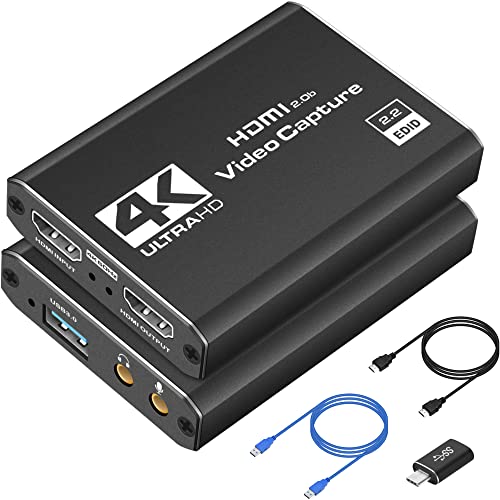
- 1080p60 capture from a 4K HDMI source
- Plug-and-play support for Windows and macOS
- HDMI loop-out and bundled USB adapters
Best For: Beginner console streamers and portable creator setups
Premium 4K Choice

- 4K60 capture with RGB24 on Windows
- HDR/VRR passthrough for high-refresh gaming
- Ultrawide and 5.1 audio support
Best For: Advanced console and PC streamers
Simple Plug-and-Play Pick
acer USB 3.0 HDMI Capture Card

- 4K input with 1080p60 output
- Built-in 3.5mm mic input
- No drivers or external power required
Best For: Budget-conscious streamers and educators
RGB Gaming Value
Fifine AmpliGame V3 Capture Card

- 1080p60 capture over USB 3.0
- 4K30 HDMI loop-out
- Headset, LINE IN, and RGB lighting
Best For: Console gamers streaming in Full HD
Best Value 4K Loop-Out – Plug-and-Play Capture Card
This capture card for streaming is a flexible choice for console gaming, cameras, meetings, and recording. It accepts up to 4K60 HDMI input with loop-out, captures up to 1080p60 over USB 3.0, and includes a mic input for commentary.
Best For: Streamers who want broad device compatibility, low-latency gameplay, and useful 4K loop-out without external power.
Pros:
- Supports 4K60 HDMI input and loop-out, with up to 1080p60 capture.
- Plug-and-play design works with Windows, macOS, Linux, Android, OBS, Streamlabs, and other listed platforms.
- Includes USB-A and USB-C connectivity plus a 3.5mm mic input.
Cons:
- Does not support 4K120 or 4K144 input.
- Mic input does not record party chat.
- Audio setup may require restarting OBS Studio.
With its loop-out, wide compatibility, and included adapter, this model offers a practical all-around setup. Its capture ceiling is 1080p60, so it is better suited to standard HD streaming than native 4K recording.
Best for Camera Streaming – Elgato Cam Link 4K
The Elgato Cam Link 4K is a focused capture card for streaming from a DSLR, mirrorless camera, camcorder, action camera, or compatible iPhone. It connects over USB 3.0 and supports 1080p60 or 4K60 with ultra-low latency.
Best For: Creators who want to turn a compatible camera into a high-quality webcam or live production source.
Pros:
- Supports 1080p60 and 4K60 video capture with compatible equipment.
- Ultra-low latency helps keep video and audio in sync.
- Compact design works with PC, Mac, and iPad, and is compatible with OBS, Zoom, and Discord.
Cons:
- Its main focus is camera connectivity rather than console-oriented features.
- 4K60 requires a compatible camera and the latest Cam Link 4K model.
- USB 3.0 connectivity is the listed hardware interface.
This is a streamlined option for camera-based streaming rather than a feature-heavy game-capture hub. Choose it when image quality, compactness, and low latency matter more than mic inputs or HDMI loop-out.
Best Flexible Connectivity – USB 3.0 HDMI Capture Card
This capture card for streaming combines 4K60 HDMI loop-out with USB 3.0 capture at up to 1080p60 or 2K30. Its USB-A/USB-C cable, aluminum body, and mic input make it a practical fit for consoles, cameras, and computer-based streaming.
Best For: Streamers who need flexible USB connectivity, 4K pass-through, and external voice commentary.
Pros:
- Supports 4K60 input and loop-out while capturing up to 1080p60 or 2K30.
- Dual USB-A/USB-C support simplifies connection to compatible computers and devices.
- Includes a 3.5mm mic input and works with OBS, Zoom, VLC, and listed consoles and cameras.
Cons:
- Capture output does not reach 4K; the listed maximum is 1080p60 or 2K30.
- Mic input does not record party chats.
- OBS may need to be restarted after audio setup.
The dual-port cable and strong pass-through support give this model useful setup flexibility. It is a good middle ground for HD streaming, though users seeking native 4K capture will need a higher-spec device.
Best for High-Frame-Rate Gaming – Elgato 4K S
The Elgato 4K S is a premium capture card for streaming modern console gameplay. It supports 4K60 capture, HDR10, and high-frame-rate pass-through at 1440p120 or 1080p240, making it well suited to fast-paced gaming setups.
Best For: PS5, Xbox Series X/S, and Switch 2 users who prioritize high-resolution capture, HDR, and high-refresh gameplay.
Pros:
- Captures 4K60 video with HDR10 support and tone mapping on Windows.
- Passes through 1440p120 or 1080p240 for high-refresh gaming.
- Includes analog audio input for in-game chat or commentary and supports Windows, macOS, and iPadOS.
Cons:
- Listed system requirements are comparatively demanding, including Windows 11 or macOS 13 and later.
- Requires a USB 3.0 Type-C connection.
- The listed capture resolution detail specifies 1080p, despite the product’s 4K60 capture feature.
This is the strongest fit for current consoles and high-refresh displays, especially when HDR and 4K recording are priorities. Verify your computer, USB-C port, and display chain before buying to take advantage of its higher-end features.
Best Portable Pick – 4K USB 3.0 HDMI Capture Card
This compact capture card for streaming supports up to 1080p at 60Hz output, with HDMI input up to 4K at 30Hz. Its USB 3.0 and USB-C connectivity, plug-and-play setup, and compatibility with OBS, Twitch, YouTube, Windows, macOS, Linux, and Android make it a flexible option for everyday recording and live broadcasts.
Best For: Portable streaming, online meetings, gameplay recording, and creators who need USB-C or USB 3.0 connectivity.
Pros:
- Captures 1080p video at up to 60Hz and supports 2K at 30Hz output.
- Compact, lightweight aluminum-alloy design with no external power supply required.
- Works with common devices and software, including consoles, cameras, OBS, Zoom, and VLC.
Cons:
- It is designed for HDMI-to-USB capture and is not intended to cast directly to a monitor or TV.
- USB 3.0 is recommended for the best available bandwidth and resolution.
- Audio setup in OBS may require restarting the software, and video decoding introduces millisecond-level latency.
This model is a practical choice when portability and broad compatibility matter more than advanced passthrough features. Check your computer’s port and remember that it requires capture software to function.
Best Premium Internal Card – Elgato 4K Pro Internal Capture Card
For demanding PC-based setups, this internal capture card for streaming combines HDMI 2.1 connectivity with 8K60 passthrough and 4K60 capture. It is built for Windows 10 systems with an available PCIe slot and supports popular broadcasting apps such as OBS, Streamlabs, Twitch Studio, Zoom, and Teams.
Best For: Serious PC streamers, dual-PC setups, and gamers who want high-resolution passthrough with VRR support.
Pros:
- Supports 8K60 passthrough and 4K60 capture for high-end gaming and broadcasting.
- HDMI 2.1 connectivity supports up to 1080p240 recording and high frame rates.
- VRR passthrough and ultra-low latency help keep gameplay smooth and synchronized.
Cons:
- Requires a Windows 10 computer with an available PCIe slot.
- Internal installation is less portable and less convenient than a USB capture device.
- The supplied details specify 1080p video capture capability in the system requirements, so verify your configuration before purchase.
The Elgato 4K Pro is the strongest fit here for a permanent, performance-focused streaming computer. Its PCIe design and Windows requirement make it less suitable for laptops or quick plug-and-play travel setups.
Best Beginner USB Pick – 1080p60 HDMI Capture Device
This capture card for streaming offers 1080p at 60FPS from a 4K HDMI source, with plug-and-play USB 3.0 connectivity and support for OBS Studio, Streamlabs, and XSplit. It also works with HDMI devices such as PS5, Xbox, Nintendo Switch, PCs, and DSLR cameras, making it a straightforward choice for new creators.
Best For: Beginners, console streamers, and content creators who want a compact USB setup with 4K preview and HDMI passthrough.
Pros:
- Captures smooth 1080p video at 60FPS from a 4K HDMI source.
- Plug-and-play operation works with Windows and macOS without additional drivers.
- Includes 4K HDMI real-time preview, HDMI loop-out, and bundled connection adapters.
Cons:
- Requires a USB 3.0 port for operation.
- Its capture output is 1080p at 60FPS rather than native 4K capture.
- Low-latency performance is designed to minimize delay, but the supplied details do not specify an exact latency figure.
This is a well-rounded USB option for console and camera streaming when simple setup and portability are priorities. Confirm that your computer has USB 3.0 before ordering, especially if you plan to use the included adapter.
Premium 4K Choice – AVerMedia Live Gamer ULTRA S
The AVerMedia Live Gamer ULTRA S is a high-end capture card for streaming setups that need 4K recording, smooth passthrough, and broad gaming support. It captures up to 4K60 and supports HDR, VRR, ultrawide inputs, and multiple operating systems.
Best For: Advanced PC and console streamers who want 4K60 capture with HDR/VRR passthrough.
Pros:
- Captures video at up to 4K60 with RGB24 full-color support on Windows.
- Passes through 4K60, 1440p144, or 1080p240 with HDR and VRR.
- Supports ultrawide resolutions and 5.1-channel audio on Windows.
- Works with consoles, PCs, Macs, and iPads using compatible systems.
Cons:
- Its advanced features may be more than casual streamers need.
- 5.1-channel audio capture is specified for Windows workflows.
This is the strongest option here for creators building a premium, high-refresh gaming workflow. Its 4K60 capture and passthrough features make it especially well suited to modern consoles and gaming monitors.
Simple Plug-and-Play Pick – acer USB 3.0 HDMI Capture Card
The acer USB 3.0 HDMI Capture Card is a practical capture card for streaming at 1080p60. It accepts 4K HDMI input, includes HDMI loop-out, and adds a microphone input for commentary without requiring extra drivers or external power.
Best For: Streamers, teachers, and creators who want an affordable, portable setup with straightforward connectivity.
Pros:
- Supports 4K input and 1080p at 60Hz output.
- Includes a 3.5mm mic-in for direct voice commentary.
- Plug-and-play design requires no extra drivers or external power.
- Works with OBS, XSplit, VLC, major platforms, and numerous consoles and cameras.
Cons:
- Capture resolution is listed up to 1080p rather than 4K.
- A USB 3.0 port is required for USB 3.0 performance.
For everyday streaming and recording, this acer model emphasizes ease of use and flexible compatibility rather than premium 4K capture. Its built-in mic input is particularly convenient for commentary and online instruction.
RGB Gaming Value – Fifine AmpliGame V3 Capture Card
The Fifine AmpliGame V3 is a versatile capture card for streaming that records 1080p video at 60fps while providing 4K30 HDMI loop-out for low-latency gameplay. It also includes LINE IN, headset connectivity, and customizable RGB lighting.
Best For: Console gamers and creators who want smooth 1080p streaming with convenient audio ports and RGB styling.
Pros:
- Captures smooth 1080p footage at 60fps through USB 3.0.
- Offers 4K30 HDMI loop-out for delay-free monitor passthrough.
- Includes LINE IN and headset ports for gameplay communication.
- Provides nine RGB lighting modes and supports OBS, Twitch, YouTube, and Discord.
Cons:
- Capture resolution is limited to 1080p.
- The manufacturer recommends using the original USB cable for best performance.
- Some display issues may require consulting the manual and troubleshooting guide.
The Fifine is a well-rounded choice for gamers who prioritize smooth Full HD capture and a convenient audio layout. Its RGB lighting adds desk appeal, while 4K loop-out helps preserve a responsive gameplay experience.
How We Picked the Best Capture Card for Streaming
We selected these models to represent the main ways people use a Capture Card for Streaming: recording console gameplay, bringing a DSLR or camcorder into a broadcast, capturing PC video, and adding a reliable HDMI input to a creator setup. We considered supported input and output resolutions, frame rates, passthrough features, connection type, platform compatibility, and the practical needs of live production.
Because specifications can vary by source device and software, confirm the manufacturer’s requirements before buying. A card may support 4K passthrough while capturing at 1080p, for example, or require a compatible USB 3.0 port for its advertised performance.
Quick Comparison
- Best for simple USB streaming: A basic USB 3.0 HDMI capture card is often sufficient for 1080p gaming and occasional broadcasts.
- Best for mirrorless and DSLR cameras: Elgato Cam Link 4K is designed to turn a compatible camera’s HDMI output into a webcam-style video source.
- Best for 4K console setups: Elgato 4K S, AVerMedia Live Gamer ULTRA S, and similar models prioritize high-resolution passthrough and responsive gameplay.
- Best for desktop power users: The Elgato 4K Pro internal card is suited to compatible desktop PCs that need advanced capture and passthrough capabilities.
- Best for a budget creator setup: The Acer and Fifine options may be appealing when you need HDMI capture without the cost or complexity of a premium card.
Key Buying Factors for a Capture Card for Streaming
Capture Resolution and Frame Rate
Choose based on what you actually plan to broadcast. 1080p at 60 frames per second remains a strong target for gaming streams, while 4K capture is useful for recording, editing, and future-proofing. Check whether the listed 4K specification applies to capture, passthrough, or both.
Passthrough and Latency
HDMI passthrough lets you play on a monitor or TV while the computer receives the capture feed. Look for the resolution and refresh rate your console or PC uses, especially if you play at 120Hz. Low-latency passthrough is important for timing-sensitive games.
Connection and Compatibility
USB models are portable and easy to move between computers, but they need an appropriate USB 3.0 connection and sufficient bandwidth. Internal PCIe cards can offer a cleaner permanent installation, although they require an open compatible slot and desktop access.
Audio, Software, and HDCP
Confirm how the card handles HDMI audio, microphone mixing, camera sources, and your preferred software such as OBS or other streaming platforms. Protected content using HDCP generally cannot be captured, so these devices are intended for compatible cameras, consoles, and unprotected sources.
Who Should Buy Which Capture Card for Streaming?
New streamers should start with a straightforward USB 3.0 model that supports 1080p60 and works with their operating system. Console players should prioritize passthrough resolution, refresh-rate support, and low latency. Camera-based creators should choose a model designed for clean HDMI camera output and verify that the camera can disable overlays and remain powered for long sessions. 4K enthusiasts and professional creators should consider higher-end cards with the required capture, passthrough, HDR, and refresh-rate support. Finally, portable creators will usually benefit from an external USB card, while a dedicated desktop broadcaster may prefer the stability and features of an internal PCIe solution.