Reliable microphones help worship leaders, pastors, choirs, and speakers stay clear and mobile throughout a service. The best wireless microphones for church balance signal stability, coverage, sound quality, and simple setup.
We compared these 10 systems by channel capacity, wireless range, microphone options, receiver features, and practical value for churches of different sizes.
Best 10 Wireless Microphones for Church Picks for 2026
Best for Large Services
8-Channel Auto-Scan UHF System

- Eight selectable UHF channels with auto scan
- 290–328-foot stated line-of-sight range
- Includes eight metal handheld microphones
Best For: Large churches and multi-speaker services
Best for JBL PartyBox Setups
Dual Wireless Microphone System
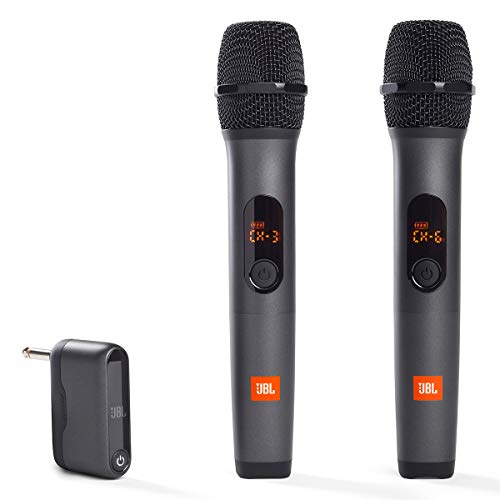
- Two microphones share a dual-channel UHF receiver
- Plug-and-play operation
- Uses replaceable AA batteries
Best For: Small gatherings with compatible JBL PartyBox speakers
Best for Four-Mic Flexibility

- Four selectable UHF channels
- Individual XLR and mixed 1/4-inch outputs
- 14–17-hour stated battery life
Best For: Small to midsize churches needing four microphones
Best for Fixed Installations

- Four fixed UHF frequencies for simple setup
- Four XLR outputs with individual volume controls
- Metal construction and memory switch
Best For: Churches with established sound systems
Best All-in-One Kit
TONOR Wireless Microphone System

- Includes handheld, headset, and lavalier microphones
- Up to 200-foot operating range
- Automatic pairing and multiple connection options
Best For: Churches needing varied microphone styles for services and events
Best for Large Groups

- Six handheld microphones included
- Six XLR outputs plus 1/4-inch mixed output
- 200-foot line-of-sight range
Best For: Churches coordinating choirs, panels, and multi-speaker events
Best for Frequency Management
Phenyx Pro PTU-71-2H Dual UHF System

- Auto Scan helps reduce frequency interference
- Up to 328-foot line-of-sight range
- Two handheld microphones with selectable UHF frequencies
Best For: Churches needing dependable dual-mic operation in complex RF environments
Best Multi-Mic Value

- Four handheld microphones included
- 200-foot coverage with frequency hopping
- Supports up to eight systems
Best For: Churches needing an affordable four-microphone setup
Best for Large Setups

- Auto Scan selects lower-interference frequencies
- Supports up to 16 transmitters
- 290–328-foot line-of-sight range
Best For: Churches managing larger services or multiple wireless systems
Best Simple Fixed-Frequency Option
innopow WM-400 4-Channel System

- Four durable metal handheld microphones
- Individual XLR and mixed 1/4-inch outputs
- 14–17 hours of battery life
Best For: Small churches using one standalone four-mic system
Best for Large Services – 8-Channel Auto-Scan UHF System
For churches needing several handhelds at once, this Phenyx Pro system combines eight UHF channels with auto scanning to help identify frequencies with less interference. Its cardioid microphones, long stated line-of-sight range, and metal construction make it a flexible option for worship services, presentations, and larger events.
Best For: Large churches, multi-speaker services, and venues that need eight wireless microphones.
Pros:
- Eight channels with 8×40 selectable UHF frequencies and auto scan.
- Stated 290–328-foot line-of-sight operating range.
- Cardioid pickup, IR synchronization, mute controls, and replaceable microphone heads.
- Includes eight handheld microphones, batteries, antennas, and connection accessories.
Cons:
- Requires an amplifier, mixer, PA system, or speaker for sound output.
- The eight-microphone configuration may be more equipment than smaller congregations need.
This is the most expandable choice in the group, particularly when multiple presenters or vocalists need dedicated channels. Auto scanning and frequency locking can simplify setup, while the included accessories support a relatively complete installation.
Best for JBL PartyBox Setups – Dual Wireless Microphone System
Churches using a compatible JBL PartyBox can get a straightforward two-microphone setup with this JBL wireless system. It is designed for plug-and-play operation, mixes both microphones through a dual-channel UHF receiver, and uses replaceable AA batteries in the handheld units.
Best For: Small gatherings, announcements, and worship or event setups built around compatible JBL PartyBox speakers.
Pros:
- Two microphones can be used together through the dual-channel receiver.
- Simple setup: turn on the receiver and microphones to begin.
- Designed for compatibility with listed JBL PartyBox models.
- Handheld microphones use replaceable AA batteries.
Cons:
- Compatibility is centered on listed JBL PartyBox speakers.
- Only two microphones are included.
- Its stated six-hour playback applies when connected to the supported speaker setup.
This is a convenient pick when your church already relies on a compatible JBL PartyBox. For larger sound systems or installations requiring multiple independent outputs, a multi-channel UHF rack-style system may be a better fit.
Best for Four-Mic Flexibility – WM500 Quad UHF System
The innopow WM500 is a practical middle ground for churches that need four wireless microphones without moving to an eight-channel system. Each channel offers selectable frequency groups, and the receiver provides both individual XLR outputs and a mixed 1/4-inch output for flexible connection to church audio equipment.
Best For: Small to midsize churches, worship teams, conferences, and events needing four handheld microphones.
Pros:
- Four UHF handheld microphones with selectable frequency groups.
- Auto scan and manual pairing support setup and multi-system use.
- Includes two individual XLR outputs plus one mixed 1/4-inch output.
- Stated 14–17-hour battery life and 180–240-foot open-area range.
Cons:
- A power amplifier may be needed for the best results, according to the supplied notes.
- The stated operating range is lower than the longest-range option here.
- Four microphones may be excessive for a basic single-speaker setup.
With four channels and multiple output options, the WM500 suits churches that want room to grow while keeping the system manageable. Its frequency controls are useful where several wireless systems operate nearby.
Best for Fixed Installations – PTU-5000-4H Quad UHF System
For churches that prefer a predictable, ready-to-use configuration, this four-channel Phenyx Pro system uses fixed UHF frequencies and individual volume controls. Its cardioid dynamic microphones, LCD frequency display, memory switch, and four XLR outputs make it suited to repeatable services and established audio setups.
Best For: Churches with a fixed sound system, recurring services, and four presenters or vocalists.
Pros:
- Fixed frequencies provide a straightforward plug-and-go configuration.
- Individual volume controls and four XLR outputs support channel-by-channel balancing.
- Cardioid dynamic microphones help reject unwanted noise and reduce feedback.
- All-metal construction, memory switch, and snap-on BNC antennas support regular use.
Cons:
- Fixed-frequency operation offers less flexibility than selectable-frequency systems.
- Stated battery operation is up to eight hours.
- Not intended for multiset operation and requires an amp or speaker for output.
This system makes sense when the church has a stable venue setup and values quick, repeatable operation over frequency customization. The individual outputs are especially useful when each microphone needs separate control at the mixer.
Best All-in-One Kit – TONOR Wireless Microphone System
For churches needing several microphone formats in one package, this TONOR system is a versatile choice. It includes handheld, headset, and lavalier microphones, with a stated operating range of up to 200 feet and automatic pairing for simpler setup.
Best For: Churches using microphones for services, presentations, classes, and events with varied speaker needs.
Pros:
- Includes two handheld microphones, two bodypacks, two headsets, and two lavalier microphones.
- Cardioid dynamic capsules are designed to provide clear sound while reducing background noise and howling.
- Supports up to 40 simultaneous sets according to the supplied specifications.
- Works with mixers, amplifiers, powered speakers, and karaoke machines through the included 1/4-inch cable.
Cons:
- AA batteries are required for the microphones and bodypacks but are not included.
- The package uses a 1/4-inch audio connection rather than offering a stated XLR cable in the box.
This is a practical wireless microphones for church option when flexibility matters more than having only handheld units. Its broad accessory mix makes it suitable for services with pastors, readers, presenters, and performers.
Best for Large Groups – PRORECK MX66 6-Channel System
The PRORECK MX66 is built for churches that need six handheld microphones at once. Its UHF receiver provides separate volume controls, six XLR outputs, and a mixed 1/4-inch output for connecting with many amplifiers, mixers, and powered speakers.
Best For: Choirs, panels, conferences, and church events requiring multiple simultaneous handheld speakers.
Pros:
- Includes six handheld microphones and a six-channel receiver.
- Offers a stated 200-foot line-of-sight operating range.
- Provides six XLR outputs plus one 1/4-inch mixed output.
- Features separate volume controls, a large LCD display, signal indicators, and eight EQ modes.
Cons:
- Each microphone requires two AA batteries, which are not included.
- The supplied notes state that two sets cannot be used together.
- All microphones are handheld, so headset and lavalier formats are not included.
Among wireless microphones for church, this system stands out for capacity and output flexibility. It is especially useful when several people need dedicated handheld microphones, though its multi-set limitation should be considered before expansion.
Best for Frequency Management – Phenyx Pro PTU-71-2H Dual UHF System
The Phenyx Pro PTU-71-2H is a dual-handheld system designed for reliable operation in busy wireless environments. Its auto-scan function searches for a lower-interference frequency, while selectable UHF channels, IR synchronization, and a stated range of up to 328 feet support flexible church setups.
Best For: Churches that prioritize frequency selection, long line-of-sight range, and two handheld microphones.
Pros:
- Auto Scan helps identify frequencies with less interference.
- Offers two 100-frequency UHF ranges and supports multiset operation of up to 16 transmitters.
- Provides a stated 290- to 328-foot line-of-sight operating range.
- Metal construction, mute functions, battery indicators, and replaceable microphone heads add practical durability and control.
Cons:
- The package includes two handheld microphones only, with no headset or lavalier option listed.
- The stated operating distance is line of sight, so building layout can affect real-world coverage.
This is a strong fit for churches seeking wireless microphones for church use with more frequency-management control than a basic fixed-channel setup. It is a focused two-microphone solution rather than a complete multi-format kit.
Best Multi-Mic Value – MELONARE 4-Channel UHF System
For churches needing several wireless microphones for church services, the MELONARE system combines four handheld transmitters with 200-foot coverage and a compact receiver. Its cardioid pickup pattern, frequency hopping, and color-coded controls support straightforward operation for speaking, singing, and larger gatherings.
Best For: Churches that need four microphones for services, events, worship teams, or presentations.
Pros:
- Includes four handheld microphones and supports up to eight systems simultaneously.
- Offers 200-foot UHF coverage with frequency hopping for clearer transmission.
- Provides 24-bit/48kHz audio, cardioid pickup, and convenient color-coded controls.
- Compact receiver and included cables make setup and transport simple.
Cons:
- Uses a 1/4-inch audio connection rather than listing individual XLR outputs for each microphone.
- Requires eight AA batteries for the four transmitters.
The MELONARE is a practical choice when a church wants a complete four-microphone package without a complicated installation. Its coverage and multi-system support are especially useful for flexible event setups.
Best for Large Setups – Phenyx Pro PTU-7000-4H
The Phenyx Pro PTU-7000-4H is designed for churches that need reliable coordination across multiple wireless microphones for church use. Auto Scan, IR synchronization, selectable UHF frequencies, and a stated 290- to 328-foot line-of-sight range make it well suited to larger or more demanding setups.
Best For: Churches, stages, and event spaces that prioritize frequency flexibility and long-range operation.
Pros:
- Auto Scan helps identify lower-interference frequencies, while the lock function helps preserve settings.
- Offers 4×40 selectable UHF frequencies and supports up to 16 transmitters in multiset operation.
- IR synchronization pairs the receiver and microphones quickly.
- Metal construction, mute controls, cardioid pickup, and replaceable microphone heads add practical versatility.
Cons:
- Its broader frequency and multiset features may be more than a small church needs.
- The receiver uses external antennas, adding some setup hardware compared with integrated-antenna designs.
With stronger frequency-management tools and longer stated range than many basic systems, the Phenyx Pro is the most scalable option here. It is a compelling fit where multiple systems, changing venues, or interference management are important.
Best Simple Fixed-Frequency Option – innopow WM-400 4-Channel System
The innopow WM-400 offers four metal handheld microphones, individual channel volume controls, and 150–200 feet of range. For churches seeking practical wireless microphones for church services, its straightforward fixed-frequency design can work well in a stable, single-system installation.
Best For: Small churches and venues wanting a durable four-microphone system for regular use.
Pros:
- Includes four handheld microphones with individual volume control.
- Metal housing supports durability, while the internal antenna keeps the receiver tidy.
- Provides 150–200 feet of open-area range and 14–17 hours of battery life.
- Includes two individual XLR outputs plus a mixed 1/4-inch output.
Cons:
- Fixed-frequency design cannot be used simultaneously with multiple units.
- Its stated range is shorter than the Phenyx Pro system.
- Only one pair of antennas is included with the receiver.
The WM-400 is a sensible choice for a church that wants four microphones and flexible output connections without needing advanced frequency scanning. Its main limitation is the fixed-frequency architecture, so it is best treated as a standalone system.
How We Picked the Best Wireless Microphones for Church
We focused on the features that matter during real services rather than judging systems by microphone count alone. Our comparison considered UHF signal performance, channel capacity, operating range, receiver design, microphone type, setup controls, and compatibility with common mixers and powered speakers.
We also included systems for different needs: compact two-microphone kits, four-channel setups for worship teams, and larger systems suited to choirs, productions, or multi-speaker events. Auto-scan functionality earned attention because it can simplify frequency selection, while fixed-frequency models may offer practical value in controlled environments.
Quick Comparison
| Church need | Recommended system type | What to prioritize |
|---|---|---|
| Pastor and occasional guest speaker | Two-channel handheld system | Easy setup, clear audio, dependable range |
| Worship team or small congregation | Four-channel UHF system | Multiple microphones, frequency flexibility |
| Choir, stage production, or large events | Six- or eight-channel system | Channel capacity, receiver organization, interference control |
| Presenters needing hands-free operation | Headset and lapel-compatible system | Input options, comfort, vocal clarity |
Key Buying Factors for Wireless Microphones for Church
Channel Count and Future Needs
Choose enough channels for the people who may speak or sing at the same time, then leave room for growth. A two-channel kit can be sufficient for sermons and announcements, while four or more channels are better for worship teams, choir sections, and rotating speakers.
Frequency Management
Auto-scan systems can locate cleaner frequencies and make installation easier, especially in buildings with Wi-Fi equipment and other wireless devices. Fixed-frequency systems can work well when the venue has a stable setup, but they require more care if interference appears.
Range and Signal Stability
Advertised range varies by building layout and interference. For most churches, prioritize stable performance through walls and across the sanctuary rather than choosing solely by the longest stated distance. Keep the receiver visible and use quality cables to connect it to the sound system.
Microphone Style and Sound Control
Handheld microphones are versatile for singers and speakers. Headset and lapel microphones keep hands free for teaching, presentations, or instruments. Dynamic microphones are generally forgiving on stage, but placement, gain settings, and speaker positioning still determine whether the system sounds clean.
Power, Installation, and Compatibility
Check battery requirements, receiver outputs, included accessories, and available mixer inputs before buying. Churches using multiple systems should also confirm that the selected frequencies can operate together without interference. A sound volunteer should be able to identify channels quickly and replace batteries without interrupting a service.
Who Should Buy Which Wireless Microphones for Church?
Choose a two-channel system for a small church, pastor, or occasional event where simplicity matters most. Select a four-channel model for regular worship services with several singers, speakers, or musicians. Larger six- and eight-channel systems make more sense for churches hosting productions, conferences, or multiple simultaneous performers.
If presenters need mobility or hands-free delivery, choose a system that includes headset or lapel options. For churches with changing venues, crowded RF environments, or less technical staff, auto-scan functionality is especially useful. Before purchasing, confirm local wireless-frequency rules, test the system in the actual sanctuary, and leave enough budget for spare batteries, cables, and microphone stands.