The best voice recorders for interviews make it easier to capture accurate answers without constantly taking notes. This roundup compares compact digital recorders, high-capacity models, and AI-powered options with transcription and summarization features.
Consider recording quality, battery life, storage, controls, and how quickly you need searchable notes after an interview. The right choice depends on whether you prefer dependable standalone recording or a connected AI workflow.
Best 10 Voice Recorders for Interviews Picks for 2026
Reliable Classic

- MP3 recording with 4GB storage
- Up to 57 hours of battery life
- Built-in USB for PC transfers
Best For: Simple interviews and everyday voice recording
AI Productivity Pick

- Transcribes and summarizes recordings
- Ask questions across captured meetings
- 64GB storage with four-day battery
Best For: Interview workflows that benefit from AI notes and action items
High-Capacity Workhorse
EVISTR L357 64GB Voice Recorder

- 64GB storage with WAV and MP3 support
- Seven-level gain and voice activation
- Up to 32 hours of continuous recording
Best For: Long interviews requiring local storage and recording controls
Professional AI Notes
Comulytic Note Pro AI Recorder

- AI transcription, summaries, and action items
- 64GB storage with fast Wi-Fi syncing
- Up to 45 hours of continuous recording
Best For: Professional interviews that need organized transcripts and follow-up notes
High-Capacity Pick
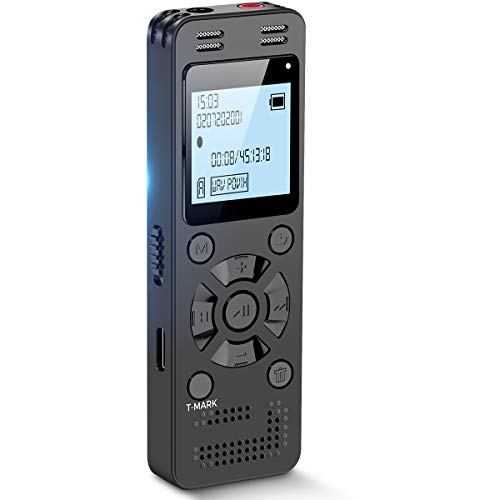
- 1536 kbps PCM recording
- Up to 9,296 hours of MP3 storage
- Voice activation and password protection
Best For: Interviewers needing extensive storage and organized file management
AI Transcription Pick
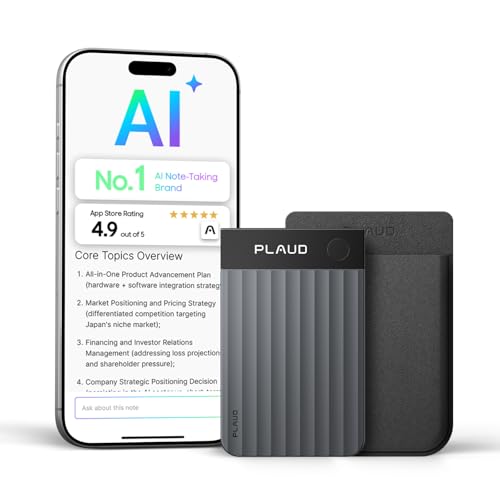
- Transcribes in 112 languages
- Summarizes interviews into action items
- Slim 1.06-ounce design
Best For: Professionals who need searchable transcripts and structured interview notes
Long-Battery Pick
Tonfarb 136GB Digital Voice Recorder

- Up to 68 hours of recording
- 1536 kbps PCM with noise reduction
- One-click recording and USB-C transfer
Best For: Extended interviews, meetings, and field recording sessions
Best AI-Enabled Interview Recorder

- 3072Kbps recording with noise reduction
- AI transcription and summaries in 113 languages
- 128GB storage with wired OTG transfers
Best For: Interviewers needing recording plus AI organization
Best Value Stereo Interview Recorder
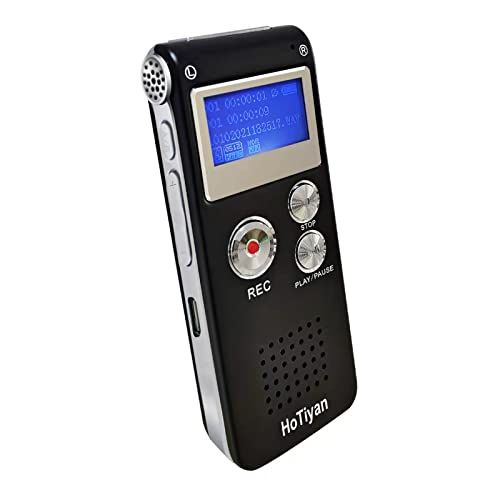
- HD stereo recording with noise reduction
- Voice activation reduces silent sections
- A-B repeat and variable playback speed
Best For: Straightforward stereo recording and review
Best Simple Long-Battery Recorder
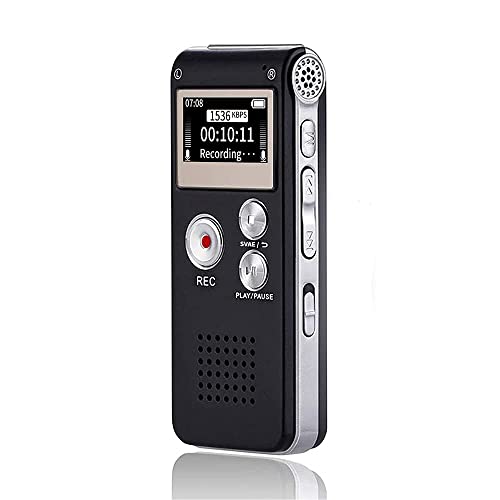
- Simple REC, STOP, and PLAY controls
- DSP noise reduction for clearer speech
- More than 30 hours of continuous recording
Best For: Users wanting uncomplicated extended recording
Reliable Classic – Sony ICD-PX370
Sony ICD-PX370 Mono Digital Voice Recorder with Built-In USB Voice Recorder,black
Check Price On AmazonFor shoppers comparing voice recorders for interviews, the Sony ICD-PX370 is a straightforward option focused on simple MP3 recording, dependable battery life, and easy computer transfers. Its built-in USB connection reduces cable clutter when moving files to a PC.
Best For: Interviewers who want a familiar, no-frills recorder with long battery life and direct USB file transfer.
Pros:
- Records in MP3 format for easy playback and sharing
- Up to 57 hours of battery life
- Built-in USB connection for quick PC transfers
- 4GB of internal storage and a built-in microphone
Cons:
- Uses two AAA alkaline batteries rather than a rechargeable battery
- Mono recording may be less suitable for spacious group audio
- Includes a 2.5mm headphone jack rather than the more common 3.5mm size
The ICD-PX370 favors simplicity over advanced workflow features. It is a practical pick for routine interviews when you primarily need clear file creation, extended recording time, and easy transfer to a computer.
AI Productivity Pick – Pocket AI Voice Recorder
Among voice recorders for interviews, the Pocket AI Voice Recorder stands out for turning conversations into searchable notes. One-tap recording is paired with automatic transcription, summaries, action items, and the ability to ask questions about recorded meetings.
Best For: Interviewers and professionals who want recording plus AI-assisted summaries and follow-up tasks.
Pros:
- One-tap recording for meetings, calls, and in-person conversations
- Automatically creates transcripts, summaries, and action items
- Ask Pocket can answer questions grounded in recordings
- 64GB storage and up to four days of battery life
Cons:
- Advanced features may require an optional subscription
- Built-in AI workflow is more dependent on the companion device or service than a basic recorder
- MagSafe attachment is most convenient with compatible phones or devices
This is less of a traditional standalone dictaphone and more of a connected note-taking tool. Choose it if reducing interview review time matters as much as capturing the original conversation.
High-Capacity Workhorse – EVISTR L357 64GB Voice Recorder
For voice recorders for interviews that prioritize storage and control, the EVISTR L357 offers 64GB of capacity, adjustable recording gain, voice activation, and WAV or MP3 recording. Its simple controls and included USB-C cable also make it practical for frequent lecture, meeting, and interview use.
Best For: Users who need substantial local storage, flexible recording settings, and playback controls for long interview sessions.
Pros:
- 64GB storage can hold up to 4,660 hours at 32Kbps according to the supplied specifications
- Adjustable seven-level gain and voice-activated recording
- Supports WAV and MP3 formats with up to 1536kbps stereo recording
- Up to 32 hours of continuous recording and USB-C file transfer
Cons:
- Voice activation may omit quiet pauses or softly spoken portions if sensitivity is not set carefully
- Its many playback and scheduling options may require more setup than a basic recorder
- High-quality recording settings will use storage more quickly than the stated maximum
The L357 is a strong conventional recorder for buyers who want hands-on control rather than cloud-based transcription. It is especially useful when you want files stored locally and the flexibility to balance quality, recording length, and silent-segment reduction.
Professional AI Notes – Comulytic Note Pro AI Recorder
For shoppers seeking voice recorders for interviews with a modern productivity layer, the Comulytic Note Pro combines one-tap recording with AI transcription, summaries, action items, and Wi-Fi syncing. Its triple-microphone array, noise cancellation, and 64GB local storage are designed for work conversations and interviews.
Best For: Professionals and journalists who want compact recording hardware with transcription, summaries, and organized follow-up notes.
Pros:
- Triple-mic array with AI noise reduction for sound within five meters
- 64GB local storage and Wi-Fi syncing advertised at up to 10 times Bluetooth speed
- Up to 45 hours of continuous recording and 107 days of standby
- Starter plan includes unlimited transcription and basic summaries according to the supplied notes
Cons:
- Some advanced tools require the optional Premium Plan
- Transcription, cloud features, and organization depend on the Comulytic app and plan
- Its AI-focused workflow may be more than needed for users who only want basic audio files
The Note Pro is aimed at turning interviews into usable work notes rather than leaving you with audio alone. Its local storage and long battery life support extended use, while the app adds transcription and analysis for faster review.
High-Capacity Pick – EVIDA 128GB Voice Recorder
If you need voice recorders for interviews with plenty of storage and straightforward file management, the EVIDA 9296 is a practical option. It supports PCM recording up to 1536 kbps, voice activation, playback, password protection, and computer transfers through USB 2.0.
Best For: Interviewers, students, teachers, and business users who want substantial storage and configurable recording formats.
Pros:
- 128GB capacity can store up to 9,296 hours in MP3 format.
- Supports WAV 1536 kbps, MP3 128 kbps, and MP3 192 kbps recording.
- Voice activation offers six sensitivity levels to reduce silent sections.
- Includes playback, A-B repeat, bookmarks, password protection, and four-folder file organization.
Cons:
- Its built-in microphone is mono rather than stereo.
- The 54-hour continuous recording figure is lower than the total storage capacity may suggest.
- No headphones jack is listed in the specifications.
The EVIDA stands out for storage, flexible audio settings, and organization features. It is a sensible fit for recurring interviews or meetings, especially when you want recordings transferred to a computer and protected with a password.
AI Transcription Pick – Plaud Note Pro Voice Recorder
For voice recorders for interviews that can turn conversations into usable notes, the Plaud Note Pro adds automatic transcription and summaries to the recording process. Its microphone array supports in-person conversations, phone calls, and online meetings, while the connected Plaud apps organize the results.
Best For: Professionals who want interview recordings converted into speaker-labeled transcripts, action items, decisions, and follow-ups.
Pros:
- Four MEMS microphones and one VPU use AI beamforming to capture voices across a room.
- Smart dual-mode recording switches between phone calls and in-person recording.
- Plaud Intelligence transcribes in 112 languages and provides speaker labels and summaries.
- Credit-card-sized design includes a 0.95-inch AMOLED display and weighs 1.06 ounces.
Cons:
- AI transcription and summary usage is subject to the included 300-minute monthly starter allowance or paid upgrades.
- Its connected app and desktop workflow may be more involved than a basic standalone recorder.
- Battery life is listed at 30 hours.
The Plaud Note Pro is the most workflow-focused choice here. It makes sense when the time saved on transcription and structured notes matters more than having a simple recorder with unrestricted local playback.
Long-Battery Pick – Tonfarb 136GB Digital Voice Recorder
The Tonfarb A20 is one of the more practical voice recorders for interviews when long sessions and quick operation are priorities. It combines PCM recording, automatic noise reduction, one-click recording, voice activation, and USB-C file transfers in a pocket-friendly metal body.
Best For: Journalists, students, and interviewers who need extended battery life, simple controls, and flexible MP3 or WAV recording.
Pros:
- Records at up to 1536 kbps PCM with dual noise-reduction microphones.
- Built-in 8GB storage plus a 128GB TF card provides 136GB of listed capacity.
- 1100mAh battery supports up to 68 hours of continuous recording.
- One-click recording, voice activation, password protection, and A-B repeat simplify use.
Cons:
- At approximately 97 to 100 grams, it is heavier than ultra-slim recorders.
- The listed USB hardware interface is USB 2.0, despite the product description mentioning USB-C.
- The 1.44-inch screen is functional but relatively compact.
The Tonfarb is a strong all-around choice for long interviews and back-to-back sessions. Its physical recording switch, long battery rating, and included storage are especially useful when you need to start recording quickly and manage files later.
Best AI-Enabled Interview Recorder – EVISTR L359
The EVISTR L359 is a strong choice among voice recorders for interviews when you want more than an audio file. It combines high-bitrate recording, noise reduction, voice activation, and app-based transcription and summaries in a lightweight design.
Best For: Interviewers, professionals, and students who want recording plus AI transcription and organization tools.
Pros:
- Supports up to 3072Kbps recording with noise reduction.
- AI DVR Link can provide transcription in 113 languages, summaries, mind maps, speaker identification, and Ask AI insights.
- Large 128GB storage, up to 33 hours of continuous recording, and wired OTG transfers.
- One-touch recording, a HOLD switch, and password encryption support convenient, more private use.
Cons:
- The AI features require processing through the AI DVR Link app.
- Its stated continuous recording time is shorter than its total low-bitrate storage capacity might suggest.
This is the most feature-rich option here for interview workflows that include transcription and follow-up organization. The wired phone connection is useful for fast transfers, while the compact 65g build makes it easy to carry.
Best Value Stereo Interview Recorder – HoTiyan H-10001
The HoTiyan H-10001 is a straightforward pick among voice recorders for interviews, meetings, and lectures. Its stereo microphone, noise-reduction function, voice activation, and simple three-button controls cover the essentials without adding an app-based workflow.
Best For: Buyers who want an affordable recorder with stereo capture, adjustable recording quality, and basic playback tools.
Pros:
- Uses a higher-sensitivity microphone and professional recording chip for HD stereo recording.
- Voice activation can reduce silence and conserve storage space.
- 8GB storage supports multiple recording-quality options, with up to 20 hours of continuous recording.
- Includes A-B repeat, variable playback speed, password protection, timestamps, and MP3 playback.
Cons:
- Transfers use a Micro USB cable rather than USB-C.
- Storage is substantially smaller than the 128GB option in this roundup.
The H-10001 offers a useful balance of recording controls and playback features for routine interviews. It is especially practical when stereo recording and easy review matter more than built-in transcription.
Best Simple Long-Battery Recorder – Sunlan 16GB Voice Recorder
The Sunlan 16GB recorder keeps the interview recording process simple: press REC, STOP, and PLAY, then review key passages with A-B repeat. Noise reduction, voice activation, and a sensitive microphone make it a practical basic option among voice recorders for interviews.
Best For: Users who prioritize simple controls, clear voice capture, and a compact recorder for interviews, meetings, or lectures.
Pros:
- One-button recording and built-in speaker make operation and playback uncomplicated.
- Sensitive microphone and DSP noise reduction are designed to capture clearer speech.
- Voice-activated recording can save recording time and reduce power use.
- Offers 16GB storage and more than 30 hours of continuous recording.
Cons:
- Records in WAV format rather than offering the MP3/WAV choice listed for some alternatives.
- Playback is stated at about 7 hours, so extended review may require recharging.
- It does not include the AI transcription and summary features of the EVISTR model.
This recorder is a good fit when dependable basic operation matters most. Its voice activation and long recording time are helpful for extended sessions, while A-B repeat makes it easier to revisit important interview answers.
How We Picked the Best Voice Recorders for Interviews
We focused on the features that matter during real interviews: dependable audio capture, easy controls, practical storage, battery performance, and convenient file transfer. We also considered whether each recorder supports voice activation, playback, built-in USB connectivity, or AI transcription and summaries.
Simple digital recorders can be a strong fit when reliability and low operating complexity matter most. AI voice recorders may save time after an interview, but their transcription features can depend on an app, subscription, internet connection, language support, and speaker clarity.
Quick Comparison
| Type | Best For | What to Look For |
|---|---|---|
| Basic digital recorder | Reliable standalone recording | Clear microphones, playback, battery life, USB transfer |
| High-capacity recorder | Frequent or extended sessions | Storage management, file organization, charging convenience |
| AI recorder | Transcription and meeting notes | App compatibility, transcript accuracy, privacy terms, subscription costs |
Key Buying Factors for Voice Recorders for Interviews
Audio Quality and Microphone Pickup
Prioritize a recorder with clear microphone performance and controls that are easy to operate discreetly. For one-on-one interviews, a built-in microphone may be sufficient. In noisy rooms or group discussions, look for better microphone placement, noise reduction, or compatibility with an external microphone where available.
Storage, Battery, and File Transfer
More storage is useful for frequent recording, but capacity alone does not guarantee a better experience. Check whether files are easy to browse and transfer, and whether the recorder uses USB, a removable card, or an accompanying app. Long battery life and a clear remaining-battery indicator help prevent interruptions.
Transcription, Privacy, and Usability
AI models can turn recordings into searchable text and summaries, making them useful for journalists, researchers, and professionals. Before buying, confirm supported languages, export options, processing requirements, and how recordings are stored. If interviews contain sensitive information, review the provider’s privacy policy and consider a standalone recorder that keeps files locally.
Who Should Buy Which Voice Recorders for Interviews?
Choose a Basic Digital Recorder If…
You want straightforward recording, physical controls, local file storage, and minimal setup. These models are practical for students, interviewers, and anyone who prefers reviewing audio manually.
Choose a High-Capacity Model If…
You record frequently, need extended storage, or want to keep many interviews available before transferring them. Confirm that navigation and file management remain convenient at the stated capacity.
Choose an AI Recorder If…
You value fast transcripts, summaries, and searchable notes more than a purely offline workflow. AI models are especially useful for reporters, consultants, researchers, and meeting-heavy professionals, provided the app and privacy requirements suit your work.