The right subwoofer can add weight, depth, and realism to music without overwhelming the rest of your system. The best models deliver tight, controlled low frequencies that complement your speakers rather than simply producing more bass.
We selected 10 subwoofers for music across compact desktop, bookshelf-speaker, and full-size home audio setups. This guide focuses on power, size, connectivity, placement flexibility, and value so you can choose a better match for your room and listening habits.
Best 10 Subwoofers for Music Picks for 2026
High-Output Pick
Klipsch R-12SW 12-inch Subwoofer

- 12-inch front-firing copper-spun woofer
- 400 watts of dynamic amplifier power
- Adjustable crossover, phase, and line/LFE inputs
Best For: Larger rooms and powerful music or movie bass
Compact Value Pick
Polk Audio PSW10 10-inch Subwoofer
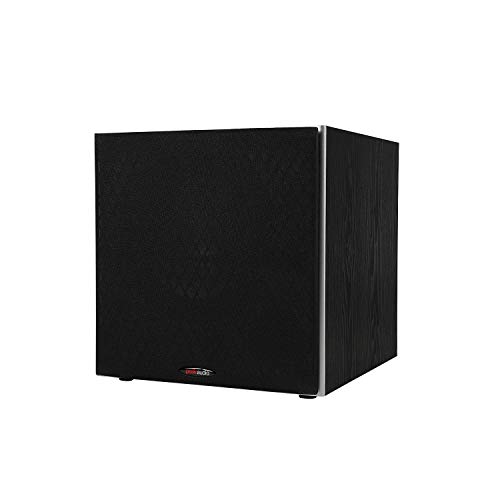
- Compact design for small-to-mid-size rooms
- 10-inch woofer with up to 100 watts of power
- Variable crossover and speaker- or line-level connections
Best For: Affordable bass upgrades in modest-sized rooms
Music-Friendly Cabinet
Fluance DB10 10-inch Powered Subwoofer

- 10-inch long-throw driver for deep, controlled bass
- Ported MDF cabinet supports low-distortion output
- Auto power-on adds everyday convenience
Best For: Music and home theater systems needing refined low-end support
Balanced Performance Pick
Klipsch R-100SW 10-inch Subwoofer

- 10-inch front-firing spun-copper IMG woofer
- 300 watts of peak amplifier power
- Crossover, phase control, and RCA/LFE inputs
Best For: Compact systems needing adjustable, high-impact bass
Best Compact Studio Subwoofer

- 8-inch driver extends bass to 30 Hz
- Bluetooth 5.0 and multiple wired inputs
- Adjustable crossover and room-tuning controls
Best For: Music production and compact listening setups
Best Compact Home Theater Subwoofer

- 8-inch spun-copper woofer
- Down-firing design with digital amplification
- RCA and LFE wired connectivity
Best For: Compact music and home theater systems
Best Flexible 10-Inch Subwoofer

- 10-inch driver with 180W Class-D amplifier
- RCA, LFE, and speaker-level inputs
- Braced cabinet and five-year warranty
Best For: Music and home theater systems needing deeper bass
Room-Friendly Bass

- 8-inch woofer with 100 watts of power
- Twisted flare port for tight bass
- Compact black floor-standing design
Best For: Compact music and home-theater setups
Powerful Front-Firing Bass
Klipsch Sub-100 10-Inch Subwoofer

- 10-inch front-firing Cerametallic woofer
- 150 watts continuous, 300 watts dynamic
- All-digital amplifier with wired RCA connection
Best For: Music and home theater with an AV receiver
Flexible Compact Setup

- 100 watts RMS and 200 watts peak power
- Adjustable crossover and phase controls
- RCA and speaker-level connectivity
Best For: Compact, adjustable home-audio systems
High-Output Pick – Klipsch R-12SW 12-inch Subwoofer
For listeners seeking powerful subwoofers for music, the Klipsch R-12SW combines a large 12-inch front-firing woofer with an all-digital amplifier rated at 400 watts of dynamic power. Its adjustable crossover, phase control, and line/LFE inputs make it practical for integrating into a home audio or theater system.
Best For: Larger rooms and listeners who want strong, room-filling bass for both music and movies.
Pros:
- 12-inch copper-spun front-firing woofer delivers substantial low-end output.
- 400 watts of dynamic amplifier power supports high-impact bass.
- Low-pass crossover, phase control, and line/LFE inputs simplify system matching.
- Designed for both music and movie playback.
Cons:
- The larger cabinet may require more floor space than a compact subwoofer.
- Wired connectivity does not provide wireless placement flexibility.
The R-12SW is the strongest output-oriented option in this group. Its 12-inch driver and 400-watt amplifier favor scale and impact, while the adjustable controls help tailor the bass to your existing setup.
Compact Value Pick – Polk Audio PSW10 10-inch Subwoofer
The Polk Audio PSW10 is a practical choice among subwoofers for music when you want added bass without a large cabinet. Its 10-inch Dynamic Balance woofer, directed port, and compact design suit small-to-mid-size rooms, while the adjustable crossover helps it blend with existing speakers.
Best For: Small-to-mid-size rooms and budget-conscious listeners upgrading a home audio system.
Pros:
- Compact 10-inch design adds bass without demanding extensive floor space.
- 50-watt RMS amplifier provides up to 100 watts of power.
- Continuously variable 80–160 Hz crossover supports flexible speaker integration.
- Includes speaker- and line-level connections plus a phase toggle.
Cons:
- Its 100-watt maximum output is lower than the larger, more powerful options here.
- The listed frequency response is less specific than the other models’ published ranges.
The PSW10 emphasizes easy integration and value rather than maximum output. It is a sensible match for modest spaces, especially when you want fuller low frequencies from an existing stereo or home theater system.
Music-Friendly Cabinet – Fluance DB10 10-inch Powered Subwoofer
Fluance DB10 10-inch Low Frequency Ported Front Firing Powered Subwoofer for Home Theater & Music
Check Price On AmazonThe Fluance DB10 is one of the more music-focused subwoofers for music in this roundup, pairing a 10-inch long-throw driver with a ported MDF cabinet. Its controlled excursion, dedicated amplifier, and auto power-on feature are designed to add deep bass while keeping everyday operation convenient.
Best For: Music and home theater listeners who want a wood-cabinet subwoofer with automatic power management.
Pros:
- 10-inch long-throw driver is designed for deep bass and precise reproduction.
- Ported engineered-MDF cabinet supports a warm, low-distortion presentation.
- 120-watt amplifier provides strong low-frequency output.
- Auto power-on detects an audio signal and turns the unit on or off.
Cons:
- The cabinet is relatively deep at 15.7 inches, which may affect placement.
- It uses wired subwoofer connectivity despite the supplied device compatibility listing.
The DB10 balances bass depth with practical design details. Its long-throw driver and tuned wood cabinet make it appealing for music playback, while auto power-on reduces the need to manage the subwoofer manually.
Balanced Performance Pick – Klipsch R-100SW 10-inch Subwoofer
The Klipsch R-100SW is a compact option for subwoofers for music, using a 10-inch spun-copper IMG woofer and an all-digital amplifier with 300 watts of peak power. Its low-pass crossover, phase control, and RCA line-level/LFE inputs give you the essential tools to match bass with a stereo or theater system.
Best For: Listeners who want a compact Klipsch subwoofer with adjustable controls and substantial peak output.
Pros:
- 10-inch front-firing spun-copper IMG woofer provides deep bass.
- All-digital amplifier delivers 300 watts of peak power and 150 watts continuous power.
- Low-pass crossover and 0/180-degree phase control support system tuning.
- RCA line-level and LFE inputs offer broad receiver compatibility.
Cons:
- Its 32 Hz–120 Hz frequency response does not reach as low on paper as the R-12SW.
- RCA wired connectivity limits placement compared with wireless designs.
The R-100SW offers a useful middle ground between compact size and high-impact bass. It is a strong fit when you want Klipsch’s recognizable driver design and adjustment controls without moving up to a 12-inch cabinet.
Best Compact Studio Subwoofer – PreSonus Eris Sub 8BT
For listeners and creators seeking subwoofers for music, the PreSonus Eris Sub 8BT combines an 8-inch driver with Bluetooth 5.0, flexible wired inputs, and room-tuning controls. Its lowpass and highpass filters help integrate the subwoofer with compact studio monitors, while the front headphone output adds practical convenience.
Best For: Music production, hi-fi listening, and desktop or compact studio setups that need wireless connectivity and adjustable crossover control.
Pros:
- 8-inch driver reaches down to 30 Hz for extended low-frequency response.
- Bluetooth 5.0 plus balanced TRS, RCA, and front-panel aux connections.
- Adjustable high- and low-frequency controls help tailor the sound to the room.
- Front headphone output and built-in amplifier support quick headphone monitoring.
Cons:
- Its compact 8-inch design may offer less output than larger subwoofers.
- The feature set is geared toward studio and desktop use rather than simple plug-and-play home theater.
The Eris Sub 8BT is a versatile choice when accurate bass, connectivity, and setup flexibility matter more than maximum room-filling output. It is especially appealing for compact monitoring systems and music-focused workspaces.
Best Compact Home Theater Subwoofer – Klipsch Reference R-8SW
Klipsch Reference R-8SW Surround Subwoofer, 150 Watts Peak Power (Brushed Black Vinyl, 8-Inch)
Check Price On AmazonThe Klipsch Reference R-8SW is a compact wired option for shoppers comparing subwoofers for music and home theater. Its 8-inch spun-copper woofer, down-firing design, and all-digital amplifier are built to add immersive bass without requiring a large cabinet.
Best For: Home theater and music systems that need a compact, RCA/LFE-connected subwoofer with remote control.
Pros:
- Compact cabinet is easier to place than many larger subwoofers.
- Spun-copper 8-inch woofer provides a distinctive Klipsch driver design.
- Down-firing driver and all-digital amplifier support an immersive bass presentation.
- RCA and LFE connectivity works with common wired audio systems.
Cons:
- It has fewer connection options than models offering Bluetooth or speaker-level inputs.
- The 8-inch design is more suited to compact systems than very large listening rooms.
The R-8SW makes sense for a straightforward home audio or theater setup where compact dimensions and strong bass impact are priorities. Its wired RCA/LFE approach keeps installation familiar, though it is less flexible for wireless or studio-oriented systems.
Best Flexible 10-Inch Subwoofer – Dayton Audio Classic CS1000
The Dayton Audio Classic CS1000 adds a larger 10-inch driver and 180W Class-D amplifier for listeners evaluating subwoofers for music and home theater. Its braced cabinet is designed for tight, accurate bass, while RCA, LFE, and speaker-level inputs make it adaptable to different audio systems.
Best For: Home music and theater systems that need deeper bass, flexible connections, and straightforward tuning.
Pros:
- 10-inch driver and 180W amplifier provide a substantial bass foundation.
- Rigid, braced cabinet is designed to limit boominess and distortion.
- RCA, LFE, and speaker-level inputs support varied system configurations.
- Auto-on operation, included grille, and five-year warranty add practical value.
Cons:
- The larger cabinet takes more floor space than compact 8-inch alternatives.
- It uses wired connections rather than Bluetooth.
- The gray grille is sold separately; the included grille is black.
The CS1000 is the strongest fit here for buyers wanting more driver area and output potential without giving up connection flexibility. Its 10-inch format makes it better suited to fuller home systems, provided you have room for the cabinet.
Room-Friendly Bass – Yamaha NS-SW050BL
The Yamaha NS-SW050BL is a compact, practical choice among subwoofers for music when you want tighter low-end without a large cabinet. Its 8-inch woofer, 100-watt output, and twisted flare port are designed for clear, controlled bass in home entertainment setups.
Best For: Music listeners and home-theater users who want a compact wired subwoofer with a subtle black design.
Pros:
- Twisted flare port contributes to clear, tight bass.
- Advanced YST II technology supports the 8-inch cone woofer.
- Compact floor-standing design fits easily into many rooms.
- Offers 100 watts of dynamic power.
Cons:
- The 8-inch driver may provide less output than larger subwoofers.
- It uses a wired connection rather than wireless subwoofer connectivity.
- Its plastic enclosure may feel less substantial than wood-based designs.
Choose this Yamaha when clean, controlled bass and a compact footprint matter more than maximum room-filling output. Its straightforward wired design makes it a sensible addition to compatible music players and home theaters.
Powerful Front-Firing Bass – Klipsch Sub-100 10-Inch Subwoofer
The Klipsch Sub-100 is built for listeners comparing subwoofers for music who want more driver size and output. Its front-firing 10-inch Cerametallic woofer, 150 watts of continuous power, and all-digital amplifier suit larger home-theater and music systems.
Best For: Home-theater and music systems with an AV receiver, processor, or preamp that need powerful front-firing bass.
Pros:
- 10-inch front-firing Cerametallic woofer delivers substantial low-frequency output.
- Provides 150 watts continuous and 300 watts dynamic power.
- All-digital amplifier is designed for efficient, accurate sound.
- Removable grille and contemporary finish integrate easily with decor.
Cons:
- Requires an AV receiver, processor, or preamp.
- Connection wires are not included.
- Larger and heavier than compact subwoofer options.
The Sub-100 is a strong match when you want authoritative bass for both music and movies and have the right upstream equipment. Klipsch recommends corner placement for optimal performance, though its 15.7-inch depth should be considered when planning the room.
Flexible Compact Setup – Rockville Rock Shaker 6.5
The Rockville Rock Shaker 6.5 is a space-conscious option among subwoofers for music, offering a 6.5-inch woofer with 100 watts RMS power. Adjustable crossover and phase controls help you integrate its bass with existing speakers, while RCA and speaker-level connections support varied systems.
Best For: Smaller rooms and flexible home-theater, music, gaming, or studio setups that need adjustable bass integration.
Pros:
- Delivers 100 watts RMS and 200 watts peak power.
- Adjustable crossover and phase controls support system matching.
- RCA and speaker-level inputs and outputs offer flexible connectivity.
- Compact MDF cabinet with detachable grille fits neatly into many spaces.
Cons:
- The 6.5-inch woofer may not match the output of larger models.
- It is limited to wired RCA connectivity.
- The one-year warranty is shorter than some competing options.
This Rockville is a practical pick when placement flexibility and adjustment controls are priorities. Its compact cabinet and multiple connection options make it easier to add bass to an existing system without committing to a larger enclosure.
How We Picked the Best Subwoofers for Music
We focused on powered subwoofers that can integrate easily with common stereo, home theater, desktop, and bookshelf-speaker systems. The lineup includes compact 6.5- and 8-inch models for smaller spaces, versatile 10-inch options, and larger 12-inch designs for listeners who want deeper, more authoritative bass.
Our evaluation criteria included amplifier output, driver size, enclosure and port design, available inputs, crossover flexibility, cabinet size, and likely room suitability. For music, we gave particular attention to bass control and integration—not just maximum volume.
Quick Comparison
| Best For | Recommended Size | What to Prioritize |
|---|---|---|
| Desktop or nearfield listening | 6.5–8 inches | Compact cabinet, adjustable crossover, low noise |
| Small to medium rooms | 8–10 inches | Balanced output, phase control, flexible placement |
| Larger rooms or floorstanding speakers | 10–12 inches | Higher output, deeper extension, stronger amplifier |
| Mixed music and home theater | 10–12 inches | Ported design, ample headroom, system compatibility |
Key Buying Factors for Subwoofers for Music
Driver Size and Power
A larger driver generally moves more air and can reach deeper frequencies, but bigger is not always better. An 8-inch subwoofer may be ideal for a desk or compact room, while a 10- or 12-inch model is more suitable for larger spaces or speakers that can play loudly. Choose adequate headroom rather than chasing the highest wattage specification.
Integration and Controls
Look for an adjustable crossover so the subwoofer can take over where your main speakers begin to lose output. Phase adjustment helps align bass with the speakers, while volume control makes it easier to blend the subwoofer naturally. Line-level and speaker-level connections can expand compatibility with different amplifiers and receivers.
Sealed Versus Ported Enclosures
Ported subwoofers can produce more output and pronounced low bass from a given cabinet size, making them useful for larger rooms and home theater. Sealed designs often emphasize a tighter, more controlled response and can be easier to blend in nearfield or music-focused systems. Room placement and setup have a major effect on either design.
Placement and Room Matching
Place the subwoofer near the front speakers when possible, then test nearby locations for smoother bass. Avoid assuming that a corner is automatically best; corners increase output but can also create boomy peaks. Smaller rooms typically benefit from modest output and careful calibration.
Who Should Buy Which Subwoofers for Music?
Choose a compact 6.5- or 8-inch model for desktop systems, apartments, bedrooms, or low-volume listening. These options take up less space and are easier to integrate with small powered speakers.
Choose a 10-inch subwoofer if you want the best all-around balance for bookshelf speakers, medium-sized rooms, and mixed music and movie use. This is the most versatile category for many buyers.
Choose a 12-inch model for larger rooms, floorstanding speakers, or listeners who want stronger low-end impact at higher volume. Leave enough space for proper placement and confirm that your amplifier or receiver offers a compatible subwoofer output.