Choosing a multitrack recorder with sixteen XLR inputs means balancing channel count, hands-on mixing, recording flexibility, and portability. The products in this roundup range from compact tabletop recorders to full live-sound consoles with USB connectivity.
Use the guide below to compare workflows, input requirements, monitoring features, and expansion options before choosing the right recorder for your studio, stage, or podcast setup.
Best 10 Multitrack Recorder with Sixteen Xlr Inputs Picks for 2026
Best Overall

- 20 inputs and 22-track recording
- 24-bit/96kHz audio with six monitor mixes
- Includes bag, Bluetooth adapter, and XLR cables
Best For: Live bands and flexible studio setups
Best Analog-Style Mixer

- 16-channel premium analog mixer
- 96kHz/24-bit multi-track USB recording
- Onyx preamps and sweepable midrange EQ
Best For: Tactile live mixing with computer recording
Best Compact Recorder
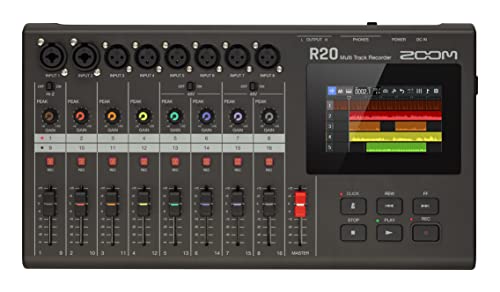
- 16-track recording with eight simultaneous tracks
- Touchscreen editing without a computer
- Six XLR inputs and built-in rhythms
Best For: Portable songwriting and small recording projects
Best for Live Console Control

- 16-channel digital console with 12 mic preamps
- 18-in/16-out USB multichannel interface
- Built-in processing, effects, and scene recall
Best For: Small venues and live sound operators
Best for Easy Setup
Zoom LiveTrak L-20 Mixer/Recorder
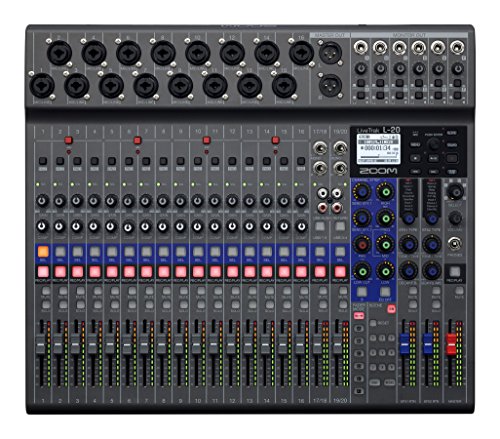
- Records up to 22 tracks at 24-bit/96kHz
- Six independent monitor mixes
- 20 onboard effects and iOS wireless control
Best For: Large bands, live shows, and rehearsals
Best Portastudio Workflow
Tascam DP-24SD 24-Track Recorder

- 24-track digital recording
- Eight XLR inputs with effects and mastering
- Color screen and USB 2.0 connectivity
Best For: Standalone recording and overdubbing
Best Portable Option
Zoom LiveTrak L6max Mixer/Recorder

- Captures up to 14 tracks to SD
- Battery, USB, or mobile-pack power
- Clip-free recording, AI noise reduction, and MIDI
Best For: Mobile recording and compact setups
Best Full-Size Mixer Recorder

- 16 TASCAM mic preamps
- Up to 24-track SD recording
- Hands-on EQ and aux controls
Best For: Bands and studios needing a full-size mixer workflow
Best Heavy-Duty Pick

- Eight combo XLR/1/4-inch inputs
- Eight-channel simultaneous recording
- 135 built-in digital effects
Best For: Mobile recording and compact home setups
Best Compact Mixer Recorder

- 16-track SD recording
- 16-in/14-out USB interface
- Punch in/out for up to eight tracks
Best For: Small studios wanting mixer, recorder, and DAW integration
Best Overall – Zoom LiveTrak L-20
The Zoom LiveTrak L-20 is a strong choice when you need a multitrack recorder with sixteen XLR inputs—or more—alongside hands-on mixing. Its 20-input design, 22-track recording, multiple monitor mixes, and included accessories make it suitable for both live performance and studio work.
Best For: Live bands, rehearsal spaces, and home or project studios that need extensive routing and remote-control flexibility.
Pros:
- 20 discrete channels with XLR and 1/4-inch inputs, including Hi-Z support.
- Records and plays back up to 22 tracks at 24-bit/96kHz.
- Includes six monitor mixes, built-in effects, a carrying bag, Bluetooth adapter, and two XLR cables.
Cons:
- At 18.1 pounds, it is less portable than a compact tabletop recorder.
- Its broad feature set may take longer to learn than a simpler recorder.
The L-20 combines multitrack recording and digital-console control in one substantial package. It is particularly appealing if you want plenty of inputs, dedicated faders, flexible monitoring, and accessories included from the start.
Best Analog-Style Mixer – Mackie Onyx16
The Mackie Onyx16 suits shoppers seeking a multitrack recorder with sixteen XLR inputs in a premium analog mixer format. It combines 16-channel operation with 24-bit/96kHz multi-track recording to a computer, plus stereo recording and playback through an SD card.
Best For: Musicians and live engineers who prefer tactile analog-style mixing with modern USB recording and onboard effects.
Pros:
- Provides 16-channel mixing and high-resolution 96kHz/24-bit multi-track USB recording.
- Onyx mic preamps offer up to 60dB of gain.
- Includes sweepable British-style EQ, customizable effects, and Bluetooth channel streaming.
Cons:
- Its 20.6-pound weight makes it more suitable for a fixed or semi-permanent setup.
- SD recording is described as stereo rather than multi-track.
The Onyx16 is a compelling fit when hands-on channel control matters as much as recording resolution. Choose it for a traditional mixer workflow with USB multi-track capability and useful built-in processing.
Best Compact Recorder – Zoom R20
The Zoom R20 is a portable alternative for musicians who want a multitrack recorder with sixteen XLR inputs as part of a larger comparison, but do not need sixteen physical inputs. It records up to 16 tracks, handles up to eight simultaneous tracks, and provides touchscreen editing without a computer.
Best For: Songwriters, solo artists, and small setups that prioritize simple standalone recording over a large input count.
Pros:
- Records up to 16 tracks with up to eight simultaneous tracks.
- Touchscreen interface supports recording, editing, and mixing directly on the unit.
- Includes EQ, compression, 150 rhythm patterns, and an onboard synth with 18 sounds.
Cons:
- It has six XLR inputs, not sixteen.
- Maximum sample rate is 44.1kHz.
- It is designed for compact projects rather than large ensemble input counts.
The R20 is best viewed as a straightforward standalone multitrack workstation, not a sixteen-input mixer-recorder. Its 4.3-pound body and touchscreen workflow make it attractive for mobile songwriting and smaller recording projects.
Best for Live Console Control – PreSonus StudioLive 16.0.2
The PreSonus StudioLive Classic 16.0.2 is a practical option for buyers comparing a multitrack recorder with sixteen XLR inputs, though its supplied configuration combines mono and stereo channel inputs rather than offering sixteen dedicated XLR sockets. Its 18-in/16-out USB interface records all channels and the main mix at 24-bit/44.1kHz or 48kHz.
Best For: Live sound operators and small venues that want integrated channel processing, scene recall, and computer-based multichannel recording.
Pros:
- Offers 16 channel inputs with 12 Class A XMAX mic preamplifiers plus talkback.
- Includes Fat Channel processing, two effects processors, and a main-bus 31-band graphic EQ.
- 18-in/16-out USB connectivity records all channels and the main stereo mix.
Cons:
- Its supplied input layout is eight mono and four stereo channel inputs, not sixteen dedicated XLR inputs.
- USB recording is limited to 24-bit/44.1kHz or 48kHz.
- At 20 pounds, it is better suited to installed or managed live setups than frequent casual transport.
The StudioLive 16.0.2 emphasizes live-console functionality rather than maximum recording resolution. It makes sense when built-in processing, scene management, auxiliary buses, and software control are central to your workflow.
Best for Easy Setup – Zoom LiveTrak L-20 Mixer/Recorder
If you need a multitrack recorder with sixteen xlr inputs—or a flexible setup for a large ensemble—the Zoom LiveTrak L-20 offers 20 input channels and simultaneous recording of up to 22 tracks at 24-bit/96kHz directly to an SD card. Its mixer layout and monitor features make it practical for live shows, rehearsals, and podcast production.
Best For: Large bands, live performances, and users who need multiple performer monitor mixes.
Pros:
- Records up to 22 tracks simultaneously at 24-bit/96kHz.
- Provides six independent headphone and line outputs with individual volume control.
- Includes 20 onboard effects, -128dBu EIN preamps, USB audio interface functionality, and iOS wireless control.
Cons:
- Its larger 17.5-inch depth and 15.3-inch width may be less convenient for compact setups.
- It requires corded power, so it is less suited to remote recording without an outlet.
The L-20 is the strongest all-around choice here for live multitrack work because it combines high track capacity, extensive monitoring, onboard effects, and a road-ready design in one mixer-recorder.
Best Portastudio Workflow – Tascam DP-24SD 24-Track Recorder
The Tascam DP-24SD is a dedicated 24-track digital Portastudio with eight XLR inputs, built-in effects, mastering tools, and a color screen. For shoppers comparing a multitrack recorder with sixteen xlr inputs, it is worth noting that this model prioritizes hands-on standalone recording while providing fewer XLR inputs than that target.
Best For: Standalone multitrack recording, overdubbing, effects, and in-device mastering.
Pros:
- Supports 24-track digital recording.
- Includes eight XLR inputs, built-in effects, mastering functions, and a color screen.
- Offers USB 2.0 connectivity and up to 32 hours of digital recording time according to the supplied details.
Cons:
- It has eight XLR inputs, so it does not meet a sixteen-XLR-input requirement.
- At 13.7 pounds, it is less portable than compact mixer-recorders.
The DP-24SD makes the most sense when an integrated Portastudio workflow matters more than maximizing simultaneous XLR inputs or minimizing weight.
Best Portable Option – Zoom LiveTrak L6max Mixer/Recorder
The Zoom LiveTrak L6max is a compact mixer-recorder for mobile sessions, offering 12 channels and up to 14 simultaneous tracks. It is not a multitrack recorder with sixteen xlr inputs, but its four combo inputs, eight line inputs, battery operation, and clip-free recording make it useful for smaller productions.
Best For: Mobile musicians, podcasters, and compact live or studio setups.
Pros:
- Records up to 14 tracks simultaneously to SD cards up to 2TB.
- Uses dual AD converters for clip-free audio on channels 1–4.
- Can run on AA batteries, USB bus power, or a mobile battery pack, with AI noise reduction and MIDI support.
Cons:
- It has 12 channels and does not provide sixteen XLR inputs.
- Its four combo inputs and eight line inputs are better suited to smaller setups than large ensembles.
The L6max is the most travel-friendly option in this group, especially when battery power, compact dimensions, and flexible recording modes matter more than maximum input count.
Best Full-Size Mixer Recorder – Tascam Model 24
The Tascam Model 24 is a strong choice if you need a multitrack recorder with sixteen XLR inputs and want hands-on mixer controls. It combines 16 TASCAM mic preamps, up to 24-track recording to SD at 24-bit/48kHz, and USB connectivity for computer-based recording.
Best For: Bands, rehearsal spaces, and studios that want a full-size analog-style mixer with integrated multitrack recording.
Pros:
- Provides 16 high-grade TASCAM mic preamps.
- Records up to 24 tracks simultaneously to an SD card.
- Physical EQ and auxiliary controls keep adjustments accessible without menu diving.
- Works as a USB audio interface with a PC or Mac.
Cons:
- Its full-size mixer design is less compact than a tabletop recorder.
- The supplied notes list a 24-bit/48kHz recording limit.
The Model 24 is the most suitable option here for users who prioritize abundant inputs, immediate control, and a console-style workflow over portability.
Best Heavy-Duty Pick – Zoom R16
The Zoom R16 is a portable multitrack recorder with sixteen XLR inputs in a compact tabletop format, using eight balanced XLR/1/4-inch combination inputs. It supports eight-channel simultaneous recording, 16-channel playback, SDHC storage, and USB interface functionality.
Best For: Mobile musicians and home recordists who value portability, built-in microphones, and onboard effects.
Pros:
- Offers eight balanced XLR/1/4-inch combination inputs.
- Records eight channels simultaneously and plays back 16 channels.
- Includes 135 built-in effects for recording, mixing, and mastering.
- Has built-in stereo condenser microphones and can run on included AA batteries.
Cons:
- It has fewer physical inputs than the Tascam models in this roundup.
- 48V phantom power is available on only two tracks.
- Recording storage is limited to SDHC cards up to 32GB.
The R16 is a practical travel-friendly recorder, but its eight-input design makes it better for smaller setups than for projects requiring sixteen simultaneous XLR sources.
Best Compact Mixer Recorder – Tascam Model 16
The Tascam Model 16 suits buyers seeking a multitrack recorder with sixteen XLR inputs in a more streamlined mixer format. It records 16 tracks to SD, supports punch in/out on up to eight tracks, and provides a 16-in/14-out USB connection for a DAW.
Best For: Small studios and bands that want integrated SD recording, analog mixing, and computer connectivity without stepping up to the larger Model 24.
Pros:
- Records 16 tracks to SD, SDHC, or SDXC cards at up to 24-bit/48kHz.
- Provides 10 monaural XLR/TRS inputs plus two stereo-paired TRS inputs.
- Offers 16-in/14-out USB audio communication with a DAW.
- Includes punch in/out capability on up to eight tracks simultaneously.
Cons:
- It lists 10 Ultra-HDDA mic preamps rather than 16 mic preamps.
- Class 10 or higher SD, SDHC, or SDXC cards are required.
The Model 16 balances hands-on mixing and multitrack recording well, making it a capable middle ground for users who need more than a compact recorder but fewer features than the Model 24.
How We Picked the Best Multitrack Recorder with Sixteen Xlr Inputs
We focused on recorders and mixer-recorders that support serious multitrack production, live capture, rehearsal recording, or podcast work. Selection criteria included input capacity, XLR or combo-input availability, simultaneous recording capability, standalone operation, computer connectivity, monitoring options, portability, and practical mixing controls.
Because several models have fewer than sixteen XLR inputs, we also considered closely related alternatives that may fit users who need fewer microphones, more compact hardware, or a traditional analog workflow. Always verify the exact input configuration before buying, since advertised channel counts do not always equal the number of available XLR microphone inputs.
Quick Comparison
| Best For | Look For | Recommended Type |
|---|---|---|
| Large live recordings | Many mic preamps, multitrack capture, routing | Digital mixer-recorder |
| Project studios | Overdubbing, editing, effects, USB audio | Standalone multitrack recorder |
| Podcasts and small ensembles | Fast setup, monitoring, portability | Compact mixer-recorder |
| Hands-on mixing | Physical faders, EQ, aux sends | Analog mixer with multitrack USB |
Key Buying Factors for a Multitrack Recorder with Sixteen Xlr Inputs
Input Count and Preamps
Confirm whether the stated channel count refers to XLR microphone inputs, combo inputs, line channels, or total mixer channels. For a full band, drum kit, or multiple-person podcast, count the microphones you will record simultaneously and leave room for future expansion.
Recording and Connectivity
Standalone SD or multitrack recording is useful for live work and locations, while USB audio interfaces simplify computer-based production. Check the number of simultaneous USB channels, supported sample rates, direct-monitoring behavior, and whether the device can record to a computer and removable media at the same time.
Workflow and Editing
Tabletop recorders can provide dedicated controls, built-in effects, overdubbing, and basic editing without a laptop. Digital consoles offer deeper routing and recall, but they may require more setup. Analog mixers are often faster to operate, although they may provide less onboard editing and automation.
Monitoring, Outputs, and Expansion
Look for separate headphone mixes, auxiliary sends, monitor outputs, control-room routing, and suitable main outputs. Bluetooth, remote control, and additional line inputs can be valuable, but they should not replace the microphone inputs your sessions actually require.
Who Should Buy Which Multitrack Recorder with Sixteen Xlr Inputs?
Choose a digital mixer-recorder if you record full bands, events, or ensembles and need flexible routing, multiple monitor mixes, and hands-on live control. These models are generally the strongest fit for users seeking a Multitrack Recorder with Sixteen Xlr Inputs or a similar high-input workflow.
Choose a tabletop recorder if you prioritize portability, standalone operation, and quick songwriting or rehearsal capture. This format suits musicians who want to record without opening a DAW.
Choose an analog mixer with USB multitrack support if tactile faders and familiar signal flow matter most. It is a practical choice for live sound and project studios, provided its actual USB and input specifications meet your recording needs.
Before ordering, confirm the number of simultaneous tracks, XLR preamps, phantom-power behavior, storage format, computer compatibility, and included accessories. Those details determine whether a recorder will handle your current setup without costly add-ons.