Small bands need MIDI connectivity that is dependable, easy to configure, and suited to limited rehearsal or studio space. The right interface can connect keyboards, drum machines, controllers, and computers without adding unnecessary complexity.
This roundup covers compact 1-in/1-out and 2×2 MIDI adapters, wireless models, and audio interfaces with MIDI-related workflow benefits. Use the guide below to match the connection type and features to your band’s setup.
Best 10 Midi Interfaces for Small Bands Picks for 2026
Premium Recording Hub

- 2-in/2-out audio with MIDI I/O
- 32-bit/192 kHz support and DSP effects
- Rugged build with two combo inputs
Best For: Small bands needing MIDI and high-quality audio recording
Dedicated MIDI Router

- Two MIDI inputs and two MIDI outputs
- USB-powered with no external supply
- Driver-free Mac and Windows setup
Best For: Connecting multiple MIDI instruments to a computer
Budget Audio Companion
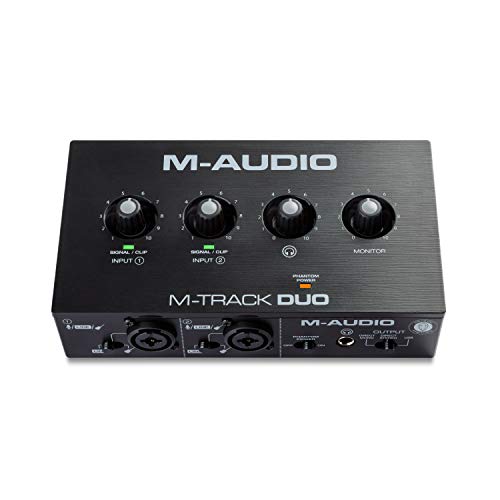
- Two combo mic, line, and instrument inputs
- Phantom power and zero-latency monitoring
- Includes MPC Beats software
Best For: Affordable two-channel band recording
Portable MIDI Cable

- One MIDI input and one MIDI output
- Plug-and-play USB bus-powered design
- Works with computers and mobile devices
Best For: Mobile setups connecting one 5-pin MIDI device
Compact Computer Link

- 1-in/1-out MIDI over USB
- USB-powered and portable
- Works with Windows and macOS
Best For: Keyboard players needing a simple computer connection
Plug-and-Play Workhorse

- 1-in/1-out 5-pin MIDI connection
- Plug-and-play with LED status lights
- Supports Windows, macOS, iOS, and Android
Best For: Bands connecting legacy MIDI gear to computers or mobile devices
Wireless Stage Flexibility
FORE K1 Wireless MIDI Interface

- Wireless Bluetooth MIDI with up to 32-foot range
- Multiple modes for mobile and computer use
- Stated 3 ms latency and driver-free setup
Best For: Mobile or stage setups seeking fewer MIDI cables
Best Wired Type-C Pick
FORE T1 Type-C MIDI USB Interface
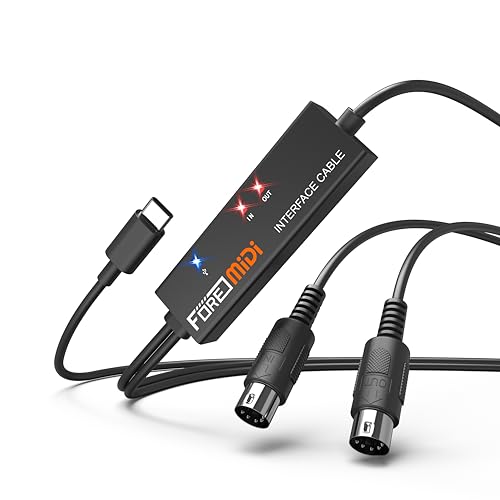
- One MIDI in and one MIDI out
- Plug-and-play USB-C connection
- Supports iOS, Android, Windows, and macOS
Best For: Small bands with USB-C recording devices
Best Wireless Option
FORE S1 Wireless MIDI Interface

- Wireless, USB, and USB-C operating modes
- Up to 49 feet of wireless range
- Works with major mobile and desktop systems
Best For: Bands seeking a cleaner wireless setup
Best USB-A Value
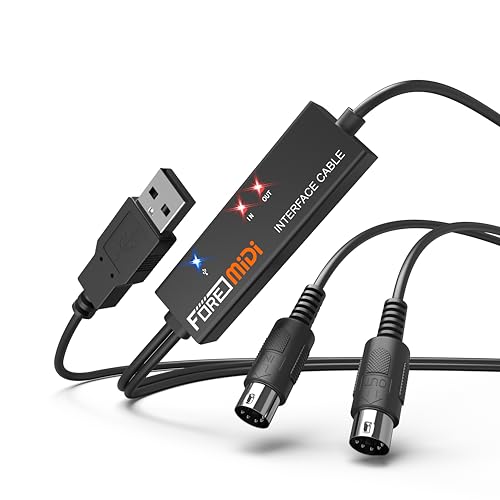
- Standard USB-A computer connection
- One MIDI in and one MIDI out
- Bus-powered, plug-and-play design
Best For: Bands recording with USB-A computers
Premium Recording Hub – Yamaha URX22C
For small bands comparing midi interfaces for small bands, the Yamaha URX22C is a versatile choice when you need both MIDI connectivity and high-quality audio recording. It combines two combo inputs, MIDI I/O, DSP monitoring, and a rugged metal build in a compact interface.
Best For: Small bands recording vocals, guitar, and MIDI instruments while monitoring with effects.
Pros:
- Offers 2-in/2-out audio, MIDI I/O, and up to 32-bit/192 kHz support.
- Two XLR/TRS combo inputs include Class-A D-PRE preamps and +48 V phantom power.
- DSP-powered monitoring includes reverb, channel strip, and guitar amp effects.
- Works with Windows, macOS, and iOS and includes Steinberg software.
Cons:
- Its advanced features may be more than needed for basic MIDI-only setups.
- The supplied warranty is limited to one year and has authorized-retailer conditions.
The URX22C is the strongest all-around option here for a small band that wants MIDI plus serious microphone and instrument recording. Its DSP effects and broad device compatibility add useful flexibility for rehearsal and production workflows.
Dedicated MIDI Router – Midiplus 2×2 USB MIDI
If your small band mainly needs dependable MIDI communication rather than audio recording, the Midiplus 2×2 is a straightforward option. It provides two MIDI inputs and two MIDI outputs through a USB-powered, driver-free design.
Best For: Bands connecting multiple keyboards, synthesizers, or other MIDI hardware to a Mac or Windows computer.
Pros:
- Provides two MIDI inputs and two MIDI outputs, supporting 32 MIDI channels on each side.
- USB-powered, so no external power supply is required.
- Works with Mac OS X and Windows XP or later without a driver.
- Compact and lightweight at approximately 5.28 ounces.
Cons:
- Does not provide microphone, instrument, headphone, or speaker connections.
- Its listed operating-system support is less current than some competing options.
The Midiplus is a practical pick when the band already has an audio interface and needs a simple MIDI bridge. Choose it for hardware control and sequencing, not for recording live audio.
Budget Audio Companion – M-AUDIO M-Track Duo
For bands searching for midi interfaces for small bands while also needing basic audio recording, the M-AUDIO M-Track Duo offers two combo inputs and simple monitoring controls. It is designed for recording, streaming, podcasting, and connecting microphones, guitars, or line-level sources to a computer.
Best For: Small bands that need an affordable two-input USB audio interface for vocals, guitar, and line sources.
Pros:
- Two combo XLR/line/instrument inputs support microphones, guitars, and line signals.
- Includes phantom power for condenser microphones and Crystal preamps.
- USB/Direct monitoring switch helps provide zero-latency monitoring.
- Includes MPC Beats and supports Windows, macOS, iOS, and Android.
Cons:
- Its maximum sample rate is 48 kHz, below the Yamaha option’s 192 kHz capability.
- The supplied notes do not list dedicated MIDI DIN input or output.
- It has only two audio channels for larger recording setups.
The M-Track Duo is best viewed as an audio interface rather than a complete hardware MIDI interface. It makes sense for a small band whose MIDI devices connect through USB or a separate MIDI adapter.
Portable MIDI Cable – FORE USB-C MIDI Interface
The FORE USB-C MIDI Interface is a compact choice for small bands that need to connect one traditional 5-pin MIDI device to a computer, phone, or tablet. Its plug-and-play design and integrated 6.5-foot cable make it convenient for keyboards, drum machines, and synthesizers.
Best For: Mobile MIDI setups using a single keyboard, synthesizer, electronic drum, or other 5-pin MIDI device.
Pros:
- Provides one MIDI input and one MIDI output with 16 channels each.
- USB bus-powered and designed for plug-and-play operation without extra drivers.
- Includes LED indicators for power and MIDI signal activity.
- Supports Windows, macOS, iOS, and Android with compatible connections.
Cons:
- It offers only one MIDI input and one MIDI output.
- It does not provide audio inputs, outputs, or monitoring connections.
- The USB A-C adapter mentioned for Type-A connections is not included.
The FORE is useful when portability and a low-cost single-device connection matter most. For a full small-band rig with multiple MIDI instruments or live audio recording, pair it with an audio interface or choose a multi-port solution.
Compact Computer Link – Portable USB MIDI Interface
For small bands building a computer-based setup, the M-Audio USB Midisport Uno is a straightforward choice among MIDI interfaces for small bands. Its 1-in/1-out design connects a keyboard or controller to a computer through USB, while the built-in cables keep the setup compact.
Best For: Keyboard players and small-band setups that need a simple, portable connection to Windows or macOS MIDI software.
Pros:
- USB bus-powered, so it does not require a separate power outlet
- External installation avoids opening the computer case
- Built-in USB and MIDI extension cables simplify setup
- Supports standard MIDI-compatible software on Windows and macOS
Cons:
- Offers only one MIDI input and one MIDI output
- Requires a USB connection to the computer
The Uno is best when portability and simplicity matter more than multiple hardware connections. It is a practical single-device bridge for a keyboard, controller, or similar MIDI instrument.
Plug-and-Play Workhorse – FORE MIDI USB Interface
The FORE MIDI USB Interface is a practical option for small bands connecting traditional 5-pin MIDI instruments to a computer. It combines one MIDI input and output with a USB Type-A connection, and its plug-and-play design is suited to recording and editing workflows.
Best For: Small bands using keyboards, synthesizers, electronic drums, or other 5-pin MIDI devices with Windows, macOS, iOS, or Android equipment.
Pros:
- 1 MIDI in and 1 MIDI out with 16 input and output channels
- Plug-and-play operation with no separate driver installation required
- LED indicators show power and signal activity
- USB bus-powered and compatible with a wide range of MIDI software
Cons:
- Uses USB Type-A; a USB A-to-C adapter is not included
- Designed for 5-pin DIN MIDI devices rather than modern USB-only instruments
With its integrated cable, status lights, and broad device compatibility, this FORE interface emphasizes easy setup. It is a sensible wired choice for bands that want dependable MIDI transfer without a complicated installation.
Wireless Stage Flexibility – FORE K1 Wireless MIDI Interface
The FORE K1 adds wireless flexibility to MIDI interfaces for small bands, reducing cable clutter between compatible 5-pin MIDI devices and computers or mobile devices. Its paired MIDI A and MIDI B units support several connection modes, including wireless links to iOS, Android, macOS, and Windows systems.
Best For: Small bands and mobile setups that want to reduce MIDI cable runs while connecting keyboards, synthesizers, or electronic drums.
Pros:
- Wireless Bluetooth MIDI connection with up to 32 feet of stated range
- Supports multiple modes for phones, tablets, computers, and MIDI devices
- Advertises ultra-low 3 ms latency
- Plug, pair, and play operation without complicated driver installation
Cons:
- iOS and iPad use requires connecting through a compatible app rather than direct Bluetooth pairing
- Wireless operation adds more setup considerations than a basic cable
- Requires the paired MIDI A and MIDI B units for wireless computer use
The K1 is the most flexible option here for performers who value a cleaner setup and wireless movement. Its multi-mode design is useful, but buyers should follow the app-based pairing process for iOS and confirm which mode fits their equipment.
Best Wired Type-C Pick – FORE T1 Type-C MIDI USB Interface
For small bands building a compact recording setup, the FORE T1 Type-C is a straightforward option among MIDI interfaces for small bands. It provides one MIDI input and one MIDI output, supports 16 MIDI channels, and connects compatible five-pin DIN instruments to computers, phones, or tablets through USB Type-C.
Best For: Small bands using newer USB-C devices with keyboards, synthesizers, electronic drums, or other five-pin MIDI gear.
Pros:
- Plug-and-play design with a built-in driver and status LEDs.
- Supports Windows, macOS, iOS, and Android devices.
- Six-and-a-half-foot integrated cable and USB bus power simplify placement.
- Works with software including GarageBand, FL Studio, Cubase, and CoreMIDI.
Cons:
- The USB A-C adapter is not included.
- Offers one MIDI input and one MIDI output rather than multiple ports.
The T1 Type-C is a practical wired choice when the band’s main recording device has a USB-C port. Its integrated cable and no-driver setup reduce clutter and setup time, while the single-in/single-out layout is best suited to modest rigs.
Best Wireless Option – FORE S1 Wireless MIDI Interface
The FORE S1 gives small bands a flexible way to connect five-pin MIDI equipment without committing to a permanent cable run. It supports wireless operation as well as USB and USB-C adapter use, making it one of the more versatile MIDI interfaces for small bands working across phones, tablets, and computers.
Best For: Small bands that want a cleaner stage or studio setup and the option to switch between wireless and wired connections.
Pros:
- Offers three operating modes for wireless and USB/USB-C use.
- Advertises up to 49 feet of wireless transmission distance and 3 ms latency.
- Supports 16 MIDI channels and common music software such as GarageBand, FL Studio, and Cubase.
- Compatible with iOS, Android, macOS, and Windows.
Cons:
- Wireless operation requires connecting through an app; it does not connect directly through the device’s standard Bluetooth menu.
- The switch directions are reversed for input and output, so setup requires attention.
The S1 is appealing when cable reduction matters, particularly for rehearsals or compact performance spaces. Its wired fallback adds flexibility, but bands should plan for the app-based Bluetooth setup before relying on wireless operation.
Best USB-A Value – FORE T1 USB-A MIDI Interface
For a small band recording through a conventional computer USB port, the FORE T1 USB-A offers a simple connection between five-pin MIDI instruments and recording software. It has one MIDI input, one MIDI output, 16 MIDI channels, and an integrated six-and-a-half-foot cable.
Best For: Small bands using Windows or Mac computers, or other setups that still rely on USB-A ports.
Pros:
- Plug-and-play operation with a built-in driver and LED status indicators.
- Supports keyboards, synthesizers, electronic drums, and other five-pin MIDI devices.
- Compatible with GarageBand, FL Studio, Cubase, CoreMIDI, and other listed software.
- USB bus-powered design avoids a separate power supply.
Cons:
- The USB A-C adapter is not included for USB-C devices.
- One MIDI input and one MIDI output may limit larger multi-instrument setups.
The USB-A T1 is a sensible fit for bands whose main computer still has a standard USB-A port. It keeps the connection process simple and affordable, though teams using newer USB-C-only hardware may prefer the Type-C version or need an adapter.
How We Picked the Best Midi Interfaces for Small Bands
We focused on interfaces that fit common small-band workflows: connecting one or more keyboards to a computer, routing hardware instruments, controlling software, or adding MIDI to a compact rehearsal rig. Selection factors included port configuration, USB connector type, portability, wireless capability, setup simplicity, audio integration, and overall flexibility.
Because these products serve different roles, the list includes dedicated MIDI interfaces as well as USB audio interfaces that can be useful in a band studio. A simple adapter may be the better choice for basic keyboard control, while an audio interface can consolidate microphones, instruments, monitoring, and computer connectivity.
Quick Comparison
| Type | Best For | Main Advantage |
|---|---|---|
| 1-in/1-out USB MIDI | One keyboard or controller | Small, affordable, and easy to carry |
| 2×2 USB MIDI | Multiple hardware devices | More simultaneous MIDI routing options |
| Wireless MIDI | Clutter-free setups | Fewer cables between compatible devices |
| USB audio interface | Band recording and monitoring | Combines audio and computer connectivity |
Key Buying Factors for Midi Interfaces for Small Bands
Port Count and Routing
A 1-in/1-out interface is sufficient for connecting one MIDI keyboard to a computer, but it offers limited routing for multiple synthesizers or controllers. Choose a 2×2 model when you need separate MIDI input and output paths or expect your setup to grow.
USB Connector Compatibility
Check whether the interface uses USB Type-A, USB Type-C, or an adapter. Type-C models are convenient for newer laptops, tablets, and phones, while Type-A versions may connect more easily to older computers. Confirm included cables and operating-system compatibility before buying.
Wireless Reliability
Wireless MIDI can reduce cable clutter and work well for short, tidy connections, but it depends on compatible devices, power, and a stable wireless environment. For critical live performances or longer cable runs, a wired interface is usually the safer choice.
Audio Features
If your band also records vocals, guitars, or keyboards, an audio interface with multiple inputs, direct monitoring, and suitable software may provide better value than a MIDI-only adapter. Do not choose an audio model solely for MIDI if you only need basic keyboard connectivity.
Who Should Buy Which Midi Interfaces for Small Bands?
Choose a compact 1-in/1-out adapter for a solo keyboard player, a simple software-instrument rig, or a portable backup. Select a 2×2 interface when your small band uses several MIDI devices or needs more flexible hardware routing.
Wireless models suit performers who prioritize a clean stage or rehearsal setup and can confirm compatibility with their instruments. A USB audio interface is the strongest fit for bands recording multiple sources, monitoring through headphones, or wanting one central device for audio production and computer-based MIDI control.