Sharing one audio source with several listeners does not require a large studio rack. The best headphone distribution amplifiers for small setups make it easy to give each performer, guest, or collaborator an independent headphone connection and volume control.
This roundup compares 10 compact and higher-capacity options, including four-, five-, six-, and eight-channel models. Use the buying guide below to match channel count, connector format, controls, and portability to your setup.
Best 10 Headphone Distribution Amplifiers for Small Setups Picks for 2026
Compact Session Splitter

- Four independent headphone outputs
- Individual volume control per listener
- Compact metal enclosure
Best For: Tracking sessions and rehearsals with up to four listeners
Portable Metal Monitor Hub
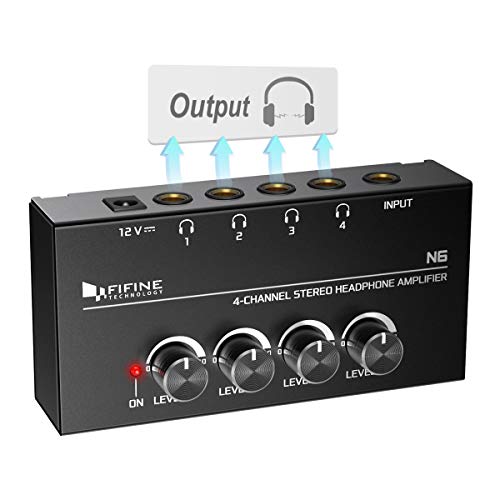
- Four outputs with independent volume knobs
- Metal construction for studio or stage use
- 12V adapter included
Best For: Shared stereo monitoring with four 1/4-inch headphones
Flexible Bass-Boost Distributor
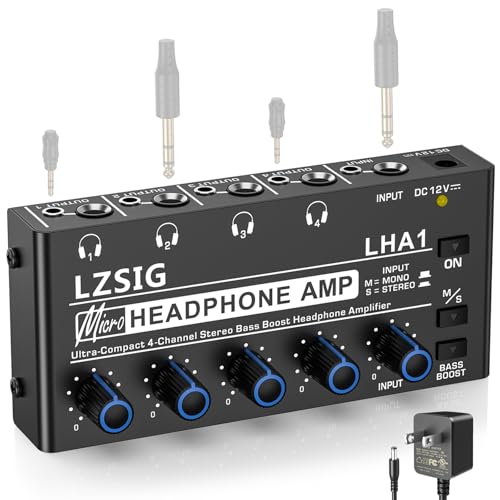
- Four independent headphone level controls
- Accepts 3.5mm and 6.35mm plugs
- Selectable bass and vocal enhancement
Best For: Home studios needing flexible connections and optional sound shaping
Budget Four-Listener Monitor Amp

- Powers up to four headphones
- Independent volume controls
- Compact 1/4-inch connection layout
Best For: Small studios and mobile monitoring setups
Compact Six-Channel Pick
LZSIG LHA2 Headphone Amplifier

- Six independent headphone outputs
- 3.5mm and 6.35mm compatibility
- Bass boost and stereo/mono switching
Best For: Small studios and shared monitoring with up to six headphones
Portable Eight-Channel Value

- Eight independent stereo channels
- Includes nine headphone conversion plugs
- Metal unibody with 12V adapter
Best For: Studios and portable setups needing eight controlled outputs
Maximum Small-Setup Capacity

- Eight independent headphone outputs
- 3.5mm and 6.35mm jack support
- Bass boost with stereo/mono mode
Best For: Shared monitoring with up to eight compatible headphones
Rack-Ready Pro Monitoring
8-Channel Headphone Distribution Amplifier

- Eight independently controlled amplifier channels
- 16 total 1/4-inch headphone outputs
- 1U rack design with LED level meters
Best For: Studios and live rigs needing multiple discrete mixes
Compact Sharing Pick
Fosi Audio PH05 5-Channel Headphone Amp

- Five independently amplified headphone outputs
- Supports 16–300Ω headphones and IEMs
- Compact aluminum body with master mute
Best For: Podcasts, teaching, and everyday audio sharing
Flexible Portable Option
6-Channel Stereo Headphone Amp

- Six independently controlled stereo channels
- 3.5mm and 6.35mm input/output support
- Mono/stereo switching in an aluminum body
Best For: Small studios and stage monitoring with mixed connectors
Compact Session Splitter – Mackie HM-4
The Mackie HM-4 is a straightforward choice among headphone distribution amplifiers for small setups. It sends one source to four headphones, while separate level controls let each listener set a comfortable volume.
Best For: Tracking sessions, rehearsals, and compact desks where four people need independent headphone volume.
Pros:
- Four independent headphone outputs with individual level controls.
- Accepts a source through 1/4-inch or 1/8-inch output connections.
- Compact metal enclosure can be attached to a desk, rack, or stand.
- Plug-and-play operation with a corded power source.
Cons:
- All four outputs share a single source rather than mixing separate inputs.
- Its compact four-channel design is intended for small setups, not larger monitoring systems.
The HM-4 focuses on the essentials: four-way distribution, individual volume control, and a compact metal build. It is a practical fit when simplicity matters more than extra routing features.
Portable Metal Monitor Hub – FIFINE N6 4-Channel Amplifier
The FIFINE N6 is a compact option among headphone distribution amplifiers for small setups, providing four outputs from one stereo source. Separate volume knobs and a metal chassis make it suitable for studio, stage, and shared listening use.
Best For: Users who need four 1/4-inch headphone connections and a supplied 12V adapter for monitoring a shared stereo source.
Pros:
- Four independent outputs with separate volume controls.
- Designed to maintain the signal when all four headphones are connected.
- Compact, rugged metal construction with smoothly operating knobs.
- Includes a 12V DC power adapter and power indicator light.
Cons:
- All input and output connections are 1/4-inch ports.
- A suitable TRS or TS cable is not included.
- It is a four-way amplifier, not a mixer with four inputs.
The N6 offers useful durability and clear connection requirements for a small monitoring rig. It is especially appealing if your source and headphones already use 1/4-inch connections.
Flexible Bass-Boost Distributor – LZSIG LHA2 4-Channel Amp
The LZSIG LHA2 adds connection flexibility and a bass-boost switch to the usual four-output format. As one of the headphone distribution amplifiers for small setups, it supports 3.5mm and 6.35mm plugs, with independent volume controls for each listener.
Best For: Home studios and small stage setups that need four headphone outputs, mixed connector sizes, and optional bass and vocal enhancement.
Pros:
- Four independent headphone channels with separate level controls.
- Supports both 3.5mm and 6.35mm TS/TRS plugs.
- Bass-boost switch enhances selected bass, vocal, and high-frequency ranges.
- Solid metal chassis and heavy-duty knobs are suited to regular use.
Cons:
- The bass-boost function may not suit listeners seeking an unaltered signal.
- It is a distributor rather than a mixer with multiple independent inputs.
- Its stated headphone support is for 32–100Ω headphones with 50mm drivers.
The LHA2 stands out for accommodating both common headphone plug sizes and offering optional tonal enhancement. Its feature set is well matched to shared monitoring where listeners value individual control.
Budget Four-Listener Monitor Amp – Pyle PHA40 4-Channel Amp
The Pyle PHA40 is a compact four-channel monitor distribution unit for small recording or performance setups. It feeds one source to up to four headphones and gives every listener a dedicated volume control.
Best For: Small studios and mobile setups that need an uncomplicated four-headphone monitoring solution with 1/4-inch connections.
Pros:
- Drives up to four headphones simultaneously.
- Independent rotary volume controls for each output.
- Four 1/4-inch stereo headphone outputs and a 1/4-inch source input.
- Compact dimensions make it easy to carry for studio or stage use.
Cons:
- The listed connections are 1/4-inch, so adapters may be needed for other plug sizes.
- Plastic enclosure may be less rugged than metal alternatives.
- It distributes one source rather than combining multiple inputs.
The PHA40 keeps the setup simple and portable while covering the core needs of four-person monitoring. It is a sensible choice when dedicated volume controls and compact size matter most.
Compact Six-Channel Pick – LZSIG LHA2 Headphone Amplifier
For small setups that need several listeners to monitor one source, the LZSIG LHA2 is a practical choice among headphone distribution amplifiers for small setups. Its six outputs, independent volume controls, stereo/mono switching, and support for both 3.5mm and 6.35mm connections make it easy to add shared monitoring without a bulky rack unit.
Best For: Home studios, shared monitoring, and compact recording or DJ setups with up to six headphones.
Pros:
- Six independently controlled headphone outputs for flexible listening levels
- Supports 3.5mm and 6.35mm TS/TRS headphone connections without adapters
- Bass-boost switch, stereo/mono mode, and a durable metal chassis
- Designed for low-noise, high-power stereo output
Cons:
- Limited to six headphone connections
- Specified headphone support is for 32–100Ω models
The LHA2 balances useful capacity with a compact footprint, making it a strong fit when six outputs are enough. Its independent controls and mixed jack compatibility are especially convenient for small collaborative sessions.
Portable Eight-Channel Value – STABCL S-800 Headphone Amp
The STABCL S-800 is built for users who need more outputs in a compact distribution unit. As one of the headphone distribution amplifiers for small setups, it provides eight independently adjustable channels, includes 6.35mm-to-3.5mm conversion plugs, and adds mono/stereo switching for flexible studio or stage use.
Best For: Recording studios, rehearsal spaces, and portable setups that need eight separately controlled headphone feeds.
Pros:
- Eight high-power stereo amplifier channels with individual volume controls
- Includes nine 6.35mm-to-3.5mm conversion plugs
- Mono/stereo switch supports different input arrangements
- Aluminium-alloy unibody construction and included 12V AC adapter
Cons:
- Native 1/8-inch devices require a conversion plug
- Power depends on the included 12V AC adapter
The S-800 is a sensible option when eight channels matter more than the smallest possible footprint. Its included adapters reduce connection hassles, while the metal construction suits home, studio, and on-the-go use.
Maximum Small-Setup Capacity – LZSIG LHA3 Eight-Channel Amp
When a compact setup needs to distribute one source to the largest number of listeners, the LZSIG LHA3 offers eight outputs in a small metal enclosure. It is a capable option among headphone distribution amplifiers for small setups, with independent channel levels, broad 3.5mm/6.35mm compatibility, and a bass-boost function.
Best For: Home studios and shared recording or stage monitoring for up to eight pairs of 32–100Ω headphones.
Pros:
- Eight independently controlled headphone outputs
- Accepts both 3.5mm and 6.35mm TS/TRS connections
- Includes bass boost and stereo/mono switching
- Metal chassis, durable knobs, and low-noise analog circuitry
Cons:
- Designed for headphones rated at 32–100Ω
- Eight outputs may be unnecessary for very small sessions
The LHA3 is the natural step up from a six-channel unit when every available output is useful. It keeps the controls straightforward while adding enough capacity for larger shared-monitoring sessions without requiring a larger system.
Rack-Ready Pro Monitoring – 8-Channel Headphone Distribution Amplifier
For small setups that still need extensive monitoring flexibility, this headphone distribution amplifier provides eight independently controlled channels, dual input routing, and 16 total headphone outputs. Its 1U rack-mount design makes it especially suitable for studios or mobile rigs that need organized, multi-listener monitoring.
Best For: Recording studios, live sound monitoring, and setups requiring multiple discrete mixes.
Pros:
- Eight high-power amplifier channels with support for headphone loads as low as 8Ω.
- Sixteen front and rear 1/4-inch outputs support up to eight channels of monitoring.
- Independent channel volume controls, mono/stereo switching, and six-segment LED meters.
- 1U rack-mount metal design with overload protection.
Cons:
- Its 1U rack format and extensive routing may be more than a very basic desktop setup needs.
- All headphone connections use 1/4-inch jacks.
This is the most capable option here for structured studio or live monitoring, particularly when separate mixes and rack integration matter more than portability.
Compact Sharing Pick – Fosi Audio PH05 5-Channel Headphone Amp
The Fosi Audio PH05 is a practical choice for small setups that need to share one stereo source with several listeners. This compact headphone distribution amplifier offers five separately powered outputs, individual level controls, and support for headphones and IEMs from 16 to 300 ohms.
Best For: Podcasts, music studios, teaching, audio sharing, and home listening.
Pros:
- Distributes one stereo source to five headphone channels.
- Each channel delivers up to 310mW at 32Ω and has its own volume control.
- Supports a broad 16–300Ω headphone and IEM range.
- Compact aluminum construction includes a master volume and one-touch mute.
Cons:
- Provides five outputs rather than the eight channels offered by larger distribution amplifiers.
- Its supplied feature set is centered on one-in/five-out stereo sharing rather than separate mixes.
For a compact desktop system, the PH05 balances useful output power and straightforward controls without the footprint of a rack unit.
Flexible Portable Option – 6-Channel Stereo Headphone Amp
This six-channel model suits small recording or stage setups that need flexible connector options. As a headphone distribution amplifier, it combines six independently controlled stereo outputs with both 3.5mm and 6.35mm input and output connections, plus selectable mono/stereo operation.
Best For: Home studios, recording sessions, stage applications, and portable monitoring.
Pros:
- Six high-power stereo amplifier channels with separate volume controls.
- Accepts and distributes audio through both 3.5mm and 6.35mm connections.
- Mono/stereo switching adds flexibility for different source configurations.
- Aluminum-alloy unibody construction and included 12V AC adapter support stable use.
Cons:
- The notes do not specify its supported headphone impedance range.
- It is powered by a 12V AC adapter rather than described as battery-powered.
Choose this unit when connector versatility and six-channel capacity are more important than rack mounting or detailed metering.
How We Picked the Best Headphone Distribution Amplifiers for Small Setups
We focused on practical requirements for home studios, podcast desks, rehearsal spaces, classrooms, and small production rigs. Each selected amplifier distributes one stereo source to multiple headphones, with attention to channel count, individual level controls, input and output connectivity, construction, portability, and power requirements.
Because specifications vary across compact models, verify the listing before purchase—especially whether the unit uses 3.5 mm or 6.35 mm connections, includes adapters, supports stereo operation, and provides separate volume adjustment for every listener.
Quick Comparison
| Setup size | Recommended channel range | Best fit |
|---|---|---|
| Two to four listeners | 4 channels | Small podcast desks, music sharing, and basic tracking |
| Five to six listeners | 5–6 channels | Group monitoring with a compact footprint |
| Seven to eight listeners | 8 channels | Ensembles, classrooms, and larger recording sessions |
| Rack or fixed installation | 8 channels or more | Permanent studio and production-room distribution |
Key Buying Factors for Headphone Distribution Amplifiers for Small Setups
Channel Count and Expansion
Choose more outputs than you currently need if your group may grow. A four-channel unit is usually the most compact choice, while six- and eight-channel models reduce the need for daisy-chaining. Confirm that every output is independently amplified rather than simply connected in parallel.
Connector Compatibility
Studio headphones commonly use 6.35 mm (1/4-inch) plugs, while consumer headphones often use 3.5 mm plugs. Some models offer one format, and others include adapters or both input and output sizes. Check your source device as well as your headphones before ordering.
Independent Controls and Monitoring Modes
Individual volume knobs let each listener set a comfortable level without affecting everyone else. Bass-boost controls can be useful for casual listening, but neutral stereo monitoring is generally preferable for recording and mixing. If a model offers mono/stereo switching, confirm that it suits your recording workflow.
Power, Noise, and Placement
Powered distribution amplifiers typically provide more consistent volume than passive splitters. Look for a suitable power supply, solid metal construction, and a footprint that fits your desk or rack. Keep gain moderate to minimize hiss and protect hearing.
Who Should Buy Which Headphone Distribution Amplifiers for Small Setups?
Choose a four-channel model for a compact home studio, two-person podcast, or occasional headphone sharing. Choose five or six channels when you regularly monitor with a small team and want room for an extra guest or performer. Choose an eight-channel amplifier for bands, classrooms, larger podcast panels, or sessions where several people need simultaneous monitoring.
For portable desks, prioritize small dimensions, durable construction, and convenient input adapters. For a permanent studio, prioritize output capacity, independent controls, reliable power, and mounting options. In every case, select a unit with enough headroom for your loudest headphones and keep listening levels at safe, comfortable volumes.