The right interview microphone helps voices stay clear when the environment is busy, unpredictable, or acoustically imperfect. Dynamic designs are especially useful for reporters, creators, and interviewers who need durable equipment with strong background-noise control.
We selected 10 options spanning handheld field microphones, vocal-style models, and USB/XLR podcasting microphones. Use the guide below to match microphone pattern, connection, handling, and recording setup to your workflow.
Best 10 Dynamic Microphones for Interviews Picks for 2026
Field Interview Pick

- Omnidirectional speech pickup
- Wind-protective sound-inlet basket
- Rugged, low-handling-noise design
Best For: Field interviews and ENG/EFP reporting
Broadcast Directional Pick

- Cardioid dynamic capsule
- Double-layer grille basket
- Balanced long-handle design
Best For: Broadcast interviews and live reporting
Versatile Vocal Backup

- Cardioid background rejection
- Integrated pop and wind protection
- Rugged metal construction
Best For: Interviews plus vocals, podcasting, and live use
Presentation and Interview Specialist

- Omnidirectional interview pickup
- Voice-tailored response
- Includes mic flag and zip case
Best For: Broadcast interviews and presentations
Studio Voice Focus
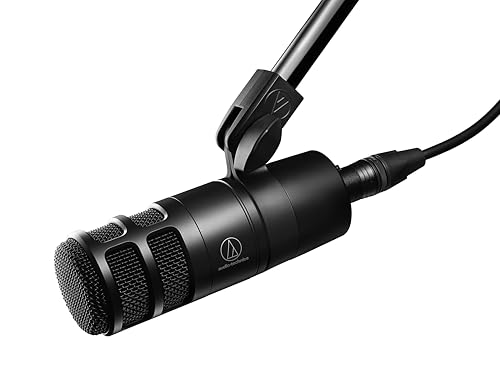
- Hypercardioid pickup isolates the speaker
- Large diaphragm delivers warm broadcast sound
- Integrated shock mount and pop filtering
Best For: Fixed-position podcasts and studio interviews
Field Reporting Pick
Movo HM-M2 Interview Microphone
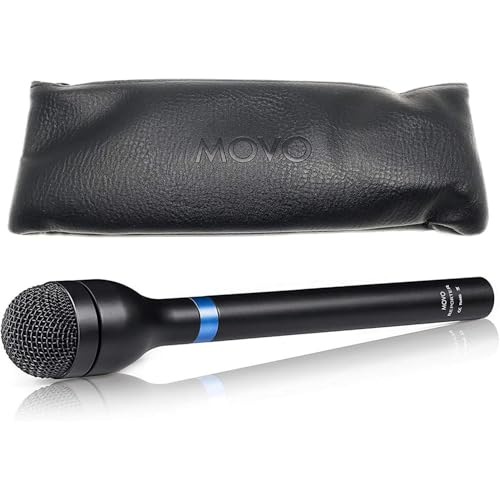
- Handheld design suits reporter-style interviews
- Omnidirectional capsule supports flexible positioning
- Internal pop filter helps control plosives and handling noise
Best For: Portable interviews, reports, and camera-based recording
Simple Cardioid Option
Sennheiser XS 1 Handheld Microphone

- Cardioid pickup focuses on the speaker
- Handheld design works for mobile speech and interviews
- Includes mute switch, clip, and carrying pouch
Best For: General handheld interviews and presentations
Best Hybrid Pick

- USB and XLR connectivity
- Cardioid pickup for focused speech
- USB mute, gain, and headphone controls
Best For: Flexible computer and studio interview setups
Best Built-In Protection

- Speech-focused broadcast capsule
- Internal pop filter and shock mounting
- Durable all-metal XLR design
Best For: XLR interview rigs in untreated rooms
Best Voice Isolation

- Voice-isolation technology reduces distractions
- XLR cardioid design for spoken word
- Rugged build with adjustable yoke
Best For: Interface-based interviews in noisy rooms
Field Interview Pick – Sennheiser MD42
Sennheiser Pro Audio MD42 - Handheld Dynamic Omnidirectional Field ENG/EFP Microphone
Check Price On AmazonFor dynamic microphones for interviews, the Sennheiser MD42 is a practical choice when you want flexible positioning in changing field conditions. Its omnidirectional pickup captures speech without requiring precise aiming, while the protected capsule and rugged metal housing suit ENG and EFP work.
Best For: Field interviews, news gathering, and remote broadcast work.
Pros:
- Omnidirectional pickup supports natural interview positioning.
- Protective sound-inlet basket helps reduce wind noise.
- Shock-mounted capsule and metal housing help minimize handling noise.
- Rugged construction is suited to regular field use.
Cons:
- Omnidirectional pickup may capture more surrounding sound than a directional design.
- Requires a wired XLR connection and corded power setup.
The MD42 is especially well matched to interviewers who need reliable handheld operation and do not want to keep the microphone precisely aimed at each speaker.
Broadcast Directional Pick – Sennheiser MD46
The Sennheiser MD46 is one of the dynamic microphones for interviews to consider when focused speech capture matters. Its cardioid capsule, double-layer grille, and long balanced handle are designed around broadcasting, live reporting, and handheld interview use.
Best For: Broadcast interviews and live reporting in environments where directional pickup is useful.
Pros:
- Cardioid pickup focuses on sound from the front.
- Double-layer grille basket provides wind protection.
- Long handle offers a balanced handheld feel.
- Designed for low handling noise.
Cons:
- Directional pickup requires more attention to microphone placement.
- Uses a wired XLR connection.
Choose the MD46 if your interview workflow benefits from a traditional cardioid broadcast microphone with a substantial handle and built-in wind protection.
Versatile Vocal Backup – Shure SM58
The Shure SM58 is a versatile option among dynamic microphones for interviews, particularly if the same microphone will also handle vocals, podcasting, recording, or live performance. Its cardioid pattern, integrated pop protection, and rugged metal construction support clear speech and dependable everyday use.
Best For: Interviews that share equipment with vocals, podcasts, live events, or recording.
Pros:
- Cardioid pattern helps minimize background sound and feedback.
- Built-in filter and spherical grille reduce plosives, breath, and wind noise.
- Rugged metal construction is suited to demanding use.
- Includes a swivel stand adapter and storage bag.
Cons:
- Its vocal-focused 50 Hz–15 kHz response is less specialized for field interviewing.
- Requires careful aiming because it uses a unidirectional pattern.
- Uses an XLR connection.
The SM58 makes the most sense when flexibility and durability are priorities, especially for buyers who need one proven handheld microphone across several audio applications.
Presentation and Interview Specialist – RØDE Reporter
The RØDE Reporter is built specifically for broadcast recording, presentations, and interviews. As one of the dynamic microphones for interviews with an omnidirectional pattern and voice-tailored response, it prioritizes easy handheld use without requiring the microphone to stay aimed at the speaker.
Best For: Broadcast interviews, presentations, and on-camera reporting.
Pros:
- Omnidirectional pattern simplifies handheld interview technique.
- Voice-tailored frequency response supports spoken-word use.
- Includes a detachable microphone flag and zip case.
- Aluminum enclosure and mesh basket suit presentation and broadcast work.
Cons:
- Omnidirectional pickup can include more ambient sound.
- Its response reaches 15 kHz, which may be less suitable for applications needing extended high frequencies.
- Requires a wired XLR connection.
The Reporter is a focused choice for interviewers and presenters who value simple positioning, broadcast-oriented handling, and included accessories for visible on-camera work.
Studio Voice Focus – AT2040 Podcast Microphone
If you want dynamic microphones for interviews in a controlled recording setup, the Audio-Technica AT2040 is designed for focused voice capture. Its hypercardioid pattern helps reduce sound from the sides and rear, while the large diaphragm, integrated shock mount, and multistage windscreen support a clean, broadcast-style result.
Best For: Podcast and interview recording in a studio or boom-mounted setup where vocal isolation matters.
Pros:
- Hypercardioid pattern limits unwanted side and rear pickup.
- Large diaphragm produces a warm, assertive vocal sound.
- Integrated shock mount and multistage windscreen help reduce vibration and plosives.
- Includes a pivoting stand mount, threaded adapter, and protective pouch.
Cons:
- Uses an XLR connection rather than a direct USB connection.
- Its stand- or boom-oriented design is less convenient for walking interviews.
The AT2040 is a strong choice when interview audio is recorded from a fixed position and you want maximum vocal focus. Plan on using compatible XLR equipment and a suitable stand or boom.
Field Reporting Pick – Movo HM-M2 Interview Microphone
Movo HM-M2 Dynamic Omnidirectional Handheld Interview Microphone with 3-Pin XLR Connector
Check Price On AmazonThe Movo HM-M2 is one of the more purpose-built dynamic microphones for interviews, with a handheld form factor and an omnidirectional capsule suited to reporting and on-camera conversations. Its internal pop filter is designed to help reduce plosives and handling noise, and it connects through a 3-pin XLR connector.
Best For: Handheld interviews, news reports, presentations, and social media videos recorded with a camera or other XLR-compatible device.
Pros:
- Handheld design is practical for reporter-style interviews.
- Omnidirectional capsule supports flexible speaker positioning.
- Internal pop filtering helps reduce plosives and handling noise.
- Does not require external phantom power and includes a carrying pouch.
Cons:
- Omnidirectional pickup can capture sound from all directions.
- Requires an XLR-compatible camera or recording setup.
The HM-M2 is a sensible field option when mobility and straightforward voice capture matter more than tight directional isolation. Its included pouch and handheld format also suit portable interview kits.
Simple Cardioid Option – Sennheiser XS 1 Handheld Microphone
The Sennheiser XS 1 is a straightforward handheld choice among dynamic microphones for interviews. Its cardioid pattern provides unidirectional pickup, while the metal enclosure, silent mute switch, mic clip, and carrying pouch make it practical for speech, presentations, and other mobile uses.
Best For: Handheld speech and interviews using an amplifier, mixer, speaker, or other XLR-compatible equipment.
Pros:
- Cardioid pattern focuses pickup toward the speaker.
- Handheld format is easy to use for mobile interviews.
- Includes a silent mute switch, mic clip, and carrying pouch.
- Metal enclosure supports a durable, practical build.
Cons:
- Offers an XLR connection rather than USB connectivity.
- Its supplied features are oriented toward general handheld use rather than specialized interview wind protection.
The XS 1 fits buyers who want a familiar handheld dynamic microphone with directional pickup and simple controls. It is best paired with an XLR-equipped mixer, speaker, amplifier, or compatible recording system.
Best Hybrid Pick – FIFINE AmpliTank K688
For shoppers comparing dynamic microphones for interviews, the FIFINE AmpliTank K688 stands out for its flexible USB and XLR connectivity. Its cardioid pattern focuses on the speaker, while USB controls make quick computer-based recording straightforward.
Best For: Interviewers who want both plug-and-play USB recording and an upgrade path to XLR equipment.
Pros:
- USB and XLR outputs support computer or studio setups.
- Cardioid pickup helps reduce background sounds such as fans and hard drives.
- Front mute, USB gain control, headphone monitoring, and a supplied windscreen add convenience.
- Metal construction and a 130 dB SPL rating support vocal recording without stated distortion at high levels.
Cons:
- Arm stand, mic stand, and XLR cable are not included.
- Mute, gain, and headphone controls work only over USB.
- The microphone is intended for close-distance recording.
The K688 is a practical choice when interview recording may happen at a desk now but expand into an interface or mixer setup later. USB convenience is its main advantage, while XLR provides added flexibility for more advanced workflows.
Best Built-In Protection – RØDE PodMic
The RØDE PodMic is a focused option among dynamic microphones for interviews, especially when you already use an audio interface or mixer. Its broadcast-tuned capsule is designed for speech and helps reject room noise in untreated spaces.
Best For: Interview setups built around an XLR interface, mixer, or RØDECaster.
Pros:
- Broadcast-quality dynamic capsule is tuned for spoken-word recording.
- Cardioid pickup helps reject room noise.
- Internal pop protection and shock mounting help control plosives and desk thumps.
- Rugged all-metal body includes an integrated swing mount.
Cons:
- XLR-only design requires an audio interface or mixer.
- It is not a USB microphone for direct computer connection.
- The supplied microphone does not include a separate stand or interface.
The PodMic makes sense when clean spoken-word capture and durable construction matter more than USB simplicity. Its built-in protection reduces the need for some extra accessories, but the required XLR equipment should be included in your setup budget.
Best Voice Isolation – Shure MV7X
For interviews where room distractions are a concern, the Shure MV7X is a strong contender among dynamic microphones for interviews. This XLR-only cardioid microphone uses voice-isolation technology and an integrated shock mount to help keep spoken audio focused.
Best For: Podcasters and interviewers using a mixer or audio interface who want a professional, voice-focused setup.
Pros:
- Voice-isolation technology helps reduce room noise and background distractions.
- Cardioid dynamic design is suited to spoken-word capture.
- All-metal construction and adjustable yoke support durable, flexible mounting.
- Included 3/8-inch adapter works with most mic stands and boom arms.
Cons:
- XLR-only connectivity requires an audio interface or mixer.
- No USB output or onboard computer recording controls are listed.
- A stand, boom arm, and interface are not identified as included accessories.
The MV7X is best suited to a dedicated XLR workflow rather than quick plug-and-play recording. Its focused pickup, integrated shock mount, and adaptable mounting make it a sensible choice for consistent interview or podcast production.
How We Picked These Dynamic Microphones for Interviews
We focused on microphone type, pickup pattern, connection options, intended use, and practical handling. The selection includes omnidirectional handheld microphones for flexible street interviews, cardioid and hypercardioid models for greater focus, and USB/XLR options for desk-based recording. We also considered whether each microphone suits field reporting, two-person interviews, podcasting, video production, or general vocal work.
Because interview conditions vary, there is no single best microphone for everyone. A rugged handheld model may be ideal outdoors, while a broadcast-style microphone can be more convenient for a controlled desk setup.
Quick Comparison
| Best For | What to Look For | Suitable Choices |
|---|---|---|
| Street and field interviews | Handheld design, durable build, omnidirectional or focused pickup | Sennheiser MD42, RØDE Reporter, Movo HM-M2 |
| Focused single-speaker recording | Cardioid or hypercardioid pattern, close working distance | Sennheiser MD46, Audio-Technica AT2040 |
| Podcast and desk recording | Broadcast voicing, boom-arm compatibility, XLR or USB connectivity | FIFINE K688, RØDE PodMic, Shure MV7X |
| Simple vocal and interview use | Familiar handheld form, straightforward XLR connection | Shure SM58 Pro, Sennheiser XS 1 |
Key Buying Factors for Dynamic Microphones for Interviews
Pickup Pattern
Omnidirectional microphones capture sound from around the capsule and can make passing a microphone between speakers easier. Cardioid and hypercardioid models reject more sound from the sides and rear, helping isolate one speaker, but they require more deliberate aiming.
Handheld or Mounted Format
Handheld interview microphones are practical for reporters and on-camera questioning. Broadcast and podcast microphones are better suited to a stand, boom arm, or desk mount. Check whether a mount, stand, or shock isolation system is included before buying.
Connectivity and Recording Equipment
XLR microphones require an audio interface, recorder, mixer, or camera input with suitable support. USB/XLR models offer more flexibility for computer recording, but USB connectivity does not automatically replace every part of a complete mobile setup. Confirm connector compatibility with your camera, recorder, or computer.
Handling Noise and Working Distance
For field use, prioritize a solid body and a design that remains comfortable during extended handheld recording. Directional microphones often need closer, more consistent positioning, while omnidirectional models can be more forgiving when speakers move.
Environment and Accessories
Dynamic microphones generally handle loud sources and less-than-perfect rooms well, but a windscreen or foam cover is still important outdoors. You may also need an XLR cable, camera adapter, interface, boom arm, or portable recorder depending on your setup.
Who Should Buy Which Dynamic Microphones for Interviews?
Choose a handheld omnidirectional model if you regularly record public events, walk-and-talks, or interviews where the microphone must move between people. Choose a cardioid or hypercardioid microphone when you want tighter focus on one speaker and can maintain consistent placement.
Choose a USB/XLR podcast microphone for home studios, video calls, and desk-based interviews where computer convenience matters. Choose a conventional XLR vocal microphone if you already own an interface or recorder and want a simple, versatile signal chain.
Before ordering, confirm the connector, mounting method, pickup pattern, and included accessories. Those details usually matter more to interview results than small differences in specifications.