The best drum machines for children make it easy to explore rhythm without requiring a full-size kit or a dedicated music room. This roundup includes playful beginner sets, compact drum pads, and roll-up electronic kits with useful practice features.
Consider your child’s age, available space, noise limits, and interest in structured practice before choosing. The right option should be engaging enough to encourage regular play while remaining simple and durable for everyday use.
Best 10 Drum Machines for Children Picks for 2026
Best Learning Starter

- Three pads and cymbal with unique sounds and lights
- Four learning and play modes
- Designed for ages 2 to 5
Best For: Toddlers beginning music and rhythm play
Best Feature-Rich Drum Pad

- 20 drum-style sounds and 30+ songs
- Recording, games, and Coach mode
- Bluetooth and audio-cable connectivity
Best For: Children ages 5+ seeking creative practice features
Best Full Beginner Kit
LinseyFun Light-Up Kids Drum Set

- Includes bass drum, pedal, four drums, cymbal, and stool
- Light-up star-themed design
- Supports hands-and-feet coordination
Best For: Young children wanting a traditional sit-down kit
Best Character-Themed Pick

- Bluey and Bingo songs with Dance Party mode
- Light-up pads and multiple sound effects
- Includes a beat-memory game
Best For: Bluey fans ages 3 and up
Best All-Around Electronic Pick
Miortior 10-Pad Roll-Up Drum Set

- 10 pads with two foot pedals
- Recording, rhythms, demos, and headphone output
- Rechargeable, portable silicone roll-up design
Best For: Children age 3 and up seeking feature-rich electronic practice
Best Simple Starter Drum

- Battery-free manual percussion toy
- Includes sticks and adjustable shoulder strap
- Designed for early rhythm and sensory exploration
Best For: Toddlers starting music and percussion play
Best for Quiet Practice
ROCKSOCKI 7-Pad Electronic Drum Set
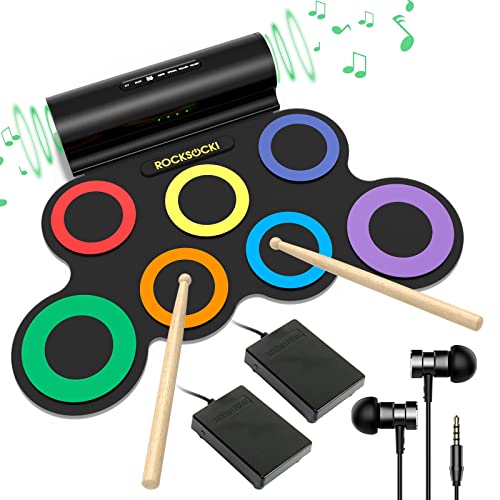
- Includes headphones for quieter practice
- Up to 10 hours of stated battery playtime
- USB MIDI connection and roll-up portability
Best For: Ages 4–12 practicing electronically at home or on the go
Best Portable Pick

- Nine pads with two pedals for a fuller beginner setup
- Headphone jack, recording, demos, and rhythms
- Rechargeable, roll-up design with up to 10 hours of play
Best For: Children ages 3+ needing portable practice and play
Best Gift-Friendly Option

- Nine pads, two pedals, and beginner-friendly sound options
- Up to 10 hours of play with headphone support
- Colorful, portable design with a one-year warranty
Best For: Young children receiving a portable first drum set as a gift
Best Learning Starter – VTech KidiBeats Kids Drum Set
For younger children exploring drum machines for children, the VTech KidiBeats combines simple percussion play with early-learning activities. Three drum pads and a cymbal offer distinct sounds, lights, and four play modes for toddlers ages 2 to 5.
Best For: Toddlers who want an introductory drum toy with letters, numbers, and guided music play.
Pros:
- Includes three drum pads and a cymbal, each with its own sound and LED light.
- Offers Free Play, Letters, Numbers, and Follow-Along modes.
- Includes nine melodies across rock, dance, and pop styles.
- Comes with two drumsticks and demo batteries.
Cons:
- Designed for younger beginners rather than advanced practice.
- Regular use requires fresh AA batteries.
This is a straightforward choice when early education matters as much as musical play. Its compact, manual design and guided modes make it particularly approachable for first-time drummers.
Best Feature-Rich Drum Pad – VTech Kidi Star Drum Pad
The VTech Kidi Star Drum Pad is a versatile option among drum machines for children ages 5 and up. It provides 20 drum-style sounds, built-in songs, games, recording, and Bluetooth or audio-cable connectivity for playing along with personal music.
Best For: Older children who want more sounds, practice features, and the ability to record performances.
Pros:
- Provides 20 styles, including rock, marching band, metal, and jazz.
- Includes more than 30 songs, three games, and a Coach mode.
- Records and replays performances with the built-in record button.
- Supports Bluetooth and audio-cable connections, plus headphone output.
Cons:
- Music player, audio cable, and headphones are not included.
- Requires four AA batteries for regular use.
With its broad sound selection and practice-oriented features, this model is the strongest fit for children ready to move beyond basic tapping. Connectivity also makes it more adaptable for play-along sessions.
Best Full Beginner Kit – LinseyFun Light-Up Kids Drum Set
For shoppers comparing drum machines for children with a more traditional layout, the LinseyFun set includes a bass drum with foot pedal, four smaller drums, a cymbal, sticks, and a stool. Its light-up star design and hands-and-feet format are aimed at introducing young children to percussion.
Best For: Toddlers and preschoolers who want a fuller, sit-down drum-kit experience with a foot pedal.
Pros:
- Includes a bass drum, foot pedal, four additional drums, cymbal, sticks, and stool.
- Light-up star styling adds visual interest during play.
- Foot drum encourages hand, leg, and eye coordination.
- Thick, flexible EVA drum surfaces are designed for consistent sounds.
Cons:
- Assembly is required for the bass drum.
- The set is intended for beginner musical play rather than advanced drumming.
- Its larger kit format takes more setup space than a single drum pad.
This set is a practical pick when children want the look and layout of a real kit. The included stool and pedal make it more immersive, while the light-up design keeps the toy visually engaging.
Best Character-Themed Pick – VTech Bluey Hooray Drum Set
The VTech Bluey Hooray Drum Set gives fans of the show a playful introduction to drum machines for children ages 3 and up. Light-up pads and a cymbal accompany melodies, character songs, sound effects, and a memory game that encourages rhythm practice.
Best For: Bluey fans who want character-themed music, movement, and simple rhythm games.
Pros:
- Features Bluey and Bingo songs in Dance Party mode.
- Offers drum, silly, and animal sounds for open-ended tapping.
- Memory mode asks children to remember and repeat a beat.
- Includes a holder for storing the drumsticks during breaks.
Cons:
- Character-focused features may appeal less to children who do not watch Bluey.
- Requires three AA batteries for regular use.
This is an appealing choice for younger children motivated by familiar characters and songs. The memory game adds a little structured rhythm practice without making the toy feel like formal instruction.
Best All-Around Electronic Pick – Miortior 10-Pad Roll-Up Drum Set
For shoppers comparing drum machines for children, the Miortior offers a broad electronic setup in a portable roll-up format. It includes 10 pads, two pedals, built-in speakers, headphone output, recording, and multiple tones, songs, and rhythms.
Best For: Children age 3 and up who want varied practice features and a portable electronic kit.
Pros:
- Includes 10 pads, two responsive foot pedals, sticks, and a rechargeable battery.
- Offers 7 tones, 10 demo songs, 9 rhythms, adjustable volume and tempo, and recording.
- Supports private practice through the headphone jack and includes a one-year warranty.
- Roll-up silicone design is easy to carry for travel or outdoor play.
Cons:
- A 5V 1A power adapter is required but not included.
- The feature-rich control set may be more than very young beginners need.
The Miortior is a flexible choice when you want a children’s electronic drum machine that supports exploration, quiet practice, and longer play sessions without taking up much storage space.
Best Simple Starter Drum – 8-Inch Wooden Drum Toy
Among drum machines for children, this wooden drum is the simplest, most hands-on option. It uses no batteries or electronics, giving toddlers a straightforward way to explore beats, sounds, and percussion through manual play.
Best For: Toddlers and young children beginning music exploration and sensory rhythm play.
Pros:
- Includes an 8-inch wooden drum, two drumsticks, and an adjustable shoulder strap.
- Sturdy wood construction is described as durable and free of sharp edges.
- Helps children explore sounds and rhythms as an early music-education toy.
- The adjustable strap supports comfortable carrying during percussion games.
Cons:
- It has no electronic sounds, volume controls, recording, or headphone mode.
- The manual design provides only one basic setting.
This drum suits families looking for an uncomplicated musical toy rather than a programmable electronic kit. Its compact, battery-free design keeps play intuitive for toddlers.
Best for Quiet Practice – ROCKSOCKI 7-Pad Electronic Drum Set
For families seeking drum machines for children with quiet-practice options, the ROCKSOCKI combines a seven-pad roll-up layout with dual speakers and an included headphone. Its USB MIDI connection also gives older children a way to connect with compatible computers or phones using the necessary adapter.
Best For: Children ages 4–12 who want portable electronic practice with headphone listening.
Pros:
- Includes seven pads, two pedals, sticks, power and audio cables, and headphones.
- Dual speakers and 10 volume levels support indoor or outdoor playing.
- Built-in 2000mAh battery provides up to 10 hours of stated playtime.
- USB MIDI connection supports computer or phone connections for music production or compatible games.
Cons:
- A phone connection requires an adapter.
- Its seven-pad layout offers fewer pads than the Miortior model.
The ROCKSOCKI is a practical pick when headphone practice and portability matter most. The included headphones add convenience, while MIDI connectivity gives the kit room to support more advanced experimentation.
Best Portable Pick – 9-Pad Roll-Up Drum Set
For shoppers comparing drum machines for children, this nine-pad roll-up set offers a broad starting layout, built-in practice sounds, and flexible listening options. It includes seven timbres, 10 demo songs, nine rhythms, recording for up to 180 seconds, and a rechargeable battery rated for up to 10 hours per charge.
Best For: Children ages 3 and up who want a portable beginner drum machine for practice, travel, or casual play.
Pros:
- Nine pads cover toms, cymbals, hi-hat, ride, snare, and bass-drum sounds.
- Headphone output supports quieter practice, while stereo speakers provide built-in sound.
- Rechargeable battery and roll-up silicone design make it easy to take along.
- Includes two foot pedals, sticks, recording, demo songs, and rhythm options.
Cons:
- The 5V 2A power adapter is not included.
- The feature set may be more than a very young child needs for simple play.
This is a versatile choice when portability and a full nine-pad layout matter. The headphone jack and recording function add useful practice flexibility, while the included demos and rhythms help beginners get started.
Best Learning Features – Donner DED-20 Electronic Drum Pad
The Donner DED-20 stands out among drum machines for children by pairing a seven-pad roll-up layout with structured learning content. It offers 40 free Melodics lessons, seven drum sets, 12 demonstration songs, nine accompaniments, recording, and MIDI connectivity for computer-based music activities.
Best For: Children and beginners who want guided lessons alongside a compact electronic drum pad.
Pros:
- Includes 40 free drum lessons from Melodics, covering beginner through advanced practice.
- Soft silicone pads reduce playing noise and the 3.5mm headphone output supports quiet practice.
- Offers USB MIDI and standard MIDI connectivity for computers and music production.
- Built-in stereo speakers, 180-second recording, demo songs, accompaniments, sticks, and pedals are included.
Cons:
- Its seven-pad layout is smaller than the nine-pad alternatives in this roundup.
- Strike force does not change with playing intensity, according to the supplied product information.
The DED-20 is the strongest fit for families that value instruction and connectivity more than the largest pad count. Its quiet silicone surface, headphones, and included lesson access make it practical for regular beginner practice.
Best Gift-Friendly Option – Sboet 9-Drum Roll-Up Kit
For families seeking drum machines for children as a gift, the Sboet nine-pad kit combines a colorful presentation with practical beginner features. It includes seven timbres, 10 demo songs, nine rhythms, adjustable volume and tempo, a 180-second recording function, two pedals, and a rechargeable battery rated for up to 10 hours.
Best For: Young children and families looking for a colorful, portable introduction to drumming.
Pros:
- Nine pads and two pedals provide a complete starter-style layout.
- Headphone output enables more private practice, while stereo speakers support shared play.
- Rechargeable battery and roll-up construction suit travel, outings, and storage.
- Includes adjustable volume and tempo, demo songs, rhythms, recording, sticks, and a one-year manufacturer warranty.
Cons:
- The 5V 2A power adapter is not included.
- The miniature/toy-sized format may be less suitable for older players wanting a full-size setup.
This Sboet model is a sensible gift-oriented pick when colorful styling, portability, and straightforward musical exploration are priorities. Its nine-pad arrangement gives young beginners plenty to explore without requiring a full acoustic kit.
How We Picked the Best Drum Machines for Children
We compared these 10 options by looking at age suitability, play features, portability, sound control, included accessories, and overall practice value. Toy-style sets prioritize simple controls, bright designs, and approachable play for younger children. Electronic pads generally offer more sounds, pedals, headphone support, and room to develop rhythm skills.
We also considered whether each design is practical for homes with limited space. Roll-up kits are easy to store and transport, while standalone sets may provide a more familiar layout for beginners. Because children have different attention spans and musical goals, there is no single best format for every family.
Quick Comparison
| Type | Best For | Main Advantage | Watch For |
|---|---|---|---|
| Colorful toy drum sets | Toddlers and young beginners | Simple, inviting play | Limited long-term challenge |
| Compact drum pads | Children practicing basic rhythms | Small footprint and varied sounds | May need batteries or power |
| Roll-up electronic kits | Older children and portable practice | Foldable design, pedals, and headphones | Pad response can vary by model |
| Structured electronic kits | Children ready to practice regularly | Lessons, multiple voices, and progression | More setup and a higher learning curve |
Key Buying Factors for Drum Machines for Children
Age and Ease of Use
Choose a straightforward toy layout for toddlers and preschoolers. Older children may benefit from multiple pads, foot pedals, rhythm modes, and lesson content. Controls should be large enough to operate without constant adult help.
Volume and Headphone Options
Built-in speakers are convenient for shared play, but volume control matters in apartments and busy households. A headphone jack is especially useful for focused practice or quiet evening sessions. Check whether headphones are included or must be purchased separately.
Size, Storage, and Power
Roll-up pads are convenient for travel and storage, while rigid sets can feel more stable during energetic play. Confirm the power source and battery requirements before buying, particularly if the kit is intended for gifts or travel.
Accessories and Learning Features
Drumsticks and pedals add value, but included accessories are not equally durable. Preset rhythms, recording functions, lessons, and multiple drum voices can keep older children engaged longer than basic sound effects alone.
Who Should Buy Which Drum Machines for Children?
Choose a colorful VTech or other toy-style set for a toddler or preschooler who is discovering music through imaginative play. A compact pad suits families that want varied sounds without taking up much room. For travel, shared bedrooms, or flexible storage, a roll-up electronic kit is usually the most practical choice. Children who are beginning regular practice should look for headphone support, responsive pads, pedals, and lesson modes. Finally, prioritize a sturdier, more feature-rich electronic set when the child already shows sustained interest and needs room to progress.