Recording a djembe well takes more than choosing a drum with a strong acoustic voice. Shell size, tuning stability, playing position, microphone compatibility, and room acoustics all affect the final track.
This roundup brings together djembes for recording plus the essential supporting gear, from dynamic microphones and drum kits to stands and accessible starter drums. Use the guide below to match your budget and recording setup with the right combination.
Best 10 Djembes for Recording Picks for 2026
Studio-Ready Shell

- Large 14-inch format
- Acousticon body
- Earth finish
Best For: Full-size recording and performance setups
Low-End Capture Tool
AUDIX D4 Instrument Microphone

- Hypercardioid pickup
- 40 Hz–18 kHz response
- XLR dynamic microphone
Best For: Focused low-end djembe recording
Natural Tone Pick
Meinl 10-Inch Rope-Tuned Djembe

- Solid mahogany shell
- Natural goat skin head
- Pre-tuned rope system
Best For: Warm, versatile djembe recording
Portable Color Set
Toca Freestyle Colorsound Djembes

- Seven-djembe set
- Synthetic construction
- Compact 7-inch heads
Best For: Group recording and music education
Versatile Recording Mic Kit

- Five-microphone package for drums and percussion
- XLR-connected dynamic microphones
- Includes travel case
Best For: Studios recording djembe alongside full drum kits and other instruments
Stable Djembe Positioning
Gibraltar Adjustable Djembe Stand

- Double-braced support for stable placement
- Adjustable height, angle, and boom reach
- Fits djembes up to 16 inches
Best For: Consistent djembe positioning during recording sessions
Portable Starter Djembe

- Goatskin head with a sharp, loud profile
- Solid hand-carved mahogany body
- Compact size and included case
Best For: Beginners making portable djembe recordings
Best Studio-Ready Pick
12-Inch Mechanically Tuned Djembe

- Distinct highs, mids, and lows for recording
- Six-lug mechanical tuning with wrench
- Weatherproof synthetic build with carry handle
Best For: Recording musicians seeking broad tonal range and easy pitch control
Best Traditional Character
Painted Mahogany Goatskin Djembe

- Solid mahogany body with goatskin head
- Balanced sound profile in a compact size
- Includes case and hand-painted design
Best For: Beginners and players wanting a portable traditional wooden djembe
Best Compact Recording Option
10-Inch Mechanically Tuned Djembe
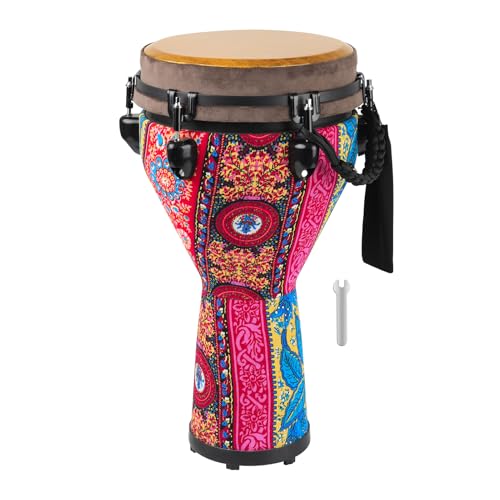
- Versatile high, mid, and low frequency profile
- Six-lug tuning system with included wrench
- Lighter 7.3-pound weatherproof design
Best For: Home studios and mobile players prioritizing portability
Studio-Ready Shell – Remo DJ-0014-05 Mondo Djembe
For shoppers comparing djembes for recording, the Remo Mondo Djembe offers a large 14-inch format with a lightweight Acousticon body. Its Earth finish and wood construction make it a substantial option for players who want a full-size djembe for studio or performance use.
Best For: Players seeking a large-format djembe with a durable Acousticon body for recording and live percussion.
Pros:
- Large 14-inch size suits full-bodied djembe playing.
- Acousticon body provides a purpose-built synthetic drum shell.
- Listed weight is approximately 10 pounds.
Cons:
- The supplied notes do not specify included accessories.
- Warranty information is listed as not applicable.
The Remo is a focused choice when size and a robust Acousticon body matter more than included extras. Confirm your preferred recording setup and stand or microphone requirements separately.
Low-End Capture Tool – AUDIX D4 Instrument Microphone
AUDIX D4 Hypercardioid Dynamic Instrument Microphone for Kick Drums, Toms, and Bass Instruments
Check Price On AmazonAlthough it is not a djembe, the AUDIX D4 is a relevant companion for djembes for recording when you need focused low-frequency capture. Its hypercardioid pattern, 40 Hz–18 kHz response, and dynamic design are intended to help isolate percussion and preserve warmth and punch.
Best For: Recording engineers pairing a djembe with a dedicated dynamic microphone for controlled low-end and isolation.
Pros:
- Hypercardioid pickup pattern supports isolation and feedback control.
- 40 Hz–18 kHz frequency response covers a broad range.
- XLR connectivity and compact design suit studio positioning.
- Dynamic capsule handles high sound pressure levels.
Cons:
- It is a microphone, not a djembe.
- Its design emphasizes low instruments, so a second microphone may be useful for detailed high slaps.
The D4 makes the most sense as part of a recording chain rather than as a standalone percussion purchase. Its directional pickup can help keep the djembe track focused, particularly in a busy setup.
Natural Tone Pick – Meinl 10-Inch Rope-Tuned Djembe
For djembes for recording, the Meinl Rope Tuned Headliner provides a traditional material combination: a hand-carved solid mahogany shell and natural goat skin head. Its 10-inch head and pre-tuned Mali Weave rope system make it a practical all-purpose instrument for players who want warm tone and clear attack.
Best For: Beginners and recording musicians seeking a natural-skin djembe with a broad bass-to-slap tonal range.
Pros:
- Solid, hand-carved mahogany shell.
- Natural goat skin head offers warm tone and clear attack.
- Ships pre-tuned with pre-stretched nylon rope.
- 10-inch head and approximately 9-pound weight remain manageable.
Cons:
- Natural goat skin can vary in color and texture.
- Rope tuning requires hands-on adjustment compared with mechanical tuning.
This Meinl is a strong choice when organic tone and a wide playing range are priorities. Its natural head may reward careful microphone placement, while the pre-tuned setup helps you begin recording without extensive initial tuning.
Portable Color Set – Toca Freestyle Colorsound Djembes
The Toca Freestyle Colorsound set is a practical group option for djembes for recording, classroom sessions, and layered rhythm parts. It includes seven compact 7-inch synthetic-head djembes in bright metallic colors, with lightweight synthetic shells designed for educators and drum-circle use.
Best For: Educators, group sessions, and recordings that need multiple compact djembes with consistent synthetic construction.
Pros:
- Set includes seven djembes in distinct colors.
- Synthetic shells and heads are suited to group and educational use.
- Compact 12-1/2-inch height makes the drums approachable and portable.
- Seven-inch heads provide a manageable playing surface.
Cons:
- Smaller heads may not provide the depth of a full-size djembe.
- The supplied notes do not specify included accessories or a warranty.
- At 17.6 pounds for the set, transport still requires planning.
This set is better suited to ensemble recording, teaching, and colorful visual presentation than to a single player seeking maximum low-end depth. Its matching synthetic construction can simplify outfitting multiple players.
Versatile Recording Mic Kit – Audix FP5 Fusion Drum Mic Kit
AUDIX FP5 Fusion Series 5-piece Drum Mic Kit for Kick, Snare, and Toms with Travel Case - Black
Check Price On AmazonFor anyone building a setup for djembes for recording, the AUDIX FP5 offers a flexible five-microphone package rather than a single-purpose djembe mic. Its included f5, three f2, and f6 dynamic microphones can capture percussion along with drums, guitar cabinets, and bass cabinets through XLR connections.
Best For: Home studios and recording setups that need a versatile microphone collection for djembe and other instruments.
Pros:
- Includes five microphones tailored for different drum and percussion roles.
- Compatible with audio recording devices that have XLR inputs.
- Hypercardioid microphone design and dynamic construction support focused instrument capture.
- Comes with a travel case and a five-year warranty for eligible Audix dynamic microphones purchased in the USA.
Cons:
- This is a full drum-mic kit, so it may be more equipment than needed for recording one djembe.
- It requires corded operation and recording equipment with XLR inputs.
The FP5 is the strongest choice here when your priority is expanding a recording rig beyond one percussion instrument. Its djembe compatibility is useful, but the kit’s main value is its broader studio flexibility.
Stable Djembe Positioning – Gibraltar Adjustable Djembe Stand
A stable stand can make a practical difference when setting up djembes for recording. The Gibraltar GPDS provides adjustable height, angle, and reach, helping position a djembe consistently for seated or standing playing while leaving the microphone area easier to manage.
Best For: Recording, rehearsal, and stage setups where repeatable djembe placement and hands-free support are important.
Pros:
- Double-braced construction provides heavy-duty support.
- Height and angle adjustments accommodate different playing positions.
- Telescopic boom arm and hinged adjustment offer flexible placement.
- Memory lock helps preserve settings between sessions and holds djembes up to 16 inches in diameter.
Cons:
- It is a stand, not a microphone or recording device, so a separate recording setup is required.
- The stand weighs 2.8 kg and adds hardware to a portable percussion setup.
The GPDS is a useful companion for recording because it helps keep the drum at a consistent height and angle. Choose it when positioning and stability matter more than adding another piece of audio equipment.
Portable Starter Djembe – AKLOT 8-Inch Mahogany Djembe
The AKLOT 8-inch djembe is a compact instrument for players assembling an accessible setup for djembes for recording. Its goatskin head is described as sharp and loud with fewer overtones, while the mahogany body, low-stretch rope, and included case make it suitable for beginner practice and portable sessions.
Best For: Beginners and portable recording setups that need a compact, ready-to-play djembe.
Pros:
- Genuine goatskin head provides a sharp, loud sound profile with fewer overtones.
- Hand-carved solid mahogany body adds a distinctive decorative finish.
- Compact 8-by-15.7-inch size supports portability and beginner use.
- Includes a case and a two-year satisfaction and quality warranty according to the supplied product notes.
Cons:
- The 8-inch size may provide less low-end presence than a larger djembe.
- It is marketed as a starter instrument, so experienced players may want a more specialized recording drum.
The AKLOT is a sensible entry point for recording simple djembe parts without committing to a large instrument. Its compact build and sharper sound profile favor portability and beginner-friendly use over maximum depth.
Best Studio-Ready Pick – 12-Inch Mechanically Tuned Djembe
For anyone comparing djembes for recording, this 12-inch Freestyle model stands out for its studio-oriented tonal range and precise mechanical tuning. Its synthetic construction is designed to provide stable performance while remaining portable enough for sessions, rehearsals, and live use.
Best For: Recording musicians who want strong low-end resonance, clear highs, and convenient pitch adjustment.
Pros:
- Produces distinct high, mid, and low frequencies for a balanced recorded sound.
- Six heavy-duty tuning lugs and an included wrench allow precise pitch adjustments.
- Weatherproof synthetic shell and tear-resistant DuPont composite head require minimal maintenance.
- Integrated carry handle supports transport to studios, classes, and performances.
Cons:
- At 9.3 pounds, it is heavier than the smaller 10-inch model.
- Synthetic construction may not suit buyers specifically seeking a traditional wooden djembe.
The 12-inch size makes this the more substantial recording option in the Freestyle pair, particularly if deeper resonance is important. Its key-tuned design also makes repeatable pitch adjustments easier between sessions.
Best Traditional Character – Painted Mahogany Goatskin Djembe
This compact mahogany djembe is a practical choice for buyers exploring djembes for recording who prefer a traditional wooden body and goatskin head. Its balanced sound profile, handmade construction, and portable size make it well suited to smaller recording setups and learning environments.
Best For: Beginners and musicians who want a portable wooden djembe with an authentic appearance and balanced tone.
Pros:
- Solid mahogany body and goatskin head provide traditional acoustic character.
- Balanced sound profile with a 6.5-inch playing surface.
- Compact 12-inch format is easy to transport and suitable for players of different ages.
- Includes a case and features a distinctive hand-painted ethnic-style design.
Cons:
- Rope tuning is less immediately convenient than the mechanical tuning on the Freestyle models.
- The goatskin head may show natural surface variation rather than a spotless white finish.
- Its smaller head may deliver less low-end presence than larger djembes.
This model prioritizes traditional materials, portability, and visual character. For recording, it may appeal most when a balanced wooden-drum tone and compact footprint matter more than maximum bass resonance or fast tuning changes.
Best Compact Recording Option – 10-Inch Mechanically Tuned Djembe
If you need djembes for recording that are easier to move and fit comfortably into a compact setup, this 10-inch Freestyle model offers a useful balance of portability and tonal versatility. Its six-lug tuning system and synthetic materials are designed for consistent, low-maintenance use.
Best For: Home studios, mobile performers, and players who want adjustable tuning in a lighter package.
Pros:
- Distinct high, mid, and low frequencies support a versatile recorded sound.
- Six heavy-duty lugs and included wrench make pitch changes straightforward.
- Weighs 7.3 pounds and includes an integrated carry handle for easier transport.
- Weatherproof head and shell resist humidity and temperature-related changes.
Cons:
- The 10-inch head may offer less low-frequency resonance than the 12-inch version.
- Plastic and synthetic construction will not provide the same material character as a wooden djembe.
The smaller size and lighter weight make this the more convenient Freestyle choice for mobile recording or limited studio space. It retains the larger model’s mechanical tuning approach while trading some size and potential depth for portability.
How We Picked These Djembes for Recording
We selected products across the main parts of a practical recording setup: full-size djembes, compact drums, microphones, multi-mic kits, and positioning hardware. We considered shell dimensions, tuning design, likely tonal range, portability, construction details, and how easily each item can fit into a home or project studio.
Because a djembe’s sound depends heavily on the player and recording space, no single product is ideal for every session. Larger drums generally offer more low-end authority, while smaller models can be easier to place and control in untreated rooms. Mechanically tuned designs can also simplify pitch adjustments between takes.
Quick Comparison
| Need | Best type to consider | Why it matters |
|---|---|---|
| Deep, full-bodied tone | Large 12- to 14-inch djembe | Produces stronger bass and a broader dynamic range |
| Easy tuning | Mechanically tuned djembe | Allows faster, more repeatable adjustments |
| Close-miking | Dynamic instrument microphone | Handles high sound-pressure levels and rejects some room noise |
| Multiple drum sources | Five-piece drum microphone kit | Provides a coordinated set for larger percussion setups |
| Consistent playing position | Adjustable djembe stand | Reduces fatigue and keeps microphone placement stable |
Key Buying Factors for Djembes for Recording
Drum Size and Tonal Balance
Diameter and shell height influence projection, bass response, and physical comfort. A large djembe can sound impressive on spacious arrangements, but it may overwhelm a small room or require more low-frequency control. Compact drums are often easier to manage for layered tracks, travel, and beginners.
Tuning and Construction
Rope-tuned drums can provide a traditional feel and broad adjustment range, while mechanical tuning is convenient when you need repeatable tension. Check the head material, shell construction, hardware quality, and stated dimensions rather than relying on appearance alone.
Microphone Choice and Placement
A dynamic microphone is usually a practical starting point for close-miking a loud djembe. Position it near the shell or head according to the balance you want, then listen for excess bass, harsh slap, and unwanted room reflections. A stand or boom that stays secure is equally important.
Room and Recording Workflow
Before buying more equipment, consider your interface inputs, available stands, acoustic treatment, and the number of percussion sources you record simultaneously. A simple single-mic setup may sound more natural, while multiple microphones offer greater control but require phase awareness and extra channels.
Who Should Buy Which Djembes for Recording?
Choose a large Remo, Meinl, or Freestyle model if your priority is a substantial acoustic tone for solo performances, ensemble work, or low-end-rich productions. A smaller AKLOT or painted wood djembe may suit beginners, mobile recording, and tighter rooms. Consider the Toca set if you want a coordinated option for developing technique or expanding percussion textures.
For recording hardware, the AUDIX D4 is a focused choice for close-miking a single drum, while the AUDIX FP5 kit makes more sense when you also record kick, snare, and toms. Add the adjustable djembe stand when posture, repeatable placement, and session comfort matter. Finally, verify connector requirements, interface inputs, stand clearance, and return policies before ordering.