Choosing among djembes for beginners can be difficult when listings vary widely in size, tuning system, materials, and intended use. A compact drum may suit casual practice, while a full-size model can offer a more authentic playing experience and greater projection.
This roundup includes beginner-friendly djembes, instruction books, and varied drum sizes so you can match your purchase to your space, budget, playing goals, and comfort level.
Best 10 Djembes for Beginners Picks for 2026
Best Starter Value

- 9.5-inch head and 20-inch height
- Mahogany shell with goatskin head
- Includes case and rope tuning
Best For: Beginners over age 8 wanting a portable, decorative starter drum
Simple Wood Option

- Traditional wood body
- Part of Toca’s Origin Series
- Specifications are limited
Best For: Buyers seeking a basic Toca wood djembe
Best All-Purpose Pick
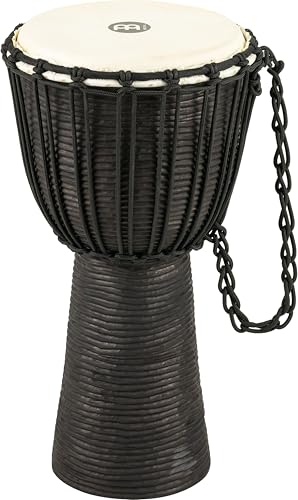
- 10-inch head and 20-inch height
- Solid mahogany with natural goatskin
- Pre-tuned with a two-year warranty
Best For: Beginners seeking a versatile drum for practice and group playing
Best Learning Companion
Ultimate Beginner Hand Drums Book
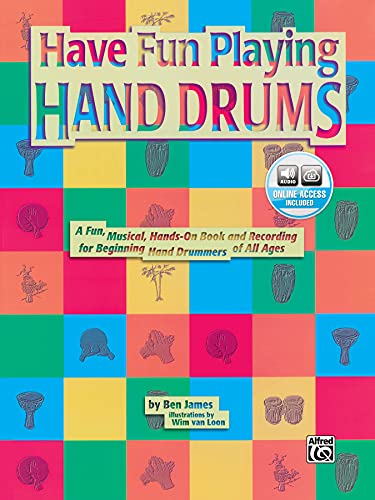
- Covers djembe and other hand drums
- Includes illustrated lessons and audio
- Builds rhythm and coordination skills
Best For: Children and adults wanting structured djembe instruction
Best Overall
Meinl Rope-Tuned Headliner Djembe

- Pre-tuned for immediate playing
- Solid mahogany and goat-skin construction
- Versatile for practice, circles, and gigs
Best For: Beginners wanting a full-size, all-purpose djembe
Best Key-Tuned Option

- Key-tuned contour bracket design
- Warm, balanced sound profile
- Large 12-inch playing surface
Best For: Beginners preferring a larger modern djembe
Best Compact Starter
Terre Handmade Beginner Djembe
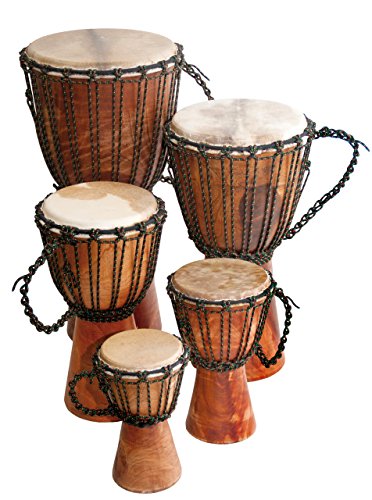
- Lightweight 12-inch handmade drum
- Mahogany body with goat-skin head
- Includes drumstick and stand
Best For: Casual practice, gifting, and portable beginner use
Best Instructional Guide

- Covers foundational technique, notation, and rhythms
- Includes online demonstration videos
- Useful for students, teachers, and self-learners
Best For: Structured djembe practice and technique study
Best Compact Rope-Tuned Drum
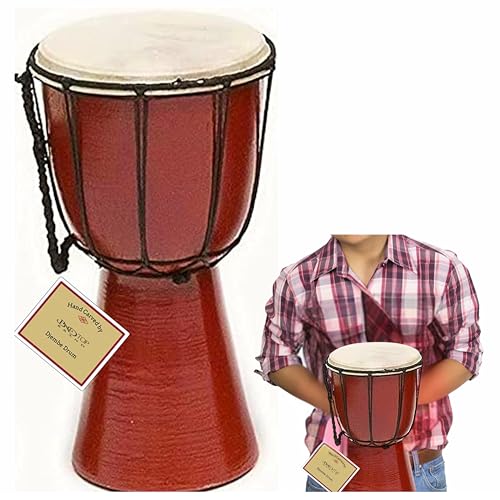
- Compact, portable 6x12-inch design
- Wood body with genuine goat-skin head
- Includes case and adjustable rope tuning
Best For: Portable beginner practice and drum circles
Best Decorative Compact Drum

- Portable 4.5x8-inch format
- Solid mahogany body with goatskin head
- Deep-carved elephant design adds visual appeal
Best For: Portable beginner playing with artistic styling
Best Starter Value – AKLOT Hand-Painted Djembe
For shoppers comparing djembes for beginners, the AKLOT offers a practical full-size design with a mahogany shell, goatskin head, and included case. Its 9.5-inch head and 20-inch height provide room to practice bass, tone, and slap techniques, while the portable size suits students and new adult players.
Best For: Beginners over age 8 who want a handcrafted, portable djembe with a distinctive finish.
Pros:
- Solid mahogany shell with hand-carved decorative detailing.
- Low-stretch rope is designed to support more consistent tuning.
- Includes a case and offers a 45-day satisfaction and quality warranty.
- Large playing head supports basic bass, tone, and slap practice.
Cons:
- Recommended for children over 8, so it may not suit younger players.
- Hand-painted and natural-material details may vary from the listing appearance.
The AKLOT is a well-rounded starting point when portability, visual character, and beginner-friendly dimensions matter. It is especially appealing for lessons, school use, and casual home practice.
Simple Wood Option – Toca Origin Series Djembe
The Toca Origin Series Djembe is a straightforward option for shoppers seeking djembes for beginners without a long list of specifications. Its supplied details identify a wood body and the Origin Series designation, making it a simple choice to compare when brand and basic construction are the priorities.
Best For: Buyers looking for a basic wood djembe from Toca for introductory hand-drumming.
Pros:
- Wood body provides a traditional material choice.
- Origin Series model is easy to identify when comparing Toca instruments.
- Single-item package keeps the purchase straightforward.
Cons:
- The supplied notes do not specify size, head material, tuning system, or included accessories.
- No warranty information is listed in the supplied details.
Because the available specifications are limited, confirm the exact size and included components before ordering. This model makes the most sense for shoppers who already prefer Toca and want to verify the fit for their intended player.
Best All-Purpose Pick – Meinl Rope-Tuned Djembe
For beginners who want an instrument they can continue using, the Meinl rope-tuned djembe combines a 10-inch playing surface with a hand-carved mahogany shell and natural goatskin head. It ships pre-tuned and is designed to produce deep bass, bright edge slaps, and a warm overall tone.
Best For: New players who want a versatile, gig-ready djembe for lessons, drum circles, and home practice.
Pros:
- Hand-carved from one solid piece of certified mahogany.
- Natural goatskin head offers a warm tone and clear attack.
- Pre-tuned Mali Weave rope system is intended to sound good out of the box.
- Two-year warranty adds useful coverage for a long-term purchase.
Cons:
- At about 9 pounds, it is heavier than some portable beginner options.
- Natural head color and texture vary between drums.
- No included components are specified.
The Meinl is a strong choice if sound range and future versatility matter more than minimum weight. Its construction and warranty make it suitable for a beginner who expects to keep playing beyond the first lessons.
Best Learning Companion – Ultimate Beginner Hand Drums Book
Although it is not a djembe, this book and audio package can complement djembes for beginners by providing structured instruction. It covers beat awareness, drum sounds, group playing, rhythm creation, coordination exercises, and simple African and Caribbean rhythms for home or classroom use.
Best For: Children and adults who want guided lessons and play-along audio for learning djembe fundamentals.
Pros:
- Covers bongos, congas, and djembe drums.
- Includes illustrated lessons and audio for practice.
- Introduces rhythm, coordination, group playing, and simple musical patterns.
- Suitable for classroom or at-home learning.
Cons:
- It is instructional material rather than a physical djembe.
- Published in 1999, so the included media format and presentation may feel dated.
- It does not provide a drum or other playing equipment.
This is a useful add-on for a beginner who benefits from step-by-step guidance. Pair it with a suitable drum to create a more complete introductory learning setup.
Best Overall – Meinl Rope-Tuned Headliner Djembe
For beginners seeking djembes for beginners that are ready to play immediately, the Meinl Rope-Tuned Headliner is a versatile choice. Its solid mahogany shell and natural goat-skin head produce a broad range of tones, while the pre-tuned rope system helps you start playing out of the box.
Best For: New players who want an all-purpose djembe for practice, drum circles, jams, or acoustic performances.
Pros:
- Pre-tuned and designed for straightforward bass and slap tones.
- Hand-carved solid mahogany shell offers a resonant sound and display-worthy appearance.
- Natural goat-skin head provides a warm tone with clear attack.
- Suitable for multiple playing settings and skill levels.
Cons:
- At about 9 pounds and 20 inches tall, it is less compact than smaller beginner drums.
- Natural goat skin can vary in color and texture.
- Rope tuning may require future adjustment as playing needs change.
This is the strongest all-around option in the group for a beginner who wants a full-size, handmade instrument with room to grow. Its combination of immediate playability, tonal range, and durable materials also makes it suitable beyond the first lessons.
Best Key-Tuned Option – REMO MONDO 12-Inch Djembe
The REMO MONDO is a substantial option for shoppers comparing djembes for beginners who value a contemporary design and key-tuned setup. Its engineered-wood shell, SKYNDEEP Fiberskyn head, and contour tuning brackets are built around a warm, balanced sound profile.
Best For: Beginners who prefer a larger djembe with a synthetic-style head and key-tuned construction.
Pros:
- Key-tuned design offers an alternative to rope tuning.
- SKYNDEEP Fiberskyn head is paired with a warm, natural, balanced sound profile.
- 12-inch size provides a generous playing surface.
- Available in several finishes, including Black Earth, Camouflage, and Adinkra.
Cons:
- Its listed package weight is about 16.2 pounds, making it the heaviest option here.
- The supplied specifications do not list included accessories.
- The product description does not include a warranty.
The MONDO stands out for players who want a larger, modern-looking drum and prefer contour brackets over traditional rope tuning. Its weight and unspecified accessories are worth considering before choosing it for portable practice.
Best Compact Starter – Terre Handmade Beginner Djembe
For beginners exploring djembes for beginners on a smaller scale, the Terre Handmade Djembe offers a compact 12-inch format with natural materials. Its mahogany body and goat-skin head are intended to deliver warm, resonant tones, and the supplied drumstick and stand add useful starter accessories.
Best For: New players seeking a lightweight practice drum, gift, or compact introduction to djembe playing.
Pros:
- Lightweight design weighs about 2.5 pounds.
- Mahogany construction and goat skin support a rich, resonant sound.
- Includes a drumstick and stand according to the supplied details.
- Handmade styling includes an alpine cord accent.
Cons:
- The 6.5- to 7-inch head is smaller than the playing surfaces on the other listed drums.
- Its compact size may provide less volume and low-end presence than a full-size djembe.
- The supplied details do not specify a tuning system.
This Terre model is a practical entry point when portability, presentation, and included accessories matter more than maximum projection. It is especially appealing for casual practice or gifting, while more performance-focused beginners may prefer a larger drum.
Best Instructional Guide – Beginner Djembe Method Book
For shoppers seeking djembes for beginners, the Djembe Method is a practical learning companion rather than a physical drum. This 48-page Hal Leonard guide covers foundational technique, notation, tone exercises, basic rhythms, traditional patterns, and modern approaches, with online demonstration videos accessed through a code in the book.
Best For: Students, teachers, and self-learners who already have a djembe or want structured instruction before choosing one.
Pros:
- Introduces core djembe techniques and notation.
- Includes bass, slap, and three- and four-tone exercises.
- Online videos demonstrate many examples from the book.
- Covers both traditional rhythms and modern techniques.
Cons:
- It is an instructional book, not a physical djembe.
- Online video access requires the unique code inside the book.
- The printed guide is relatively short at 48 pages.
This is a useful add-on for beginners who want a clear progression from basic sounds to recognizable rhythms. Pair it with a suitable drum for a more complete starter setup.
Best Compact Rope-Tuned Drum – 6×12 Goat-Skin Djembe
Among djembes for beginners, this handcrafted 6×12-inch model emphasizes portability and traditional construction. Its wood body, genuine goat-skin head, and adjustable rope tuning provide a compact instrument for learning, drum circles, performances, or casual playing.
Best For: Beginners who want a portable, handcrafted djembe with a deep, vibrant sound profile and an included case.
Pros:
- Compact 6×12-inch size is easy to carry and store.
- Wood body and genuine goat-skin head offer traditional materials.
- Adjustable rope tuning allows pitch adjustments.
- Includes a case for transport.
Cons:
- Handcrafted dimensions may vary slightly.
- Its compact size may provide less playing surface than a larger djembe.
- The manufacturer warranty is limited to 90 days.
This model makes sense when space and portability matter. Its traditional rope system offers room to learn basic tuning, while the small format keeps it approachable for casual beginner use.
Best Decorative Compact Drum – Deep-Carved Mahogany Djembe
For those comparing djembes for beginners, this 4.5×8-inch hand drum combines a highly portable format with decorative craftsmanship. It has a solid mahogany body, an unbleached goatskin head, and a tensile rope system, while its deep-carved elephant design gives it a distinctive artistic appearance.
Best For: Beginners and musicians of different ages who want a small, warm-sounding djembe with an artistic carved finish.
Pros:
- Small 4.5×8-inch size is easy to transport.
- Solid mahogany construction is described as sturdy and durable.
- Goatskin head and rope tuning support a traditional design.
- Deep-carved elephant motif adds decorative appeal.
Cons:
- The small head may offer less playing area than larger drums.
- The unbleached goatskin may have visible surface variations.
- No warranty is listed.
This is a practical choice for beginners prioritizing portability and visual character. Its compact dimensions suit introductory playing, though players seeking a larger sound and broader surface may prefer a bigger djembe.
How We Picked These Djembes for Beginners
We selected products across the main categories a new player is likely to consider: traditional rope-tuned drums, easier-to-adjust key-tuned models, compact djembes for children or travel, and larger drums for adults who want stronger projection. We also included beginner instruction books because technique, hand placement, and basic rhythms are important parts of learning.
Our comparison focuses on practical details such as drum size, head material, shell construction, tuning method, portability, age suitability, and whether the product is better for quiet home practice, lessons, drum circles, or more serious playing.
Quick Comparison
- Best for adjustable tuning: A key-tuned model lets you make pitch changes with a wrench rather than learning rope-tuning techniques.
- Best for traditional feel: Rope-tuned wooden djembes provide a classic appearance and playing experience.
- Best for portability: Compact 6- to 8-inch drums are easier to carry and fit in smaller rooms.
- Best for fuller sound: Larger 10- to 12-inch heads and taller shells generally provide more bass and projection.
- Best learning add-on: A method book or video-supported guide can help establish correct technique and rhythm reading.
Key Buying Factors for Djembes for Beginners
Size and Comfort
Choose a drum you can hold comfortably between your knees without hunching over. Smaller drums are convenient and often easier for younger players, but adult beginners may find a medium or full-size djembe more satisfying. Check the listed height and head diameter, not just the product name.
Rope Tuning Versus Key Tuning
Rope-tuned drums offer a traditional design and can be durable, but adjusting tension takes practice. Key-tuned models are usually simpler for beginners who want straightforward pitch adjustments. Either system can work well when the drum is properly tensioned.
Head and Shell Materials
Goatskin heads provide a traditional response, while synthetic heads can offer more consistent performance and easier maintenance. Wood shells often deliver a warm, resonant tone; synthetic or molded shells may be lighter and more resistant to changing humidity.
Sound, Volume, and Maintenance
A larger djembe may be loud in an apartment or shared home. Consider where you will play and whether you can protect a natural-skin head from excess heat and humidity. Inspect the head, tuning hardware, and shell for damage before regular use.
Who Should Buy Which Djembes for Beginners?
Choose a compact djembe if portability, affordability, or a child-friendly size matters most. Choose a medium wooden drum for a balanced first instrument suitable for lessons and casual ensemble playing. Choose a larger djembe if you are an adult beginner who wants deeper bass and stronger projection. Choose a key-tuned model if convenient adjustment is more important than traditional construction. Finally, add a beginner method book or online-video guide if you want structured practice rather than learning rhythms by trial and error.