If you’re looking to deepen your faith and understanding, exploring Christian apologetics can be a worthwhile journey. A selection of impactful books can guide you through foundational beliefs and logical arguments. From C.S. Lewis’s classic works to extensive study guides, each title offers unique insights. But which ones truly stand out? Let’s take a closer look at the top choices that can help you articulate your faith more confidently.
Mere Christianity

If you’re seeking a thoughtful exploration of Christian beliefs that resonates with both skeptics and believers, C.S. Lewis’s “Mere Christianity” is essential reading. This book unifies core Christian doctrines, presenting them in a conversational style that feels like a dialogue with a friend. Lewis tackles the Law of Human Nature, illustrating how morality shapes our decisions and society. He emphasizes the importance of virtues, warning against pride as a destructive vice. Through his own journey from atheism to faith, Lewis encourages personal transformation and spiritual growth, making this work relevant across generations. It’s a compelling foundation for understanding Christianity.
Best For: Those seeking a thoughtful and accessible exploration of Christian beliefs, whether they are skeptics or believers.
Pros:
- Engaging conversational style that makes complex ideas easy to understand.
- Addresses moral frameworks and virtues relevant to personal and societal well-being.
- Offers insights into personal transformation through faith, appealing to a broad audience.
Cons:
- Some readers may find the theological concepts challenging or abstract.
- The content may not resonate with those firmly opposed to religious beliefs.
- Being a compilation of earlier works, it may lack a cohesive narrative flow for some readers.
The Big Book of Christian Apologetics: An A to Z Guide (A to Z Guides)
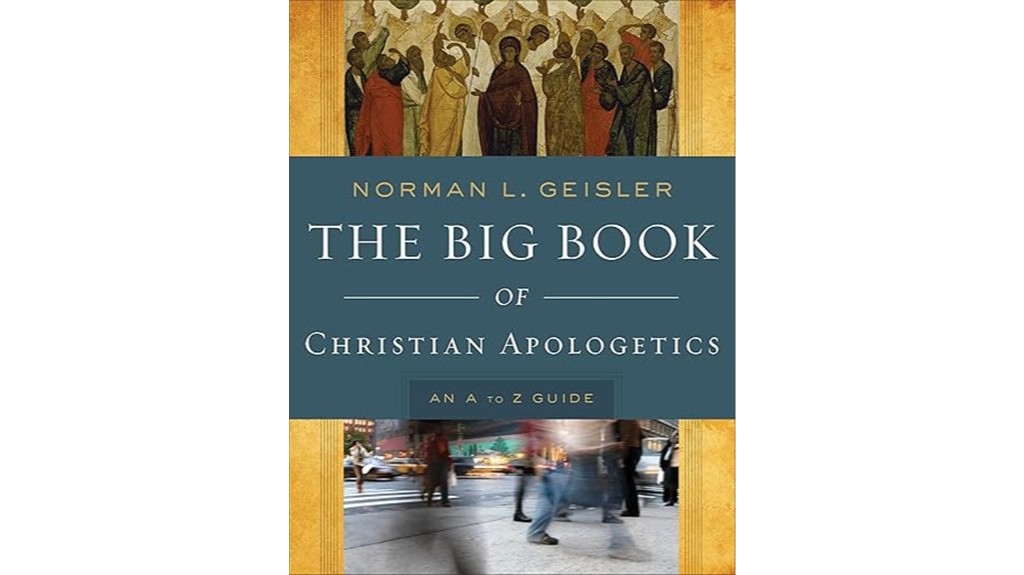
“The Big Book of Christian Apologetics: An A to Z Guide” is an excellent choice for anyone enthusiastic to deepen their understanding of Christian apologetics, whether for personal enrichment or teaching purposes. This thorough guide offers 1 to 3-page summaries on a variety of topics, providing solid evidence from scripture, history, and science. Authored by Norman Geisler, it tackles critiques of God’s Word while presenting insights from both believers and skeptics. Readers appreciate its concise, high-quality content, which bolsters their faith and confidence in God’s timeless message. Plus, the bibliographies encourage further exploration of each subject.
Best For: Individuals seeking to enhance their understanding of Christian apologetics for personal growth or educational purposes.
Pros:
- Concise Summaries: The book provides 1 to 3-page summaries that make it easy to digest a wide range of topics quickly.
- Comprehensive Coverage: It offers solid evidence from scripture, history, and science, reinforcing the Christian faith.
- Bibliographical Resources: Each topic includes a bibliography, encouraging readers to explore subjects further.
Cons:
- Cultural Localization: Some readers desire more localized content to fit different cultural contexts.
- Conservative Perspective: The author’s conservative stance may not resonate with all readers or perspectives on certain issues.
- Limited Depth: The brevity of summaries may not satisfy those seeking in-depth discussions on complex topics.
CSB Apologetics Study Bible, Gray Hardcover

For anyone seeking a deeper understanding of scripture and its defense, the CSB Apologetics Study Bible in gray hardcover stands out as an invaluable resource. Its compact design features easy-to-read serif type and offers extensive study notes, articles from various theologians, and helpful footnotes. While the main text is clear, the smaller commentary font can be a challenge. The durable hardcover and stiff spine guarantee it lies flat for easy study, though pages may be prone to tearing. Overall, this Bible is highly recommended for anyone keen to explore and deepen their faith through thoughtful insights and diverse perspectives.
Best For: Individuals seeking a deeper understanding of scripture and its defense through diverse theological perspectives.
Pros:
- Extensive study notes and articles from various Christian theologians enhance understanding.
- Compact design with easy-to-read serif type and a durable hardcover for practical use.
- Clear main text and helpful apologetics-themed footnotes provide context for scripture.
Cons:
- Smaller commentary font may be challenging for some readers.
- Pages are thin and prone to tearing or sticking together.
- Some confusing passages are not thoroughly commented on, potentially leaving questions unanswered.
Handbook of Christian Apologetics: Hundreds of Answers to Crucial Questions

A thorough resource for both believers and skeptics alike, the “Handbook of Christian Apologetics” offers hundreds of answers to pivotal questions about faith. Authored by Peter Kreeft and Ronald Tacelli, this book breaks down complex topics like the existence of God and the problem of evil, making them accessible to all. You can read it cover-to-cover or explore specific sections, depending on your curiosity. With its well-structured approach and clarity, it’s highly recommended for anyone keen to understand Christian doctrines. Despite some critiques on Catholic imagery, its insights are invaluable for contemporary discussions surrounding faith.
Best For: Those seeking a comprehensive understanding of Christian doctrines and philosophical arguments, whether they are believers or skeptics.
Pros:
- Well-structured and easy to read, making complex topics accessible.
- Covers a wide range of crucial questions about faith, appealing to diverse audiences.
- Offers valuable insights and logical arguments supporting Christian beliefs.
Cons:
- Some readers may find the inclusion of Catholic imagery off-putting.
- May not delve deeply into non-Christian perspectives, limiting its appeal.
- The breadth of topics might overwhelm those looking for specific answers.
Defending Your Faith: An Introduction to Apologetics

If you’re curious about the intersection of faith and reason, “Defending Your Faith: An Introduction to Apologetics” is an excellent choice. This book encourages you to explore the existence of God, presenting rational arguments that belief in a Creator is both logical and necessary. Sproul emphasizes that observing creation points to an Intelligent Designer. While he uses the Bible as a key resource, he acknowledges challenges in verifying its historical claims. Despite some critiques regarding clarity, the book remains a valuable introduction to apologetics, sparking meaningful discussions for both believers and skeptics alike.
Best For: Individuals seeking a clear and accessible introduction to the arguments for God’s existence and the reliability of the Bible in the context of apologetics.
Pros:
- Engaging Writing: The book presents complex philosophical arguments in an understandable manner, making it suitable for beginners.
- Rational Arguments: It provides compelling reasons for belief in God, appealing to both believers and skeptics.
- Stimulates Discussion: “Defending Your Faith” encourages meaningful conversations about faith and reason.
Cons:
- Incomplete Arguments: Some readers may find certain arguments lacking in depth or clarity.
- Limited Evidence: The book does not fully prove the historical accuracy of the Bible, which may leave some questions unresolved.
- Potential Bias: Sproul’s assertion about non-theists may detract from the objectivity of his arguments.
Tactics: A Game Plan for Discussing Christian Convictions (10th Anniversary Edition)

Christians seeking to engage in meaningful conversations about their faith will find “Tactics: A Game Plan for Discussing Christian Convictions (10th Anniversary Edition)” by Greg Koukl an invaluable resource. This book equips you with practical strategies to discuss your beliefs respectfully and effectively. Koukl’s “The Columbo” method encourages you to ask questions, allowing you to guide conversations without confrontation. He focuses on realistic goals, aiming to plant ideas that provoke thought rather than demand immediate conversion. Accessible and straightforward, this book is perfect for both seasoned apologists and newcomers, helping you communicate your faith with confidence and clarity.
Best For: Christians looking to enhance their ability to discuss and defend their faith in a respectful and effective manner.
Pros:
- Provides practical strategies that can be easily applied in various conversational contexts.
- Emphasizes a gentle approach to discussions, promoting thoughtful dialogue without confrontation.
- Accessible to both seasoned apologists and those new to the faith, making it suitable for a wide audience.
Cons:
- Some readers may find the tactics require practice to implement effectively in real conversations.
- The book’s focus on dialogue may not appeal to those seeking more direct methods of evangelism.
- Concerns about its publisher may lead some to question the overall credibility of the content.
Dont Give the Enemy a Seat at Your Table: Its Time to Win the Battle of Your Mind

For anyone battling negative thoughts and spiritual doubts, “Don’t Give the Enemy a Seat at Your Table: It’s Time to Win the Battle of Your Mind” serves as an essential guide. Louie Giglio offers powerful insights rooted in Scripture, teaching you how to combat the enemy’s lies. Readers rave about its transformative impact, reporting newfound clarity and spiritual growth. The book’s practical strategies help you focus on God’s love and truth, empowering you to replace negativity with affirmations of your identity in Christ. It’s a must-read that encourages you to strengthen your mind and deepen your relationship with God.
Best For: Individuals seeking to overcome negative thoughts and enhance their spiritual journey through biblical teachings.
Pros:
- Transformative Impact: Many readers report significant changes in mindset and spiritual growth after reading the book.
- Easy to Read: The engaging writing style allows readers to quickly absorb the material, making it accessible even for those who aren’t avid readers.
- Practical Strategies: Offers actionable advice for combating negative thoughts and focusing on God’s truths.
Cons:
- Limited Audience: May primarily resonate with Christian readers, potentially leaving non-religious individuals uninterested.
- Repetitive Themes: Some readers may find certain concepts reiterated throughout the book, which could lead to a lack of new insights.
- Emphasis on Spiritual Warfare: Those not familiar with spiritual warfare concepts might find some sections challenging to relate to.
Christian Apologetics

A key feature of Christian Apologetics books, particularly Dr. Norman Geisler’s “Christian Apologetics,” is their structured approach to defending the Christian faith. Geisler divides his work into three parts: Methodology, Religious Groups, and the truth claims of Christianity. This makes it accessible for everyone, from beginners to seminary students. You’ll appreciate the logical arguments against common objections, enhancing your understanding of various worldviews. While some sections might need more clarity, the book remains an essential resource in apologetics. Engaging with it can help you develop robust personal apologetic views grounded in philosophical concepts and biblical truths.
Best For: Those seeking a comprehensive and accessible resource in Christian Apologetics, from beginners to seminary students.
Pros:
- Covers a wide range of worldviews and provides strong arguments against common objections to Christianity.
- Clear and logical writing style makes it accessible for readers new to philosophy.
- Offers extensive information on various philosophical topics relevant to apologetics.
Cons:
- Some chapters may lack clarity and depth, focusing too narrowly on specific objections.
- Atheism and Theism could be explored more thoroughly for a balanced perspective.
- The philosophical lens may overshadow biblical perspectives on apologetics.
Every Believer Confident: Apologetics for the Ordinary Christian

If you’re looking for a straightforward resource to help you defend your faith, “Every Believer Confident: Apologetics for the Ordinary Christian” is the perfect choice. This practical guide equips you with insights, examples, and biblical wisdom to engage effectively in conversations about your beliefs. Farnham’s presuppositional approach emphasizes understanding both your faith and the worldviews of others. You’ll learn to ask impactful questions that challenge assumptions and uncover deeper issues. With actionable strategies and a focus on grace, this book helps you share the gospel meaningfully, encouraging you to build relationships as you confidently point others to Jesus.
Best For: Ordinary Christians seeking practical guidance to confidently defend their faith and engage in meaningful gospel conversations.
Pros:
- Presuppositional Approach: Encourages understanding of both Christian beliefs and the worldviews of others, fostering effective dialogue.
- Actionable Strategies: Offers practical tips and examples for engaging in faith-sharing conversations, making the process more accessible.
- Focus on Relationships: Emphasizes the importance of building long-term relationships for effective apologetics, leading to deeper discussions.
Cons:
- Requires Engagement: The call for active participation in apologetics may be overwhelming for some readers who prefer a more passive approach.
- Complexity of Worldviews: Understanding and addressing various worldviews can be challenging and may require additional study.
- Potential for Conflict: Engaging in discussions about faith may lead to uncomfortable conversations or disagreements with others.
Factors to Consider When Choosing Christian Apologetics Books
When you’re picking a Christian apologetics book, it’s essential to reflect on who the target audience is and how well the content matches your needs. You should also look into the author’s expertise and background, as this can greatly impact the book’s credibility. Finally, think about the depth of the content and how it aligns with your theological perspective and practical application strategies.
Target Audience Alignment
Choosing the right Christian apologetics book hinges on understanding your audience’s familiarity with the subject. If your readers are laypersons or seminary students, pick books that match their knowledge base—too advanced or too simplistic material can hinder understanding. You should also consider specific demographics, like youth or new believers, as these groups often appreciate relatable examples and practical applications. Evaluating your audience’s biases or existing beliefs helps you choose texts that effectively address their questions and concerns, fostering meaningful dialogue. Finally, guarantee the book’s argument framing—be it philosophical reasoning, scriptural analysis, or practical strategies—aligns with your audience’s preferred learning style. This alignment enhances engagement and deepens understanding.
Author’s Expertise and Background
Understanding an author’s expertise and background can greatly influence your choice of Christian apologetics books. When selecting a book, consider the author’s academic credentials in philosophy, theology, or related fields. These qualifications enhance the credibility of their arguments and insights. Experience in Christian ministry or evangelism can also add practical applications and real-world insights that deepen your understanding. Reviewing an author’s previous works helps you gauge their grasp of contemporary apologetic issues. Additionally, engaging with authors who present balanced perspectives on both Christian beliefs and opposing worldviews can encourage critical thinking. This rounded approach will enrich your exploration of apologetics and strengthen your faith.
Content Depth and Clarity
While exploring Christian apologetics books, pay close attention to the content depth and clarity of the material. Books that thoroughly cover topics like methodologies and religious claims provide you with robust arguments and insights. Clarity is essential; texts that break down complex philosophical concepts into accessible language benefit everyone, regardless of prior knowledge. Look for features like summaries, guided questions, and practical applications, as these enhance understanding and retention. A good balance between academic rigor and readability enables you to explore deeply into arguments without feeling overwhelmed. Finally, consider the author’s background; experienced writers typically communicate complex ideas with greater clarity, making their works more effective for your journey in understanding Christian apologetics.
Practical Application Strategies
When exploring Christian apologetics books, practical application strategies play an essential role in your learning journey. Look for books that offer actionable strategies for engaging in meaningful conversations about faith. Titles that emphasize asking questions rather than making statements can guide your discussions effectively. Resources that include summaries, case studies, and guided questions at the end of each chapter reinforce your learning and encourage real-life application. Additionally, consider materials that teach you to identify logical fallacies and mistaken beliefs, enabling thoughtful responses. Ultimately, choose books that highlight the importance of building ongoing relationships in apologetics, as fostering long-term connections often leads to deeper understanding and opportunities for meaningful dialogue.
Theological Perspective Considerations
Choosing the right Christian apologetics books involves considering the author’s theological perspective, as this can greatly shape their arguments and conclusions. Different authors align with various denominations, which influences their interpretations of Christianity. Assess whether the book uses a presuppositional, evidentialist, or classical approach to apologetics, as these methodologies affect how arguments are framed and what evidence is prioritized. Also, evaluate the theological virtues and moral frameworks discussed, as these reflect the author’s understanding of Christian ethics. Look for books that resonate with your own beliefs for better comprehension and application of the arguments. Finally, consider whether the book addresses contemporary theological challenges and engages with diverse worldviews, as this relevance enhances its practical effectiveness in apologetics.