The right channel strip can make a podcast voice sound clearer, more controlled, and easier to mix by combining essential front-end processing in one unit.
These 10 picks span budget-friendly processors, USB-equipped interfaces, tube preamps, and premium analog channel strips, so you can match features to your microphone, room, and workflow.
Best 10 Channel Strips for Podcasting Picks for 2026
Low-Noise Vocal Control

- Analog processing for low-latency noise control
- Designed to reduce ambient and preamp-floor noise
- Requires placement after a microphone preamp
Best For: Home-studio podcasters needing dedicated analog noise reduction
Studio Cable Organization
A+ ELECTRIC Full Cord Cover Kit

- Provides 26 feet of cable-raceway coverage
- Includes corners, T connectors, screws, and anchors
- Snap-on, paintable channels support tidy studio routing
Best For: Podcast rooms needing extensive indoor cable management
Complete Voice Processing

- Includes preamp, compression, de-essing, enhancer, and gate
- Provides insert and loop-out connections
- Rackmountable 1U design with LED metering
Best For: Podcasters wanting comprehensive hands-on vocal processing
Tube-Based Signal Shaping

- Class A vacuum-tube preamplifier
- Variable VCA compressor for dynamics
- Three-band parametric EQ for tone shaping
Best For: Podcasters wanting tube character with focused analog processing
Tube Versatility
ART VoiceChannel Tube Channel Strip
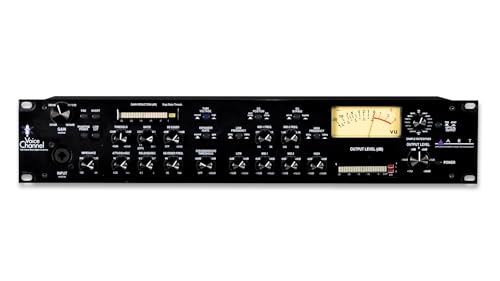
- Tube preamp adds warmth and definition
- Built-in compressor, gate, expander, and de-esser
- USB plus multiple digital output formats
Best For: Solo podcasters needing flexible processing and connectivity
Lighting Installation
Plaster-in LED Channel 10 Pack

- Trimless recessed aluminum profile
- Includes milky diffusers and installation hardware
- Provides 46 feet across ten sections
Best For: Indoor recessed LED lighting projects, not audio recording
Podcast Starter Bundle
PreSonus StudioChannel Recording Kit

- Tube preamp with VCA compressor and parametric EQ
- Includes boom arm, isolation shield, and two XLR cables
- Adds high-pass filter, pad, and phase invert
Best For: New podcasters building an XLR-based recording setup
Premium Analog Control

- Discrete preamp with Lundahl I/O transformers
- Transient Designer, compressor, and tube saturation
- Premium mono chain for one microphone
Best For: High-end hardware vocal processing
USB Podcasting Hub

- One-channel mic/line preamp
- Built-in USB audio interface
- Compressor, gate, and de-esser included
Best For: Solo podcasters using a computer-based setup
Tube Voice Shaping

- Mono tube channel-strip design
- Selectable opto/FET compression voicings
- Four-band semi-parametric EQ
Best For: Hands-on vocal tone shaping
Low-Noise Vocal Control – RO05 Analog Noise Gate
For creators comparing channel strips for podcasting, the Rodweil RO05 focuses on reducing ambient and preamp-floor noise after the microphone preamp. Its fully analog design is intended to provide smooth, low-latency processing while retaining vocal detail.
Best For: Home-studio podcasters who already have a microphone preamp and want dedicated analog noise reduction.
Pros:
- Targets ambient background noise and preamp floor noise.
- Fully analog signal path avoids digital conversion and is designed for nearly zero latency.
- Balanced circuit design and real-time processing aim for smoother sound continuity than a basic cutoff gate.
- Compact 3.35 x 2.95 x 1.97-inch enclosure weighs 10.6 ounces.
Cons:
- Must be placed after a microphone preamp or in a line-level chain; it is not designed for direct raw microphone connection.
- Its more complex circuit has higher power consumption.
- A slight circuit echo when powering off can be normal.
The RO05 is a specialized noise-control choice rather than a complete vocal channel strip. It makes the most sense when your existing setup supplies proper preamp gain and your main priority is a cleaner, more natural-sounding recording.
Studio Cable Organization – A+ ELECTRIC Full Cord Cover Kit
Although it is not an audio processor, the A+ ELECTRIC kit can support a tidy podcasting workspace by concealing speaker, HDMI, and other studio cables. The 26-foot system uses snap-on channels and included connectors to route cables along indoor walls.
Best For: Podcasters organizing several room-running cables and wanting a paintable, renter-friendly cable-management solution.
Pros:
- Includes 20 channels measuring 16 inches each for a total 26-foot installation.
- Snap-on covers can be opened for adding or changing cables.
- Includes straight connectors, inside and outside corners, T connectors, screws, and anchors.
- Offers peel-and-stick installation with optional screws and is designed to be paintable.
Cons:
- Designed for indoor cable management, not audio signal processing.
- The supplied style is intended for three to four cables.
- Adhesive removal may require gentle warm air from a hair dryer.
This kit will not shape a microphone signal, but it can make a podcast room safer and cleaner. Consider it a practical studio accessory for routing several cables away from walkways, pets, and visible wall areas.
Complete Voice Processing – dbx 286s Channel Strip
The dbx 286s is one of the more complete channel strips for podcasting in this lineup, combining a microphone preamp with compression, de-essing, enhancement, and expander/gate controls. Its XLR microphone input, TRS connectivity, LED metering, and rack-mountable 1U format suit a dedicated studio setup.
Best For: Podcasters who want hands-on control over vocal dynamics, sibilance, detail, and gating in one rackmount unit.
Pros:
- Combines microphone preamp, compressor, de-esser, enhancer, and expander/gate.
- Classic dbx compression helps bring vocals forward by reducing dynamic range.
- Insert and loop-out connections support additional processors.
- LEDs provide at-a-glance level and processor-status monitoring.
Cons:
- It is a single-channel, corded-electric unit requiring a dedicated hardware setup.
- Its 1U rackmount format may be excessive for very minimal desktop rigs.
- The listed operating voltage is region-specific, so buyers should verify compatibility.
For spoken-word production, the 286s offers a broad set of useful controls before the signal reaches a recorder or interface. It is a strong fit when you prefer adjustable hardware processing over relying entirely on software plugins.
Tube-Based Signal Shaping – PreSonus Studio Channel
The PreSonus Studio Channel is a rackmount channel strip for podcasting and other vocal applications, built around a Class A vacuum-tube preamplifier. Its listed processing includes a variable VCA compressor and three-band parametric EQ for shaping dynamics and tone.
Best For: Podcasters seeking tube-preamp character alongside adjustable compression and three-band equalization.
Pros:
- Uses a Class A vacuum-tube preamplifier.
- Includes a variable VCA compressor for dynamic control.
- Three-band parametric EQ supports tonal shaping.
- 19 x 1.75 x 5.5-inch dimensions fit a standard 1U-style rack space.
Cons:
- The supplied notes do not specify connectivity, metering, or additional processing sections.
- At 6.31 pounds, it is less portable than a compact desktop processor.
- Its rack-format design may require more dedicated space than a simple interface-based setup.
The Studio Channel is worth considering when preamp character and basic analog shaping matter more than an all-in-one suite of vocal tools. Its tube preamp, compressor, and EQ provide a focused signal-processing foundation for a studio podcast chain.
Tube Versatility – ART VoiceChannel Tube Channel Strip
The ART VoiceChannel is a flexible option among channel strips for podcasting, combining a tube preamp with dynamics control and extensive digital connectivity. Its single-channel design suits a solo microphone setup, while USB and multiple digital outputs support computer-based recording.
Best For: Podcasters and home recordists who want tube warmth, onboard dynamics processing, and flexible digital routing.
Pros:
- Tube preamp design provides warmth and definition.
- Includes compressor, expander, de-esser, and gate controls.
- Offers USB, ADAT, AES/EBU, S/PDIF, and TOSLink connectivity.
- Supports sample rates up to 192 kHz.
Cons:
- Only one channel is provided.
- At 5.5 kg, it is relatively substantial for a single-channel unit.
Choose the VoiceChannel if you want one input path that can handle preamplification, vocal cleanup, dynamics, and digital conversion in a single unit. Its broad connectivity is especially useful when your recording setup may expand beyond basic USB operation.
Lighting Installation – Plaster-in LED Channel 10 Pack
This product is not an audio channel strip for podcasting. It is a trimless, plaster-in aluminum channel for recessed LED strip lighting, supplied with diffusers, end caps, screws, and gloves for indoor installation projects.
Best For: Drywall, plaster, ceiling, baseboard, and other recessed LED lighting installations.
Pros:
- Trimless design hides the aluminum profile after installation.
- Milky diffuser helps create softer, more uniform light.
- Ten 4.6-foot sections provide 46 feet of total channel length.
- Includes end caps, screws, gloves, and diffuser covers.
Cons:
- LED strips are not included.
- It is not an audio product and does not process microphone signals.
- Designed for indoor use and is not water resistant.
Despite the word “channel” in its name, this is a lighting-installation component rather than one of the channel strips for podcasting. It should be considered only if your project involves recessed LED lighting, not recording or vocal processing.
Podcast Starter Bundle – PreSonus StudioChannel Recording Kit
The PreSonus StudioChannel bundle combines a Class A vacuum-tube preamp and channel strip with a boom arm, isolation shield, and two 20-foot XLR cables. For channel strips for podcasting, this package is notable because it pairs microphone processing with practical accessories for building a compact recording station.
Best For: New podcasters who need a tube preamp, vocal-focused processing, microphone positioning, isolation, and cables in one bundle.
Pros:
- Class A tube preamp offers adjustable tube gain and drive.
- Includes a variable VCA compressor and three-band parametric EQ.
- Provides an 80 Hz high-pass filter, 20 dB pad, and phase invert.
- Bundle includes boom arm, isolation shield, and two XLR cables.
Cons:
- Connectivity is listed as XLR rather than USB.
- The bundle may include accessories you do not need if you already own a stand or cables.
- The isolation shield helps reduce off-axis sound but does not replace room treatment.
This is a practical all-in-one starting point for a vocal recording setup. The StudioChannel supplies substantial analog control, while the included arm, shield, and cables reduce the number of separate purchases needed to begin podcasting.
Premium Analog Control – SPL Channel One MK3
For creators seeking high-end channel strips for podcasting, the SPL Channel One MK3 combines a discrete preamp with Lundahl input/output transformers and dedicated dynamics and saturation tools. Its mono design suits a single-microphone recording chain.
Best For: Podcasters building a premium, hardware-based mono vocal chain.
Pros:
- Discrete preamp with Lundahl I/O transformers
- Includes Transient Designer and compressor sections
- Tube saturation adds an additional tone-shaping option
Cons:
- Mono configuration is intended for one channel
- At 16.78 pounds, it is relatively heavy for a channel strip
- Its large 21.5-inch width may require careful rack or desk planning
The Channel One MK3 is a strong choice when premium analog processing and extensive vocal shaping matter more than a compact setup.
USB Podcasting Hub – Behringer Ultravoice UV1
The Behringer Ultravoice UV1 is a practical option among channel strips for podcasting, pairing a one-channel mic/line preamp with USB connectivity. Its compressor, gate, and dedicated de-esser provide useful voice-processing tools, while the USB interface connects directly to a computer.
Best For: Podcasters who want one vocal channel and USB computer connectivity in a single unit.
Pros:
- Combines a channel strip with a USB audio interface
- Includes compressor, gate, and de-esser functions
- Supports sample rates up to 192 kHz
Cons:
- Provides only one channel
- Software compatibility is specified for Windows 10 and Mac OS X 10.4 or higher
- Its feature set is focused on a single-user setup
The UV1 keeps a solo podcast rig straightforward by combining essential voice processing and computer connectivity in one five-pound device.
Tube Voice Shaping – ART Pro Channel III
The ART Pro Channel III gives podcasters a mono tube-based option for shaping a microphone signal. Its switchable microphone impedance, selectable opto/FET compression voicings, and four-band semi-parametric EQ offer flexible control over recording tone.
Best For: Voice-focused creators who want tube character and adjustable compression choices.
Pros:
- Tube channel-strip design for a distinct analog signal path
- Switchable microphone impedance provides setup flexibility
- Offers opto and FET compression voicings plus four-band semi-parametric EQ
Cons:
- Mono design is suited to a single channel
- It weighs 10.61 pounds
- Its 21.9-inch width may be substantial for smaller workspaces
With multiple compression voicings and a semi-parametric EQ, the Pro Channel III is geared toward hands-on vocal shaping rather than an especially compact podcast rig.
How We Picked the Best Channel Strips for Podcasting
We focused on the features that matter most for spoken-word recording: clean microphone gain, useful compression, de-essing, expander or gate control, flexible output options, and practical operation. We also considered whether each product suits a home studio, portable setup, live production, or more advanced recording chain.
The selection includes dedicated channel strips as well as closely related audio tools listed with the roundup. Before buying, confirm that the product has the inputs, outputs, and processing controls you actually need.
Quick Comparison
| Best For | Look For | Useful Features |
|---|---|---|
| Simple voice cleanup | Preamp with gate and compressor | Fast setup and consistent levels |
| USB podcast rigs | Integrated audio interface | Direct computer connection |
| Warm vocal tone | Tube-based preamp stage | Harmonic coloration and gain control |
| Advanced studio work | Expanded analog processing | Detailed EQ, dynamics, and routing |
Key Buying Factors for Channel Strips for Podcasting
Microphone Gain and Noise
Dynamic microphones often need substantial, quiet gain, while condensers require reliable 48V phantom power. Check the preamp’s gain range and noise performance, particularly if you record softly or use a less sensitive microphone.
Compression, De-Essing, and Gating
A compressor helps even out speech levels, a de-esser reduces harsh “s” sounds, and an expander or gate can lower room noise between phrases. Look for controls that are easy to adjust rather than simply choosing the longest feature list.
Connectivity and Workflow
Analog channel strips typically feed an audio interface through a line output. USB models can simplify a one-computer setup, while digital outputs may suit a compatible mixer or studio interface. Confirm connector types and whether processing is available on the output you plan to use.
Format and Build
Rack units are convenient for permanent studios, but they need suitable mounting space and cabling. A compact processor may be better for mobile recording or a small desk. Tube designs can add character, though neutral solid-state processing may be easier to match across multiple voices.
Who Should Buy Which Channel Strips for Podcasting?
Choose a straightforward preamp and dynamics processor if you want cleaner speech with minimal setup. Pick a USB-equipped channel strip if you are building a direct-to-computer podcast rig. A tube model is a good fit for hosts who want a warmer, more colored presentation, while premium studio strips make the most sense when you need precise control, flexible routing, and a long-term recording investment.
For most buyers, prioritize quiet gain, usable compression, and dependable connectivity over extra effects. A channel strip should make recording easier—not create another complicated stage to manage.