If you want to understand the Puritans, the best books do more than define a movement. They show how Puritan thought shaped doctrine, devotion, preaching, and everyday Christian life.
This roundup focuses on a mix of scholarly studies, practical guides, and readable entry points so you can choose the right book for your goals and background.
Best 10 Books on the Puritans Picks for 2026
Comprehensive Doctrine Survey

- Covers major Reformed doctrines in 50 areas
- Built from nearly 150 Puritan authors and 700 titles
- Includes practical theology sections for application
Best For: Readers seeking a thorough Puritan theology reference
New England Portraits

- Profiles nine key Puritan figures in New England
- Aims to correct common myths and half-truths
- Short, readable 224-page history
Best For: Readers wanting an accessible Puritan history
Reformed Theology Collection

- Blends biblical, systematic, and practical theology
- Includes essays on worship, Sabbath-keeping, and preaching
- Written for study, ministry, and devotion
Best For: Pastors and students wanting a broad Reformed essay collection
Transatlantic History

- Covers Puritanism in England, Scotland, and New England
- Explains internal divisions and historical decline
- Shows Puritan influence on later dissenters and America
Best For: Readers wanting a sweeping scholarly history of Puritanism
Devotional classic

- Prayers and meditations in the Puritan tradition
- Widely valued since 1975
- Pocket-sized paperback for daily use
Best For: devotional readers wanting a gentle Puritan prayer book
Reference guide
Meet the Puritans: A Guide to Their Lives and Books, 2nd Edition

- Biographies, work summaries, and bibliographies
- Expanded second edition with 190 Puritans covered
- Useful starting point for serious Puritan reading
Best For: readers who want a comprehensive guide to Puritan lives and books
Daily devotional

- 365 daily readings for the year
- Scripture verse plus brief commentary
- Compact gift edition with monthly introductions
Best For: readers who want a yearlong daily sampler of Puritan writing
Puritan Reference Guide
- Biographical sketches of major Puritans
- Bibliographic summaries of their writings
- Includes helpful appendices and guides
Best For: Readers who want a practical introduction to Puritan figures and books
Puritan History Primer

- Clear overview of Puritan origins
- Covers Mayflower-era history and America
- Short, easy-to-read introduction
Best For: Beginners who want a concise historical overview
Classic Church History

- Covers rise, growth, and decline
- Links Puritanism to English history
- Compact classic survey
Best For: Readers who want a concise history of English Puritanism
Comprehensive Doctrine Survey – A Puritan Theology
If you’re comparing books on the puritans and want a deep, structured theology reference, A Puritan Theology is built for that task. Joel Beeke and Mark Jones gather Puritan teaching across major doctrines, then connect those doctrines to spiritual growth and practical Christian living.
Best For: Readers who want a comprehensive doctrinal study of Puritan theology with practical application.
Pros:
- Covers major Reformed doctrines across fifty areas of teaching
- Draws on nearly 150 Puritan authors and 700 titles
- Includes sections on theology in practice for application-minded readers
- Written for theologians, pastors, historians, and educated lay readers
Cons:
- More academic than introductory
- Broad scope may be too detailed for casual browsing
- Best suited to readers already interested in Reformed theology
This is one of the strongest choices if you want a single volume that organizes Puritan teaching into a unified theological framework. It is especially useful when you want both historical depth and direct spiritual usefulness.
New England Portraits – The American Puritans
For readers searching for approachable books on the puritans, The American Puritans offers a focused history of the first hundred years of Reformed Protestantism in New England. Dustin Benge and Nate Pickowicz use nine key figures to show the movement through real lives, helping correct myths while keeping the narrative readable.
Best For: Readers who want an accessible historical introduction to the American Puritans.
Pros:
- Profiles nine major Puritan figures, including Bradford, Winthrop, and Cotton Mather
- Designed to correct myths and half-truths about the American Puritans
- Compact 224-page format makes it easier to finish
- Sympathetic yet informed historical treatment
Cons:
- Narrower focus on New England rather than Puritanism as a whole
- Less detailed than a large scholarly history
- Best suited to readers wanting narrative overview more than deep analysis
This is a solid pick if you want a concise, story-driven overview of the American Puritans without getting buried in technical detail. It works well as a starting point or a quick historical refresher.
Reformed Theology Collection – Puritan Reformed Theology
If you’re looking for books on the puritans that blend scholarship with devotional use, Puritan Reformed Theology is a strong contender. Joel R. Beeke gathers essays on biblical, systematic, experiential, historical, and pastoral theology, giving readers a wide survey of Reformed thought with clear practical aim.
Best For: Pastors, students, and lay readers who want a broad Reformed theology collection with pastoral application.
Pros:
- Combines biblical, systematic, experiential, and practical theology
- Draws on essays that connect doctrine to worship and obedience
- Includes topics such as Sabbath-keeping, adoption, and preaching
- Written in a style that serves both study and ministry
Cons:
- Essay collection format may feel less linear than a single-volume survey
- More useful for readers already interested in Reformed theology
- Likely more demanding than an introductory overview
This volume is best for readers who want breadth without losing the pastoral tone that marks much Puritan writing. It offers substantial material for study while keeping the focus on life, ministry, and devotion.
Transatlantic History – The Puritans
Among books on the puritans, The Puritans: A Transatlantic History stands out for its sweeping scope across England, Scotland, and New England. David Hall traces the movement from its Elizabethan roots through Cromwell, the Restoration, and its Atlantic migration, making it a strong choice for readers who want the bigger historical picture.
Best For: Readers who want a panoramic scholarly history of Puritanism across the Atlantic world.
Pros:
- Wide-ranging history spanning England, Scotland, and New England
- Explores the movement’s political and doctrinal divisions
- Shows how Puritanism shaped later dissenting groups and American religion
- Offers an in-depth scholarly narrative from an eminent historian
Cons:
- Broad and scholarly rather than introductory
- Long listening length suggests a substantial commitment
- May be more historical than devotional in emphasis
This is the best fit if your goal is a big-picture account of Puritanism’s rise, fragmentation, and legacy. It rewards readers who want a serious historical treatment rather than a quick overview.
Devotional classic – Valley of Vision
If you want books on the puritans that are easy to use in daily devotion, Valley of Vision is a focused collection of prayers and meditations in the Puritan tradition. It’s a practical choice for readers who want short, reflective passages that can deepen prayer, Scripture meditation, and time with God.
Best For: readers seeking a devotional entry point into Puritan prayers and meditations.
Pros:
- Selection of prayers and meditations in the Puritan tradition
- Widely valued since its original publication in 1975
- Portable paperback format for regular devotional use
Cons:
- Focused on prayers and meditations rather than broad Puritan history
- Less suitable if you want biographies or an annotated guide to Puritan authors
- May feel brief for readers wanting a large reference work
As a devotional book, this is one of the most accessible ways to sample Puritan spirituality without committing to a heavy study volume. It works best for readers who want a calm, readable companion for prayer and reflection.
Reference guide – Meet the Puritans: A Guide to Their Lives and Books, 2nd Edition
For shoppers comparing books on the puritans, Meet the Puritans stands out as a substantial reference guide to their lives and works. This second edition is built for readers who want biographies, work summaries, bibliographies, and an expanded glossary in one place, making it a strong starting point for serious Puritan reading.
Best For: readers who want a comprehensive guide to Puritan lives, writings, and secondary resources.
Pros:
- Includes updated biographies and bibliographies
- Summaries of Puritan works with annotated bibliographies of modern reprints
- Expanded glossary and updated list of Puritan publishers
- Large, revised second edition with extensive new material
Cons:
- Very large and heavy at 1,254 pages
- More reference-oriented than devotional
- May be more than casual readers need for a first encounter
This is the most research-friendly option in the group, especially if you want a clear map of Puritan authors and their writings. Its scale and scope make it a strong anchor volume for anyone building a Puritan reading plan.
Daily devotional – The Puritans: Daily Readings
If you’re looking for books on the puritans that fit easily into a daily habit, The Puritans: Daily Readings offers a year of brief selections with Scripture verses and short commentary. It’s designed to give you steady contact with Puritan voices in a format that’s simple, readable, and devotional.
Best For: readers who want a yearlong daily devotional sampler of Puritan writing.
Pros:
- 365 dated daily readings for the whole year
- Each entry pairs a scripture verse with brief commentary
- Introductions provide context for English Puritanism and each monthly author
- Gift-style edition with a compact format
Cons:
- Only brief excerpts, not full-length Puritan texts
- Less useful if you want a deep reference guide or biography collection
- Focused on English Puritanism rather than a broad survey
This volume is a practical pick for readers who want the Puritans in small, manageable portions. It’s especially useful if you prefer a devotional rhythm over study-heavy reading.
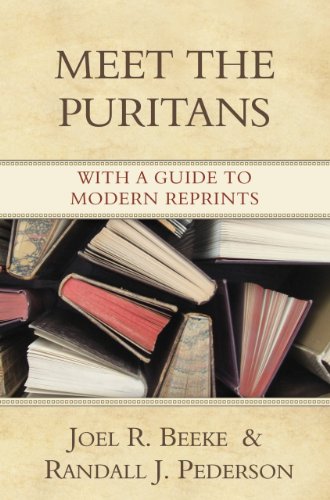
Puritan Reference Guide – Meet the Puritans
If you’re looking for books on the puritans that help you quickly identify key figures and their writings, Meet the Puritans is a strong reference-style choice. This encyclopedic guide offers biographical sketches of major Puritans along with bibliographic summaries, making it practical for readers who want both background and a path into the original works.
Best For: Lay readers, pastors, students, and scholars who want an organized entry point to Puritan biographies and books.
Pros:
- Provides biographical sketches of major Puritans.
- Includes bibliographic summaries of their writings and work.
- Useful as a library reference for beginners and experienced readers.
- Also covers Scottish Puritans and Dutch Further Reformation divines in appendices.
Cons:
- More of a reference resource than a narrative history.
- Assumes interest in Puritan literature and theology.
The strength of this book is its broad, usable coverage: it helps you move from names to actual writings without guessing where to start. If your goal is to build a serious reading list or understand who’s who in the movement, it is an especially practical pick.
Puritan History Primer – The Puritans
For shoppers browsing books on the puritans and wanting a quick historical overview, The Puritans is an accessible primer. It traces the group’s origins in England, their move toward America, and several major events associated with Puritan history, giving newer readers a broad first look at the movement.
Best For: Readers who want a short, introductory overview of Puritan history and its American connections.
Pros:
- Explains the origins of the Puritans in straightforward terms.
- Covers major milestones like the Mayflower and early settlements.
- Includes topics such as the English Civil War and Salem witch trials.
- Concise length makes it easy to read quickly.
Cons:
- At 102 pages, it is relatively brief.
- More of a broad survey than a deep scholarly treatment.
This book works well if you want a simple, fast-moving overview rather than a dense academic study. It gives enough context to understand the Puritans’ place in church history and in early American settlement without demanding a major time commitment.
Classic Church History – The English Puritans
If you want books on the puritans that focus on the movement’s development over time, The English Puritans offers a concise historical survey. Originally published in the early twentieth century, it presents the rise, growth, and decline of Puritanism and shows how the movement shaped both religion and the constitutional history of England.
Best For: Readers interested in a compact historical account of Puritan movement, especially its place in English church and political history.
Pros:
- Summarizes the rise, expansion, and decline of the Puritan movement.
- Connects Puritanism to religious and constitutional history in England.
- Based on an early twentieth-century work with a classic historical perspective.
- Short enough to serve as an accessible overview.
Cons:
- More concise than a full-length comprehensive history.
- Focused specifically on English Puritanism.
This is a good option if you want a tighter historical read with a clear emphasis on the movement’s rise and decline. It should appeal to readers who prefer a classic survey that stays focused on the English context.
How We Picked These Books on the Puritans
We prioritized Books on the Puritans that offer real value for different readers: historical reliability, clarity of writing, usefulness for study or devotion, and strong reputation among pastors, students, and general readers. We also looked for a balanced mix of formats, including theology, biography, history, and devotional reading.
Because the Puritans are a large and varied topic, the best choice depends on whether you want an overview, a theological deep dive, or a daily devotional companion.
Quick Comparison: Which Type of Book Fits Your Needs?
If you want a broad historical picture, choose a general history of the movement. If you want doctrinal depth, look for a theology-focused volume. If you need something easier to read, an introductory guide or daily readings collection will usually be the best starting point. Readers building a personal library may want one title from each category rather than only one kind of book.
Key Buying Factors for Books on the Puritans
Scope and Purpose
Some titles focus on English Puritanism, others on the American Puritans, and some cover the movement across the Atlantic. Decide whether you need a narrow study or a wider synthesis before buying.
Reading Level
Academic books can be rewarding, but they may assume prior knowledge. For first-time readers, a guide or overview is usually easier to navigate than a dense theological work.
Theological Depth
If you are studying doctrine, look for books that engage core Puritan themes such as conversion, assurance, sanctification, preaching, and the Christian life. These are especially useful for seminary students, pastors, and serious lay readers.
Practical Use
Some Books on the Puritans are best for reference, while others are meant for devotional reading or short daily sessions. Think about how you will actually use the book: research, sermon prep, family reading, or personal growth.
Who Should Buy Which Books on the Puritans?
Newcomers should start with an accessible history or guide to the major figures and books. Readers focused on prayer and devotion may prefer a daily readings collection. Pastors, students, and theology-minded readers will likely benefit most from the more substantial doctrinal and historical studies. If you want the broadest library value, pair one introductory title with one deeper theological volume for a well-rounded view of the Puritan tradition.
In short, the best Books on the Puritans are the ones that match your reading level, your purpose, and the kind of insight you want from this enduring tradition.