Choosing the right hermeneutics book can make Bible study more careful, more confident, and less confusing. The best titles balance sound method with practical examples, whether you are just starting out or sharpening advanced study skills.
In this roundup, we focus on books on hermeneutics that help readers understand context, genre, author intent, and responsible interpretation without getting lost in jargon.
Best 10 Books on Hermeneutics Picks for 2026
Standard Academic Guide
Introduction to Biblical Hermeneutics

- Updated and expanded second edition
- Covers key interpretive topics plus newer debates
- Dual-author perspective encourages thoughtful dialogue
Best For: Students, pastors, and serious lay readers
Practical Starter Pick

- Commonsense approach to studying Scripture
- Includes 11 practical interpretation guidelines
- Covers words, poetry, prophecy, and study tools
Best For: Beginning Bible readers and experienced students
Compact Theory Overview
Hermeneutics: A Very Short Introduction

- Short overview of hermeneutic theory
- Covers interpretation across multiple disciplines
- Useful for quick orientation to the subject
Best For: Readers who want a concise introduction to hermeneutics
Biblical Writers Approach
The Hermeneutics of the Biblical Writers

- Interprets Scripture through prophets and apostles
- Focuses on the New Testament’s use of the Old Testament
- Presents a distinct hermeneutic of obedience
Best For: Readers who want a Bible-centered interpretive approach
Contemporary Theological Reading

- Award-winning 2024 theology and biblical studies title.
- Focuses on interpreting Scripture as a shared Christian practice.
- Uses the transfiguration to frame figural interpretation.
Best For: Readers and students seeking a theological, church-oriented hermeneutics book
Classic Study Guide
Principles of Biblical Hermeneutics

- Teaches Bible interpretation through clear, systematic principles.
- Includes charts, outlines, and bite-sized chapters.
- Built from decades of classroom instruction.
Best For: Pastors, students, and readers wanting a practical hermeneutics textbook
Inductive Method Guide

- Step-by-step guide to inductive Bible study.
- Builds on a classic hermeneutics method.
- Addresses current interpretive issues and practice.
Best For: Readers who want a detailed, process-driven way to study the Bible
Practical Interpretation Guide
Hermeneutics: Principles and Processes of Biblical Interpretation

- Five-step method for biblical interpretation
- Useful for study, sermons, and writing
- Updated second edition
Best For: Readers who want a step-by-step biblical interpretation method
Quick Reference Companion
Dictionary of Hermeneutics : A Concise Guide to Terms, Names, Methods, and Expressions

- Concise definitions, examples, and illustrations
- Seven-section layout for quick navigation
- Searchable CD-ROM included
Best For: Readers who want a quick-reference guide to terms and methods
Classic Interpretation Text
Hermeneutics: Updated Third Edition (Restoration Movement Library)
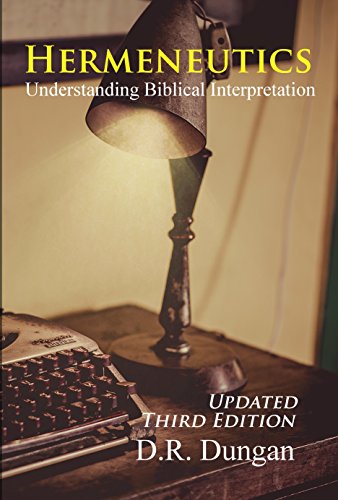
- Classic work on Bible interpretation
- Covers language, figures of speech, and prophecy
- Updated for easier readability
Best For: Readers who want a classic, updated resource on biblical interpretation
Standard Academic Guide – Introduction to Biblical Hermeneutics
If you want books on hermeneutics that balance academic depth with real-world Bible study, this updated text is a strong fit. It covers core interpretive issues and adds newer discussions on biblical theology, contemporary questions, the New Testament’s use of the Old Testament, and the role of history in interpretation.
Best For: Students, pastors, and serious lay readers who want a comprehensive introductory text with differing scholarly viewpoints.
Pros:
- Standard text for a generation of Bible students and church leaders
- Substantially updated and expanded second edition
- Includes four new chapters on major interpretive debates
- Written by two scholars with differing viewpoints, encouraging discussion
Cons:
- More academic than a quick-start devotional guide
- Broader scope may feel dense for absolute beginners
This is a solid pick if you want a foundational hermeneutics book that goes beyond basics and engages current interpretive questions. Its dialogue-driven approach helps readers see where issues are settled and where thoughtful disagreement remains.
Practical Starter Pick – Knowing Scripture
For readers comparing books on hermeneutics, this classic offers a simple, practical path into Bible study. R. C. Sproul focuses on how to study Scripture with eleven guidelines and covers common questions like biblical words, poetry, parables, prophecy, culture, translations, and study tools.
Best For: Beginning Bible readers and experienced students who want a straightforward, commonsense approach to interpretation.
Pros:
- Clear, basic explanation of how to study Scripture
- Eleven practical guidelines for interpretation and application
- Addresses many common Bible-study challenges
- Shorter format makes it easy to read and revisit
Cons:
- Less expansive than a full academic survey of hermeneutics
- Focuses more on method than on broad theory
This is an excellent entry point if you want practical tools without heavy jargon. Its strength is clarity: it aims to help readers study and apply Scripture with confidence.
Compact Theory Overview – Hermeneutics: A Very Short Introduction
If you want books on hermeneutics that explain the subject quickly and clearly, this pocket-sized overview is a smart choice. Jens Zimmerman traces the history of hermeneutic theory and shows how interpretation works across theology, literature, law, and the social and natural sciences.
Best For: Readers who want a concise introduction to hermeneutic theory and its wider applications.
Pros:
- Brief, readable introduction to a complex topic
- Explains key elements in the history of hermeneutic theory
- Applies interpretation beyond theology to several disciplines
- Pocket-sized format is ideal for quick study
Cons:
- Too brief for readers wanting a deep technical treatment
- More overview than step-by-step Bible study manual
This is best when you need a fast but thoughtful orientation to hermeneutics. It gives useful context and breadth without requiring a major time commitment.
Biblical Writers Approach – The Hermeneutics of the Biblical Writers
Among books on hermeneutics, this title stands out for arguing that modern readers should learn from the prophets and apostles themselves. Abner Chou presents a “hermeneutic of obedience,” showing the prophetic hermeneutic of the Old Testament and its continuity with the apostolic hermeneutic of the New Testament, including the New Testament’s use of the Old Testament.
Best For: Readers who want a Bible-centered approach focused on how the biblical writers interpreted Scripture.
Pros:
- Centers interpretation on the methods of prophets and apostles
- Directly addresses the New Testament’s use of the Old Testament
- Connects hermeneutics with theology and Christian living
- Provides a distinct “hermeneutic of obedience” framework
Cons:
- Highly specialized approach may not suit every reader
- More focused on one interpretive framework than broad comparison
This is a strong choice if you want a theologically driven hermeneutics book that is tightly anchored in Scripture itself. It will appeal most to readers looking for interpretive principles modeled by the biblical authors.
Contemporary Theological Reading – Mere Christian Hermeneutics
Mere Christian Hermeneutics: Transfiguring What It Means to Read the Bible Theologically
Check Price On AmazonIf you’re comparing books on hermeneutics and want a recent, theology-forward guide, this one stands out for readers who care about reading Scripture “to the glory of God.” Kevin J. Vanhoozer addresses the reality of multiple interpretive communities and argues for a “mere” Christian hermeneutic that can hold unity and diversity together without flattening either.
Best For: Readers, pastors, and theology students looking for a current, award-winning approach to reading the Bible theologically.
Pros:
- Engages major interpretive questions across denominational, historical, and global reading cultures.
- Connects figural interpretation to the transfiguration of Jesus in a clear theological framework.
- Recognized by multiple 2024 book awards in theology and biblical studies.
- Aims to be irenic while still making a strong argument for Christian reading practices.
Cons:
- More suited to theological reflection than a basic how-to manual.
- Its conceptual approach may be demanding for casual readers.
This is a strong choice if you want hermeneutics that moves beyond technique and into ecclesial and theological purpose. It is best treated as a serious study book for readers ready to think deeply about how Christians interpret Scripture together.
Classic Study Guide – Principles of Biblical Hermeneutics
For shoppers comparing books on hermeneutics, this classic-style guide is built for readers who want a systematic introduction to Bible interpretation. It presents hermeneutics as a practical science, using charts, outlines, and clear principles to help everyday believers, pastors, and students read Scripture carefully.
Best For: Believers, pastors, and Bible students who want a structured, classroom-tested introduction to interpretation.
Pros:
- Explains core interpretive principles in a straightforward, organized format.
- Uses charts and outlines to make concepts easy to scan and review.
- Draws on nearly 40 years of classroom teaching experience.
- Works well as a reference, curriculum resource, or textbook.
Cons:
- Leans heavily toward traditional principles rather than current academic debate.
- May feel more instructional than conversational.
If you want a practical foundation rather than a theory-heavy discussion, this book is a strong fit. It is especially useful for readers who want repeatable rules, visual organization, and a hands-on approach to rightly handling Scripture.
Inductive Method Guide – Inductive Bible Study
If you’re browsing books on hermeneutics and want a hands-on method for studying Scripture, this guide is designed to teach inductive Bible study step by step. It builds on Robert Traina’s classic work and aims to help students, pastors, and church leaders hear the Bible on its own terms.
Best For: Students, pastors, and church leaders who want a practical inductive approach to interpretation.
Pros:
- Provides step-by-step instruction for doing inductive Bible study.
- Engages current hermeneutical issues while staying grounded in process.
- Written by experienced educators with decades of classroom teaching.
- Combines multiple methods to support biblical interpretation and appropriation.
Cons:
- More method-focused than devotional or popular-level reading.
- Best suited to readers willing to work through a detailed study process.
This is a solid option if your priority is learning how to study Scripture carefully and consistently. It fits readers who want a comprehensive, instruction-driven hermeneutics resource rather than a brief overview.
Practical Interpretation Guide – Hermeneutics: Principles and Processes of Biblical Interpretation
If you’re comparing books on hermeneutics for clear, usable guidance, this volume is built for non-specialists who want a practical method for interpreting Scripture. It lays out a five-step process covering historical-cultural and contextual analysis, lexical-syntactical analysis, theological analysis, genre identification and analysis, and application, with updated material in the second edition.
Best For: Readers who want a step-by-step biblical interpretation method for Bible study, sermon preparation, or writing.
Pros:
- Explains a five-step hermeneutical procedure in a straightforward way
- Designed to help readers apply interpretation principles in real study and writing
- Second edition includes updated material on developments in hermeneutics over the past twenty years
Cons:
- Focused on principles and process rather than a broad reference format
- Best suited to readers looking for structured interpretation guidance
This is a strong pick if you want a practical, method-driven introduction among books on hermeneutics. It emphasizes application as much as interpretation, which makes it especially useful for ongoing study work.
Quick Reference Companion – Dictionary of Hermeneutics : A Concise Guide to Terms, Names, Methods, and Expressions
Dictionary of Hermeneutics : A Concise Guide to Terms, Names, Methods, and Expressions
Check Price On AmazonFor shoppers comparing books on hermeneutics, this title works as a compact reference for terms, names, methods, and expressions tied to biblical interpretation. It is designed to make hermeneutical study easier to navigate with concise definitions, examples, grouped sections, and footnotes for deeper study.
Best For: Readers who want a searchable, easy-reference guide to hermeneutics terminology and concepts.
Pros:
- Provides concise definitions with examples and illustrations
- Organized into seven sections for easier topic exploration
- Includes in-depth footnotes for further study
- Comes with a fully searchable CD-ROM for quick reference
Cons:
- More of a reference tool than a full interpretation manual
- Shorter length may not satisfy readers wanting extended treatment
This is a practical companion if you want a glossary-style resource that helps decode the language of hermeneutics without a steep learning curve. It fits well beside a fuller guide when you need fast definitions and context.
Classic Interpretation Text – Hermeneutics: Updated Third Edition (Restoration Movement Library)
If you want books on hermeneutics with a classic foundation, this updated third edition presents a long-respected work on interpreting the Bible in a more readable format. The notes highlight its logical treatment of language, figures of speech, prophecy, and the principle of basing conclusions on the whole of Scripture on a subject.
Best For: Readers who want a classic, updated resource on biblical interpretation with emphasis on language and method.
Pros:
- Classic work that has been valued since the late 1800s
- Covers language, figures of speech, prophecy, and interpretation method
- Updated edition is described as easier to read without losing depth
- Useful for readers seeking a historically rooted approach
Cons:
- Best suited to those comfortable with a more traditional treatment
- Not presented as a modern beginner workbook
This edition is a strong choice if you want a time-tested hermeneutics resource that has been refreshed for modern readers. It keeps the original depth while improving readability, which makes it appealing for serious study.
How We Picked These Books on Hermeneutics
We prioritized books that are readable, widely used, and useful for real Bible study. That means clear explanations of interpretation principles, strong biblical grounding, and value for different levels of experience. We also looked for a mix of introductory, academic, theological, and reference-style resources so readers can match the book to their goals.
Quick Comparison
Some of these Books on Hermeneutics are best for first-time learners who want a straightforward overview. Others go deeper into method, theological interpretation, or the interpretive habits of the biblical writers themselves. A few are reference tools that work well alongside a main textbook. If you want one primary guide, choose a practical introduction; if you want a study library, pair a foundational text with a concise reference work.
Key Buying Factors for Books on Hermeneutics
Clarity and Teaching Style
Look for books that explain terms in plain language and define interpretive methods before building on them. The best Books on Hermeneutics do not assume too much prior training.
Depth and Academic Level
Match the book to your purpose. Introductory readers may prefer shorter, method-focused titles, while seminary students or pastors may want more detailed treatment of biblical theology, original context, and interpretive theory.
View of Scripture
Different authors emphasize different approaches, including historical-grammatical, theological, inductive, or tradition-based interpretation. Pick a book that aligns with how you approach Scripture and the kind of study you want to do.
Practical Application
The most useful Books on Hermeneutics connect principles to actual passages. Examples, exercises, and study steps make it easier to move from theory to daily Bible reading and sermon preparation.
Reference Value
For readers building a long-term library, a dictionary or concise guide can be especially helpful. These resources are not always the best starting point, but they are excellent for clarifying terms, methods, and interpretive labels.
Who Should Buy Which Books on Hermeneutics?
Beginners should start with a clear, practical introduction that explains the basics without heavy terminology. Pastors and teachers may prefer a more robust book that connects interpretation to preaching and theology. Seminary students often benefit from combining one foundational textbook with one more advanced or specialized title. If you want a quick desk reference, choose a concise dictionary or short survey. If you want a fuller framework for study, choose a comprehensive guide and use it as your main companion.
In short, the best choice depends on whether you need a first-step overview, a deeper interpretive framework, or a reference tool to support ongoing Bible study. Among Books on Hermeneutics, the strongest options are the ones that fit your reading level, your doctrinal needs, and the way you actually study Scripture.