If you’re looking for bible atlases for beginners, the best options do more than show maps—they make biblical history easier to understand and place events in context.
This roundup focuses on atlases that are accessible, visually clear, and useful for new students of Scripture, whether you want a simple reference tool or a deeper study companion.
Best 10 Bible Atlases for Beginners Picks for 2026
Flagship Reference
Holman Bible Atlas: Complete Geography Guide

- 132 full-color maps plus photos, timelines, and charts
- Covers biblical history from the patriarchs to Constantine
- Text-linked layout helps beginners follow key events
Best For: Beginners who want the most comprehensive visual atlas
Quick-Reference Map Pack
Then & Now Bible Maps Quick Reference

- 17 color maps compare Bible places with modern locations
- Slim fold-out format fits inside most Bibles
- Covers major areas like Canaan, Egypt, Babylon, and Paul’s journeys
Best For: Beginners who want a compact Bible-cover reference
Budget Student Atlas

- 30 maps cover both Old and New Testaments
- Includes place-name index and archaeology site guide
- Clear, concise format is easy for new readers
Best For: Beginners and students who want an affordable starter atlas
Visual Study Atlas
Zondervan Atlas of the Bible Revised Edition

- Multidimensional and 3D maps with over 100 images
- Chronological coverage from Eden through the New Testament
- Includes geographical dictionary and index for study
Best For: Beginners who want a visually rich, in-depth atlas
Best Scholarly Starter
Thoroughly Revised Reference Atlas
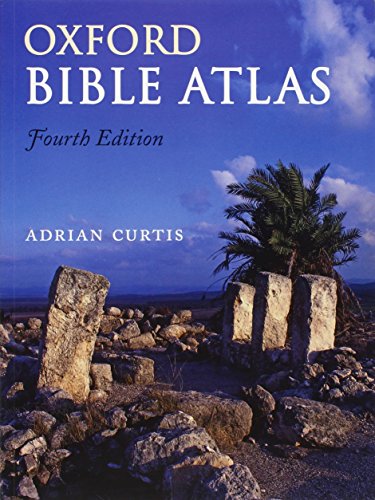
- 27 full-color maps
- 81 color illustrations
- Revised with recent scholarship and archaeology
Best For: Beginners who want accuracy and strong visual context
Best Portable Beginner Pick

- More than 300 visuals and maps
- Easy-to-carry format
- Covers key Bible events and journeys
Best For: New readers and small groups needing a portable atlas
Best Comprehensive Study Option

- 175+ full-color maps
- 70 photographs and 3-D recreations
- 65,000 words of narrative description
Best For: ESV readers and beginners wanting a deeper reference
Premium Study Atlas

- 119 full-color maps plus 100+ photos
- Covers every location from Eden to Rome
- Strong extra tools: notes, indexes, reading list
Best For: Readers who want a deep study atlas for Bible teaching and personal study
Kid-Friendly Visual Atlas

- Illustrated maps for ages 9-12
- Covers major Old and New Testament events
- Simple, visual, and easy to follow
Best For: Kids and families starting with Bible geography
Compact Reference Atlas
The Essential Atlas of the Bible

- Nearly 200 maps with full-color images
- Adds charts on history, weather, and roads
- Compact 160-page format
Best For: Curious readers who want a concise but informative Bible atlas
Flagship Reference – Holman Bible Atlas: Complete Geography Guide
Holman Bible Atlas: A Complete Guide to the Expansive Geography of Biblical History
Check Price On AmazonIf you’re comparing bible atlases for beginners, the Holman Bible Atlas is a strong pick when you want a fuller, classroom-style overview rather than a quick-reference pamphlet. Its 132 full-color maps, photos, timelines, chart summaries, and sidebars help connect biblical events to geography, history, and culture in a clear, visual way.
Best For: Beginners who want a comprehensive, visually rich atlas that explains biblical places and history in context.
Pros:
- 132 full-color maps provide broad coverage of biblical geography and history.
- Includes more than 100 color photographs, timelines, charts, and sidebars for context.
- Arranged around specific biblical texts, which helps with teaching and study.
- Covers both the physical geography of the Ancient Near East and major Bible history periods.
Cons:
- More substantial than a simple starter map booklet.
- At 256 pages, it is not the most compact option for carrying around.
For beginners who want one atlas that can grow with their study, this is the most complete and visually developed option in the group. It gives plenty of detail without losing sight of the biblical storyline.
Quick-Reference Map Pack – Then & Now Bible Maps Quick Reference
For bible atlases for beginners, this fold-out map pack is ideal if you want an easy way to see biblical locations alongside modern-day places. The 17 color maps, red modern boundary overlays, and slim format make it simple to match Bible places to today’s geography without paging through a large book.
Best For: Beginners who want a compact, easy-to-use visual aid that fits inside most Bibles.
Pros:
- 17 full-color maps show biblical locations and modern boundaries together.
- Compact 14-panel fold-out format fits inside most Bible covers.
- Covers major Bible areas such as Canaan, Egypt, Babylon, and Paul’s journeys.
- Easy to use as a quick reference during Bible study.
Cons:
- Far less detailed than a full atlas.
- Best as a supplement rather than a stand-alone study resource.
This is the most portable option here and a smart choice if you mainly want fast orientation. It works especially well for beginners who prefer a visual guide they can keep close at hand.
Budget Student Atlas – The Student Bible Atlas
If you want bible atlases for beginners that stay clear and affordable, The Student Bible Atlas is built for straightforward study. It includes 30 maps covering the Old and New Testaments, plus an index of place names and a guide to major archaeology sites, making it easy to connect Bible journeys with real locations.
Best For: Beginners, students, and budget-minded readers who want a simple, accessible atlas.
Pros:
- Clear, concise, and colorful presentation makes it easy to use.
- Includes 30 maps covering both Old and New Testament events.
- Has a helpful index of place names for quicker lookup.
- Includes a guide to major archaeology sites in the Middle East.
Cons:
- Much slimmer than the larger reference atlases.
- Layout is simple, so it offers less depth than the premium options.
This atlas is a practical starter pick if you want the essentials without extra complexity. It is especially appealing for readers who value readability and a lower-cost entry point.
Visual Study Atlas – Zondervan Atlas of the Bible Revised Edition
Zondervan Atlas of the Bible: Revised Edition, Full-Color Maps, Photos, Graphics, and More
Check Price On AmazonAmong bible atlases for beginners, the Zondervan Atlas of the Bible stands out if you want a more immersive visual study experience. Its multidimensional and three-dimensional maps, over 100 images, charts, graphics, and detailed place-name index help explain biblical geography and history in a format that is still approachable for study.
Best For: Beginners who want a richer visual atlas with strong historical and geographic detail.
Pros:
- Stunning multidimensional and three-dimensional maps add visual clarity.
- Includes over 100 relevant images, plus charts and graphics.
- Chronological structure traces biblical history from Eden through the New Testament.
- Includes a complete geographical dictionary and index for deeper study.
Cons:
- More detailed and substantial than a basic beginner map booklet.
- May feel like a bigger commitment than a slim quick-reference option.
This is a strong choice if you want beginner-friendly access without giving up depth. It balances rich visuals with organized historical coverage, making it useful as your study needs grow.
Best Scholarly Starter – Thoroughly Revised Reference Atlas
If you want bible atlases for beginners that still offer serious scholarly depth, the Oxford Bible Atlas is a strong starting point. This fourth edition pairs accurate color maps with updated archaeology and topography, making it easier to follow biblical places and the stages of the Bible’s stories.
Best For: Readers who want a highly accurate, up-to-date atlas with rich visual support for Bible study.
Pros:
- 27 full-color maps help connect places to biblical events.
- 81 color illustrations add visual context to people, lands, and settings.
- Thoroughly revised with recent biblical scholarship and archaeology.
Cons:
- At 229 pages, it is less expansive than some larger atlases.
- The larger hardcover format may feel less portable for quick study sessions.
This is a polished reference choice for beginners who want accuracy first and a clear visual overview of the Bible world. It balances readability with detailed scholarship, which makes it a dependable long-term study tool.
Best Portable Beginner Pick – Compact Beginner Guide
Among bible atlases for beginners, this one is especially easy to approach because it is designed as a study tool for those just starting out. It includes more than 300 maps, charts, photos, and reconstructions to explain the geography behind major biblical events in a compact, easy-to-carry format.
Best For: New Bible readers, small-group use, and anyone who wants a portable visual guide.
Pros:
- More than 300 maps, charts, photos, and reconstructions.
- Covers major Bible events from Abraham to Paul’s missionary journeys.
- Compact size makes it easy to carry and use in group settings.
Cons:
- The smaller format may be less comfortable for extended reading.
- Visual-heavy approach may leave some readers wanting more narrative depth.
This is a practical beginner-friendly option if you want a lot of visual material without a heavy reference book. It works well as an everyday companion for tracing Bible locations and events.
Best Comprehensive Study Option – Feature-Rich Study Atlas
If you are comparing bible atlases for beginners but want something that can grow with your study, the Crossway ESV Bible Atlas offers a lot of built-in support. It combines more than 175 full-color maps, photographs, 3-D recreations, timelines, and narrative description in a visually organized format.
Best For: ESV readers and beginners who want a comprehensive atlas with strong historical detail.
Pros:
- More than 175 full-color maps with regional coverage of key biblical areas.
- Includes 70 photographs, 3-D recreations, indexes, and timelines.
- Combines visual aids with 65,000 words of narrative description.
Cons:
- Its size and depth may be more than some beginners need at first.
- Designed especially for ESV readers, so it is less tailored to other preferences.
This atlas is a strong choice if you want a beginner-accessible resource that still feels substantial. The mix of maps, visuals, and explanation makes it useful for both overview study and deeper reference work.
Premium Study Atlas – The Moody Bible Atlas
If you want bible atlases for beginners that still go deep, The Moody Bible Atlas is a strong pick. It connects Scripture to real places with full-color maps, photos, and clear historical background, making it easier to understand journeys, wars, and other events in their geographic setting.
Best For: Readers who want a serious, visually rich atlas for Bible study, sermon prep, or growing beyond the basics.
Pros:
- 119 full-color maps covering Canaan, the Mediterranean, the Near East, Sinai, Turkey, and more
- Over 100 all-new color photos of locations and artifacts
- Includes endnotes, a reading list, and multiple indexes for deeper study
- Updates reflect newer biblical scholarship, linguistics, and archaeology
Cons:
- More advanced than a simple introductory overview
- Substantial size and depth may feel heavy for casual readers
- Designed more for study than quick browsing
This atlas stands out for readers who want a thorough reference that goes beyond maps alone. Its mix of geography, theology, and historical detail makes it especially useful once you’re ready for a more complete Bible study tool.
Kid-Friendly Visual Atlas – The Bible Atlas
For bible atlases for beginners, especially younger readers, The Bible Atlas: A Pictorial Guide to the Holy Lands is an accessible entry point. It uses illustrated maps, short explanations, and visual details to show where Old and New Testament events happened and how people lived in biblical times.
Best For: Kids ages 9–12 and families looking for an easy, visual introduction to Bible geography.
Pros:
- Designed as an illustrated guide for children ages 9-12
- Shows key biblical events with colorful maps and images
- Explains people, rulers, and places in an easy-to-grasp format
- Compact 64-page layout makes it approachable
Cons:
- Not as detailed as a full scholarly atlas
- Limited page count means less depth for older readers
- Best suited to visual learning rather than advanced study
This is the most beginner-friendly option in the group, with a strong emphasis on illustration and accessibility. If you want a simple Bible atlas that helps children follow the stories and map the places, this one fits well.
Compact Reference Atlas – The Essential Atlas of the Bible
If you’re comparing bible atlases for beginners and want something concise but still substantial, The Essential Atlas of the Bible is a practical middle ground. It combines nearly 200 maps and full-color images with charts and background information to help readers connect biblical events to their settings.
Best For: Curious readers, first-time atlas users, and Bible students who want a compact but informative resource.
Pros:
- Nearly 200 visually detailed, multidimensional maps
- Includes full-color images plus chronological charts
- Covers regions, weather, roads, and historical background
- Concise 160-page format is easier to manage than larger atlases
Cons:
- Less expansive than a larger reference atlas
- Compact size may leave some topics less developed
- Better for overview study than exhaustive research
This atlas offers a useful blend of depth and portability, making it a smart choice if you want more than a beginner picture book but less than a heavy reference volume. It should work well for regular Bible reading and guided study.
How We Picked These Bible Atlases for Beginners
We focused on atlases that are easy to navigate, visually clear, and helpful without assuming advanced background knowledge. The strongest picks combine readable maps, timeline support, place-name indexing, and enough historical explanation to connect geography with the biblical story.
We also considered layout quality, chart and photo support, translation neutrality, and whether the atlas works well for personal study, classroom use, or church reference.
Quick Comparison
Some Bible Atlases for Beginners lean simple and highly visual, making them ideal for fast reference and first-time use. Others offer more historical depth, fuller annotations, and broader academic scope for readers who want to keep growing beyond the basics.
If you want the most approachable experience, look for a title with clear full-color maps and concise explanatory notes. If you prefer a long-term study resource, choose one with detailed geography, historical reconstructions, and strong index tools.
Key Buying Factors for Bible Atlases for Beginners
Clarity of Maps
Beginners benefit most from maps that are clean, well-labeled, and not overloaded with too many symbols. Good color contrast and readable place names matter more than sheer map count.
Context and Explanations
The best atlases explain why locations matter, how regions changed over time, and where major biblical events fit into the larger narrative. Short historical notes can make a big difference for new readers.
Ease of Navigation
Look for strong indexes, cross-references, and logical chapter organization. A beginner should be able to find a place, event, or period quickly without needing advanced research skills.
Visual Support
Photos, charts, timelines, and reconstructions can help bring the ancient world to life. For many readers, these features make the atlas more memorable and easier to use.
Who Should Buy Which Bible Atlases for Beginners?
If you want a straightforward starting point, choose a more accessible atlas with simple maps and concise explanations. If you’re teaching, leading a study group, or want a richer reference library, select a fuller-volume atlas with stronger historical detail and broader visual content.
Students, new believers, homeschool families, and small-group leaders will usually get the most value from atlases that balance readability with enough depth to support ongoing Bible study. In short, the best choice depends on whether you want quick orientation or a more comprehensive study companion.