Live sound systems rarely perform perfectly without adjustment. Room acoustics, microphone placement, speaker response, and changing stage conditions can all create harsh frequencies, muddy vocals, or weak instrument detail.
These 10 audio equalizers for live sound include dedicated rack EQs, mixer-based solutions, and feature-rich units with spectrum displays, Bluetooth, DSP effects, and noise reduction. Use the guide below to narrow your choice by system size, control requirements, and installation style.
Best 10 Audio Equalizers for Live Sound Picks for 2026
Precision Control Pick
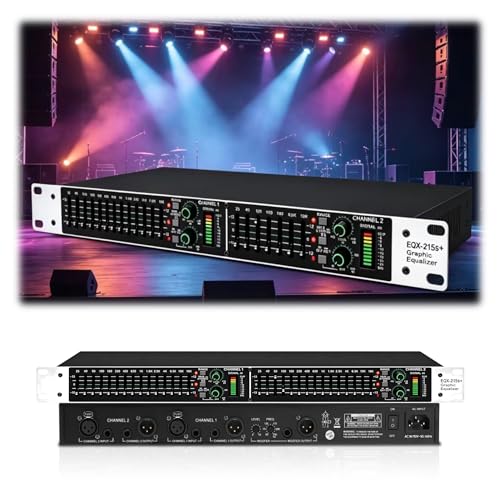
- 15 bands per channel with ±12 dB adjustment
- Balanced XLR and TRS connectivity
- 1U rack design with meters and noise reduction
Best For: Detailed live-sound EQ control
All-in-One Mixing Pick
6-Channel DJ Mixer with 7-Band EQ
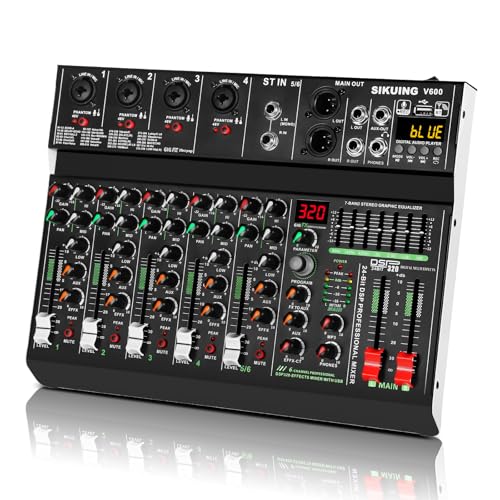
- Six channels for microphones, instruments, and playback
- 7-band EQ plus 320 DSP effects
- Bluetooth, USB audio, and phantom power capability
Best For: Compact live rigs and streaming setups
Visual Monitoring Pick
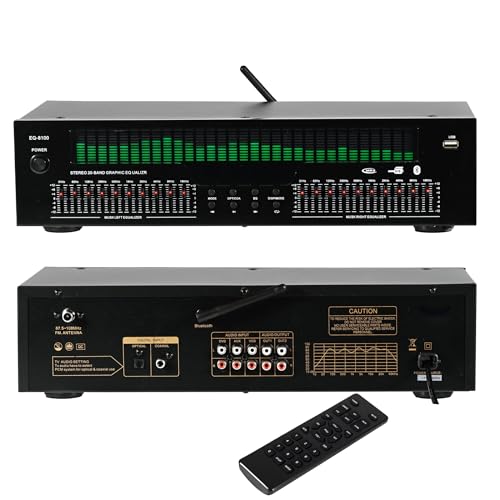
- 20-band EQ with 31-band spectrum analyzer
- Bluetooth, USB, optical, coaxial, and RCA inputs
- Slim 1U design with display and preset saving
Best For: Visual frequency monitoring and flexible system integration
Feature-Rich Budget Mixer
FULUODE CT-80S 8-Channel Mixer

- Eight channels for live music and karaoke
- Bluetooth, USB/MP3 playback, and recording
- Reverb, LED display, and 48V phantom power
Best For: Small events needing mixing and playback features
Best Rack EQ
15-Band Stereo EQ with Sub Out
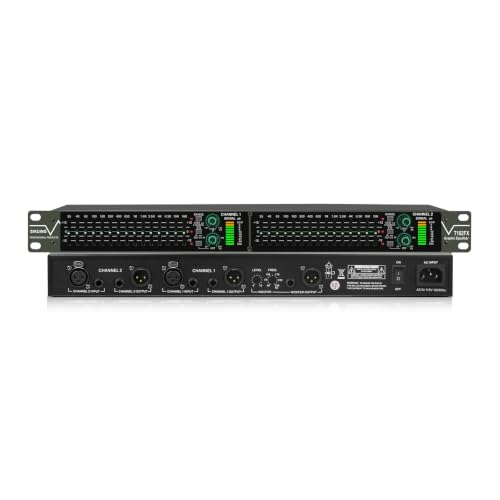
- 15-band independent stereo EQ
- Low-cut filter and EQ bypass
- Dedicated adjustable subwoofer output
Best For: Rack-based live sound and subwoofer-equipped systems
Best All-in-One Mixer
4-Channel Mixer with Stereo EQ

- Four XLR/line combo inputs
- 5-band stereo EQ and 16 DSP effects
- USB, Bluetooth, AUX, and EFX connectivity
Best For: Small live gigs, karaoke, DJ events, and streaming
Best Feature-Rich EQ

- 31-band tuning with spectrum analyzer
- 12 customizable modes with auto-save
- Optical, coaxial, and USB connectivity
Best For: Detailed digital EQ work across live, studio, and entertainment systems
Best 31-Band Flexibility
EQ-231 Stereo Graphic Equalizer

- 31 bands per channel for detailed sound shaping
- Low-cut filter helps reduce rumble and hum
- XLR and 1/4-inch TRS connectivity
Best For: Live, installation, and studio systems needing extensive EQ control
Best Low-End Control

- 15 bands per channel for precise adjustment
- Dedicated adjustable-frequency bass output
- 1U rack mount with versatile connections
Best For: Systems requiring focused EQ and dedicated bass management
Best Simple Rack-Mount Option
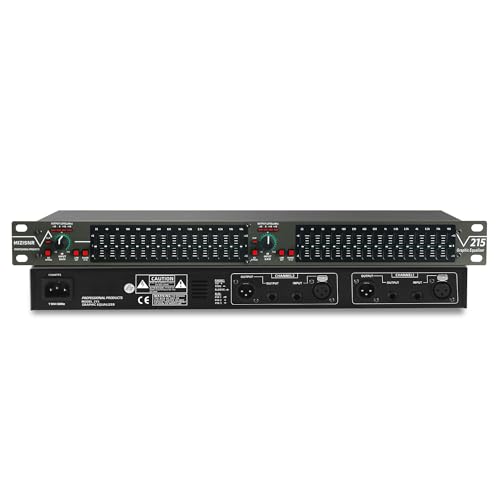
- Dual-channel 15-band graphic equalization
- Low-cut and bypass switches for setup control
- Standard 1U rack-mount design
Best For: Live and installed systems needing essential stereo EQ functions
Precision Control Pick – RQG Dual-Channel 15-Band EQ
For live sound setups that need hands-on frequency shaping, the RQG Dual-Channel 15-Band Graphic Equalizer provides independent control for each channel. Its long-throw faders, balanced connections, level meters, and noise-reduction circuitry make it a practical rack-mounted option for concerts, karaoke, churches, and studio systems.
Best For: Live sound operators who want detailed dual-channel EQ control and straightforward front-panel adjustments.
Pros:
- Offers 15 adjustable bands per channel with a ±12 dB range.
- Includes balanced XLR and 1/4-inch TRS inputs and outputs.
- Rugged 1U chassis includes LED meters, clip indicators, and noise reduction.
Cons:
- It is an analog EQ processor rather than an all-in-one mixer.
- Its rack-mounted design is less portable than a compact mixer.
This is a focused choice among audio equalizers for live sound, especially when you already have a mixer and need precise channel-by-channel tonal adjustment.
All-in-One Mixing Pick – 6-Channel DJ Mixer with 7-Band EQ
The V600 combines mixing, equalization, effects, and connectivity in one portable console. Its 7-band graphic EQ and 320 DSP effects are useful for shaping vocals and instruments during live performances, while Bluetooth and USB recording add flexibility for streaming, rehearsals, and small production setups.
Best For: Performers, streamers, and small live-sound setups that need mixing, EQ, effects, and recording features together.
Pros:
- Six channels accommodate microphones, instruments, and playback devices.
- Provides a 7-band graphic equalizer and 320 built-in DSP effects.
- Includes Bluetooth 5.0, USB sound-card functionality, and 48V phantom power capability.
Cons:
- Its 7-band EQ offers less frequency control than dedicated multi-band processors.
- It is a mixer with EQ rather than a standalone rack equalizer.
Choose this model when versatility matters more than maximum EQ resolution. It is a practical central hub for compact live rigs, streaming, and home recording.
Visual Monitoring Pick – EQ8100 20-Band Spectrum EQ
The EQ8100 is designed for users who want visual feedback while tuning a system. Its 20-band graphic equalizer, 31-band spectrum analyzer, oversized display, and multiple digital inputs support live stages, DJ booths, recording studios, and home theater systems where monitoring frequency activity is useful.
Best For: Engineers and enthusiasts who want spectrum visualization, preset recall, and broad analog/digital connectivity.
Pros:
- Combines 20-band EQ control with a 31-band real-time spectrum analyzer.
- Supports Bluetooth, USB, optical, coaxial, and RCA connections.
- Uses a slim 1U chassis with auto-save presets and color-coded controls.
Cons:
- The supplied dimensions list an unusual 19-inch value for each dimension, so rack-fit details should be confirmed.
- Its feature-rich interface may be more than needed for simple live-sound systems.
Among audio equalizers for live sound, this is the strongest fit for users who value visual analysis and digital source flexibility alongside traditional graphic EQ controls.
Feature-Rich Budget Mixer – FULUODE CT-80S 8-Channel Mixer
The FULUODE CT-80S is a compact 8-channel mixer for live music, karaoke, conferences, and school or campus events. Rather than serving as a dedicated graphic equalizer, it provides channel mixing with three-segment controls, reverb, Bluetooth, USB/MP3 playback, recording support, and 48V phantom power.
Best For: Small live events and karaoke systems that need basic tone shaping, playback, effects, and microphone support in one console.
Pros:
- Offers eight channels for microphones, instruments, and other sources.
- Includes Bluetooth 5.0, USB/MP3 playback, and USB recording functions.
- Features reverb, a large LED display, and 48V phantom power.
Cons:
- It does not provide a dedicated multi-band graphic EQ like the other processors in this roundup.
- The supplied notes do not specify detailed frequency-band controls.
- Its 1.77-inch-thick chassis may require different mounting considerations than a standard rack processor.
This mixer makes sense when your priority is an affordable, portable control surface with basic EQ-style channel shaping and broad event-oriented features—not precision system tuning.
Best Rack EQ – 15-Band Stereo EQ with Sub Out
For shoppers comparing audio equalizers for live sound, this 1U rack unit offers practical feedback control, stereo tone shaping, and dedicated bass management. Its 15-band dual-channel layout covers 25Hz–16kHz, while the low-cut filter and signal monitoring help keep a live mix cleaner.
Best For: Rack-based live sound systems, studios, and setups using an active subwoofer.
Pros:
- Independent 15-band stereo EQ for detailed tonal adjustments.
- Adjustable low-cut filter helps reduce hum and muddy low frequencies.
- Dedicated subwoofer output with adjustable 50Hz–250Hz range.
- Metal 1U chassis, rack hardware, XLR/TRS connectivity, and LED metering.
Cons:
- Its rack-mount format is less convenient for compact or mobile rigs.
- Analog controls may require more hands-on adjustment than digital EQ systems.
This is a focused choice when you want straightforward stereo EQ control and subwoofer integration in a durable rack format. The bypass switch and clip indicator are especially useful when making changes during setup or performance.
Best All-in-One Mixer – 4-Channel Mixer with Stereo EQ
Among audio equalizers for live sound, this Phenyx Pro console is a useful option when mixing and EQ need to happen in one unit. It combines four mono XLR/line combo inputs, per-channel tone controls, a 5-band stereo graphic equalizer, USB, Bluetooth, and built-in DSP effects.
Best For: Small live gigs, karaoke, DJ events, stage performances, and compact streaming or recording setups.
Pros:
- Four combo inputs accommodate microphones, instruments, and other audio sources.
- Independent channel gain, EQ, pan, AUX, EFX, solo, and fader controls.
- 5-band stereo graphic EQ plus 16 built-in DSP effects.
- USB audio, Bluetooth playback, AUX/EFX sends, and +48V phantom power.
Cons:
- Four channels may be limiting for larger bands or complex productions.
- The integrated mixer layout offers less dedicated graphic-EQ detail than a standalone multi-band rack EQ.
This console makes sense for buyers who need a complete small-format live mixing solution rather than a standalone equalizer. Its connectivity and effects reduce the number of extra pieces needed for basic performances and events.
Best Feature-Rich EQ – 31-Band Digital Equalizer
For detailed audio equalizers for live sound, this digital 31-band model provides independent band tuning, real-time spectrum monitoring, noise and echo reduction, and customizable modes. Optical, coaxial, and USB connections also make it adaptable to studio, home theater, KTV, and event-oriented systems.
Best For: Users who want detailed digital tone shaping, visual frequency monitoring, and multiple input options for live or studio setups.
Pros:
- 31-band adjustment provides fine control from bass through treble.
- Built-in spectrum analyzer supports real-time frequency monitoring.
- Offers 12 customizable modes with auto-save preset functionality.
- Supports optical, coaxial, and USB lossless playback connections.
Cons:
- The supplied notes do not specify balanced XLR or TRS live-sound connections.
- Its broad feature set may be more than needed for simple analog rack systems.
This equalizer is most compelling when visual feedback, presets, and precise digital adjustment matter more than a minimal control surface. Confirm connector compatibility with your mixer, speakers, or venue system before choosing it for a live rig.
Best 31-Band Flexibility – EQ-231 Stereo Graphic Equalizer
For audio equalizers for live sound, the EQ-231 stands out when you want detailed control across two stereo channels. Its 31 bands per channel provide extensive shaping options, while the low-cut filter and visual LED monitoring help manage unwanted noise and output levels.
Best For: Live applications, audio installations, and studios that need highly detailed two-channel EQ control.
Pros:
- 31 adjustable bands per channel with up to ±12dB of control.
- Low-cut switch helps attenuate wind noise, floor rumble, and electrical hum.
- XLR balanced and 1/4-inch TRS unbalanced inputs and outputs support varied setups.
- Four-segment LED ladders provide visual feedback for gain reduction and output levels.
Cons:
- The 31-band layout offers more control but may take longer to configure.
- Its 6.69-pound chassis may be less convenient for highly portable systems.
The EQ-231 is the most adjustment-focused option in this group. Choose it when precise frequency shaping and comprehensive front-panel monitoring matter more than minimizing rack space or controls.
Best Low-End Control – EQX-215S Rack-Mount Equalizer
Among audio equalizers for live sound, the EQX-215S is a practical choice for systems that need straightforward frequency adjustment plus dedicated bass management. Its 15-band-per-channel design, adjustable low-cut frequency, and subwoofer output make it useful for tailoring a system’s low end.
Best For: Live events, studios, and installations that benefit from adjustable low-cut filtering and a dedicated bass output.
Pros:
- 15 bands per channel provide focused ±12dB tonal adjustment.
- Dedicated bass output includes adjustable frequency control.
- Low-cut frequency can be adjusted with a dedicated rotary knob.
- 1U rack-mount design and included power, XLR, and 1/4-inch TRS cables simplify integration.
Cons:
- Fewer bands provide less detailed shaping than a 31-band equalizer.
- The supplied notes specify 110V AC power, which may limit compatibility in some regions.
The EQX-215S is the most feature-oriented model here for managing bass alongside general EQ. It is a strong fit when a compact rack unit with subwoofer-oriented connectivity is more useful than maximum band count.
Best Simple Rack-Mount Option – EQ-215 15-Band Stereo EQ
The EQ-215 is a straightforward option for audio equalizers for live sound, offering dual-channel 15-band control in a standard 1U rack-mount format. Its low-cut and bypass switches help with basic system cleanup and setup checks without adding unnecessary complexity.
Best For: Live rigs, studios, and installations seeking a conventional 1U stereo equalizer with essential noise-reduction controls.
Pros:
- 15 bands per channel offer adjustable control up to ±12dB per band.
- Low-cut switch helps reduce wind noise, floor rumble, and electrical hum.
- Standard 1U rack-mount design supports straightforward installation.
- XLR balanced and 1/4-inch TRS unbalanced connections accommodate different audio setups.
Cons:
- It offers less frequency-resolution control than a 31-band model.
- The supplied notes do not mention a dedicated subwoofer output.
The EQ-215 keeps the core functions focused: dual-channel shaping, low-frequency filtering, bypass operation, and rack integration. Consider it when you want a practical 15-band unit for routine live or installed-system adjustment.
How We Picked the Best Audio Equalizers for Live Sound
We focused on the features that matter during setup and performance: available EQ bands, channel count, stereo or dual-channel operation, connectivity, output flexibility, noise-control features, and rack or tabletop practicality. The selection includes dedicated graphic equalizers for precise frequency shaping as well as mixers that combine equalization with inputs, effects, phantom power, USB, or wireless playback.
Because live systems vary widely, no single model is ideal for every venue. A compact mixer may suit a small band or mobile DJ, while a dual-channel rack EQ can provide more targeted control between a mixer and amplifier or powered speakers.
Quick Comparison
- Dedicated rack equalizers: Best for inserting EQ into an existing PA, DJ, studio, or home audio signal chain.
- Mixers with built-in EQ: Better when you need microphone inputs, level control, effects, monitoring, or playback in one unit.
- 15-band models: A practical balance of control, speed, and affordability for many small and mid-sized systems.
- 31-band models: Better for detailed room correction, feedback management, and more precise tonal shaping.
- Spectrum-display models: Useful for visualizing frequency activity, but the display should support—not replace—careful listening.
Key Buying Factors for Audio Equalizers for Live Sound
Band Count and Control Layout
More bands provide finer adjustment, especially when taming feedback or correcting uneven room response. However, additional sliders can slow down live operation. Choose the highest resolution your setup and experience justify.
Signal Routing and Connections
Check whether the unit supports the inputs and outputs your system uses, including balanced connections, stereo channels, subwoofer outputs, USB, Bluetooth, or insert-style routing. Confirm that the equalizer can be placed where you need it in the signal chain.
Noise, Headroom, and Reliability
Low-noise circuitry, adequate headroom, and dependable controls are important at high volume. Noise reduction can help, but correct gain staging remains essential. Avoid boosting multiple neighboring bands heavily, which can increase noise and overload downstream equipment.
Built-In Mixer Features
If you are building a system rather than adding one component, a mixer with EQ, DSP effects, phantom power, and playback may offer better value than separate devices. Make sure its channel count and output controls match your microphones, instruments, and monitors.
Who Should Buy Which Audio Equalizers for Live Sound?
Choose a 15-band dual-channel rack EQ if you want straightforward tonal control for a small PA, DJ rig, home system, or studio rack. These models are generally easier to operate quickly.
Choose a 31-band graphic equalizer if you regularly work in difficult rooms, need detailed feedback control, or want more precise stereo tuning.
Choose a mixer with built-in EQ and DSP if you need one central console for microphones, instruments, effects, monitoring, and playback. This is often the most practical route for small bands, presenters, churches, and mobile entertainers.
Choose a model with Bluetooth, USB, or a spectrum analyzer when convenient playback, recording, or visual monitoring is part of your workflow. For critical live work, prioritize balanced routing, usable controls, and reliable gain structure over extra features alone.