Science and faith do not have to be rivals. The best apologetics books on science and faith help readers think carefully about evidence, origins, reason, and belief without sacrificing clarity or rigor.
Whether you want an accessible introduction, a focused case for theism, or a deeper theological discussion, this roundup highlights books that speak to skeptical questions and real-world conversations.
Best 10 Apologetics Books on Science and Faith Picks for 2026
Core Christian Apologetics
I Don't Have Enough Faith to Be an Atheist
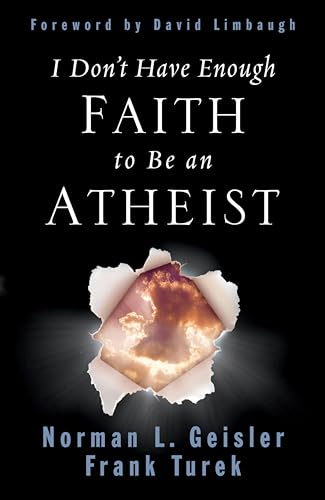
- Broad case for Christianity and theism
- Includes science, morality, and the New Testament
- Useful for skeptics and Christian defenders
Best For: Readers who want a wide-ranging defense of Christianity that goes beyond science alone.
Journalistic Science Case

- Investigates scientific evidence for intelligent design
- Covers cosmology, DNA, astronomy, and physics
- Highly readable journalistic format
Best For: Readers who want a readable, science-focused apologetics book with a journalistic style.
Short Apologetics Primer
Can Science Explain Everything?

- Concise overview of science and faith
- Argues science and Christianity can coexist
- Short, accessible 128-page format
Best For: Readers looking for a short, accessible introduction to the science-versus-religion debate.
Origins Debate Roundtable
Four Views on Creation, Evolution, and Intelligent Design

- Compares four major Christian views on origins
- Includes direct critique and response format
- Useful for science, Scripture, and interpretation questions
Best For: Readers who want a balanced, comparative look at major Christian views on origins.
Classic Christian Apologetics
Reasonable Faith: Christian Truth and Apologetics

- Updated with astrophysics, probability calculus, and Reformed epistemology
- Works as both a textbook and a lay-reader resource
- Covers faith and reason, miracles, and the resurrection
Best For: Readers seeking a rigorous, positive case for Christianity
Science-Heavy Evidence Review
God, the Science, the Evidence

- Built from four years of research with over twenty experts
- Covers relativity, quantum mechanics, the Big Bang, and fine-tuning
- Addresses the rise and challenge of materialism
Best For: Readers wanting a readable, research-based case for a creator God
Q&A Creation Apologetics

- Easy-to-read Q&A format for teens and older
- Covers evolution, Genesis, fossils, and suffering
- Highly visual with diagrams and illustrations
Best For: Teens, families, and ministry use
Science & Origins Perspective
Science and the Mind of the Maker

- Argues for the "Maker Thesis" using science and order in nature.
- Draws on cosmology, astronomy, biochemistry, and human rationality.
- Short 224-page read focused on origins and design.
Best For: Readers who want a focused case for design in science and origins.
All-in-One Apologetics
The Comprehensive Guide to Apologetics

- Covers Bible reliability, science and faith, and worldviews.
- Features many respected apologists and scholars.
- Large 528-page reference-style volume.
Best For: Readers who want a broad apologetics reference with science-and-faith coverage.
Science & Faith Research Guide
The Comprehensive Guide to Science and Faith

- More than 45 expert entries on science and faith.
- Covers intelligent design, biblical history, and bias in science.
- Available as a 30-hour audiobook.
Best For: Listeners seeking a deep, research-driven guide to intelligent design and biblical questions.
Core Christian Apologetics – I Don't Have Enough Faith to Be an Atheist
If you want apologetics books on science and faith that also tackle morality, the reliability of the New Testament, and the claims of Christ, this is a broad, argument-driven option. Geisler and Turek frame Christianity as more reasonable than unbelief and walk through classic cases for a creator God in a clear, structured way.
Best For: Readers who want a wide-ranging defense of Christianity that goes beyond science alone.
Pros:
- Covers the existence of God, morality, New Testament reliability, and Christ’s claims.
- Written to help both skeptics and Christians who want a more sophisticated defense.
- Uses traditional, tested arguments in a detailed, conviction-driven format.
Cons:
- At 448 pages, it is more of a deep read than a quick overview.
- Its broad scope means science is only one part of the overall case.
The strength of this book is its range: it gives you a full apologetics framework, not just one scientific argument. If you want a substantial foundation for discussing faith and reason, it fits that need well.
Journalistic Science Case – The Case for a Creator
For shoppers comparing apologetics books on science and faith, Lee Strobel’s approach is especially accessible because he investigates the scientific evidence through a journalist’s lens. This book explores cosmology, cellular biology, DNA, astronomy, physics, and human consciousness as part of a case that points toward intelligent design.
Best For: Readers who want a readable, science-focused apologetics book with a journalistic style.
Pros:
- Centers on scientific evidence for a Creator, including DNA and cosmology.
- Highly readable investigative format that is easy to follow.
- Connects faith discussion to multiple scientific fields.
Cons:
- Its focus is narrower than books that cover broader apologetics topics.
- Readers wanting a technical science text may find it more accessible than rigorous.
This is a strong pick if you want a mainstream, evidence-led book that makes the science-and-faith discussion feel concrete. It works well as an entry point into intelligent design arguments.
Short Apologetics Primer – Can Science Explain Everything?
If you need a compact choice among apologetics books on science and faith, John Lennox offers a concise response to the idea that science explains everything. In just 128 pages, he argues that science and Christianity are not opposed and can work together to deepen our understanding of the universe and human existence.
Best For: Readers looking for a short, accessible introduction to the science-versus-religion debate.
Pros:
- Very short and approachable at 128 pages.
- Directly addresses the science versus religion debate.
- Written by an Oxford math professor and Christian believer.
Cons:
- Its brevity leaves less room for detailed argumentation.
- More of an overview than a comprehensive apologetics treatment.
This book is a good fit if you want a fast, thoughtful primer rather than a long technical defense. It is especially useful for getting a clear Christian perspective on why science and faith need not conflict.
Origins Debate Roundtable – Four Views on Creation, Evolution, and Intelligent Design
Four Views on Creation, Evolution, and Intelligent Design (Counterpoints: Bible and Theology)
Check Price On AmazonIf you want apologetics books on science and faith that present multiple Christian positions side by side, this counterpoints volume is especially useful. It lays out four views on origins—young earth creationism, old earth creationism, evolutionary creation, and intelligent design—so readers can compare how each approach handles science and Scripture.
Best For: Readers who want a balanced, comparative look at major Christian views on origins.
Pros:
- Includes four major positions on creation, evolution, and intelligent design.
- Lets contributors critique and respond to one another.
- Addresses how evidence from science and divine revelation relate to each view.
Cons:
- Works more as a comparison tool than a single-position defense.
- Readers looking for one unified conclusion may prefer a more direct apologetics book.
This is a strong choice if you want to understand the landscape of evangelical origins debates before choosing a side. The format is especially helpful for readers who value seeing arguments in conversation rather than in isolation.
Classic Christian Apologetics – Reasonable Faith: Christian Truth and Apologetics
If you’re comparing apologetics books on science and faith, this updated edition of Reasonable Faith is built for readers who want a serious, positive case for Christianity. William Lane Craig brings in recent thought on astrophysics, probability calculus, the arguments for God, and Reformed epistemology while staying accessible to lay readers, seekers, pastors, and students.
Best For: Readers who want a theologically grounded, academically informed introduction to Christian apologetics with attention to science and philosophy.
Pros:
- Updates key material with newer work in astrophysics and probability calculus.
- Written to serve both textbook use and general readers.
- Covers major apologetics topics like faith and reason, miracles, and the resurrection.
- Emphasizes a positive case for Christianity rather than defensive rebuttal only.
Cons:
- At 416 pages, it is a substantial read for newcomers.
- Its academic tone may be more demanding than lighter popular-level titles.
This is a strong fit if you want a broad, well-known apologetics resource that engages scientific and philosophical questions without losing sight of core Christian claims.
Science-Heavy Evidence Review – God, the Science, the Evidence
For shoppers looking for apologetics books on science and faith, this 2025 title focuses directly on the evidence question and the long history of scientific ideas about God. Based on four years of research with more than twenty scientists and experts, it surveys breakthroughs such as relativity, quantum mechanics, the Big Bang, expansion, heat death, and fine-tuning in a readable format.
Best For: Readers who want a contemporary, research-driven overview of scientific arguments that point toward a creator God.
Pros:
- Draws on collaboration with more than twenty scientists and experts.
- Connects major scientific developments to the question of God’s existence.
- Explicitly tackles materialism and the changing scientific consensus.
- Noted as highly readable and awarded by multiple organizations.
Cons:
- At 562 pages, it is one of the longer options in this roundup.
- Its focus is broader scientific evidence, so it may be less compact than a Q&A-style book.
If you want a recent, evidence-forward volume that centers science in the faith conversation, this is the most directly targeted pick here.
Q&A Creation Apologetics – The New Answers Book
If you want apologetics books on science and faith that answer common creation questions directly, this illustrated Q&A volume is a practical choice. It tackles evolution, creation, Genesis, dinosaurs, carbon dating, fossils, death and suffering, and more in an easy-to-read format aimed at teens and older readers.
Best For: Teens, families, and ministry readers who want straightforward creationist answers in a visual Q&A format.
Pros:
- Uses a clear question-and-answer format that is easy to follow.
- Highly visual, with illustrations and diagrams throughout.
- Addresses popular science-and-Bible topics like fossils, Noah’s Ark, and starlight.
- Features contributions from Answers in Genesis leaders and scientists.
Cons:
- Its creationist perspective will not suit readers seeking a neutral overview.
- Some readers may prefer a more narrative or less topic-by-topic structure.
This book is especially useful if you need concise, biblically framed answers for classroom, family, or ministry settings.
Science & Origins Perspective – Science and the Mind of the Maker
Science and the Mind of the Maker: What the Conversation Between Faith and Science Reveals About God
Check Price On AmazonIf you’re comparing apologetics books on science and faith, this title is a focused choice on cosmic origins, natural order, and what science may reveal about a Maker. Melissa Cain Travis draws from cosmology, astronomy, biochemistry, and the mind’s ability to understand the universe to argue for what she calls the “Maker Thesis.”
Best For: Readers who want a concise, evidence-driven look at how scientific order can point toward design.
Pros:
- Connects multiple scientific disciplines to a unified case for design.
- Focuses on the relationship between the structure of nature and human rationality.
- Compact 224-page format makes it approachable for individual study.
Cons:
- Centers on a specific thesis rather than covering the full apologetics landscape.
- Best suited to readers interested in origins and design arguments.
This is a good pick if you want a science-and-faith book that keeps the argument tightly centered on origins and the intelligibility of the universe. It works well as a focused entry point into design-based apologetics.
All-in-One Apologetics – The Comprehensive Guide to Apologetics
Among apologetics books on science and faith, this is the broadest option in the group, covering evidence for Scripture, the science-and-faith conversation, and comparisons between Christianity and other worldviews. With contributions from a wide range of respected apologists and scholars, it is built as a practical reference for answering skeptical questions.
Best For: Christians who want a wide-ranging apologetics reference with science-and-faith coverage.
Pros:
- Covers multiple apologetics topics, including Bible reliability and worldview comparison.
- Includes contributions from many well-known scholars and apologists.
- Substantial 528-page volume for deeper study and reference use.
Cons:
- Its breadth may feel less focused if you only want science-and-faith material.
- The large scope can make it more of a reference book than a quick read.
This is the strongest all-purpose pick if you want one resource that can handle a wide range of apologetics questions. It is especially useful for readers who want both broader defense-of-the-faith material and dedicated science-and-faith coverage.
Science & Faith Research Guide – The Comprehensive Guide to Science and Faith
If you’re shopping for apologetics books on science and faith that lean heavily on current research, this audiobook is built for that purpose. It presents science and Christianity as complementary, with more than 45 entries from experts explaining intelligent design, biblical history, and the biases that can shape how science is presented.
Best For: Listeners who want a detailed, research-oriented guide to intelligent design and biblical questions.
Pros:
- Includes more than 45 entries from top-caliber experts.
- Addresses intelligent design, biblical history, and interpretive bias.
- Long-form audiobook format offers extensive coverage.
Cons:
- Audio-only format may not suit readers who prefer print study.
- Its depth may be more than casual listeners need.
This is a strong choice if you want a modern, research-heavy resource that connects scientific findings with biblical truth. The audiobook format makes it practical for long listening sessions and in-depth exploration.
How We Picked the Best Apologetics Books on Science and Faith
We prioritized books that address the science-and-faith conversation directly, use credible arguments, and serve different reader levels. We also looked for clear writing, strong reputations, and a range of viewpoints on creation, evolution, intelligent design, and broader apologetics.
Quick Comparison
If you want a fast starting point, choose an introductory case-making book for broad credibility, a dedicated science-and-faith title for big-picture questions, or a counterpoints-style volume if you want to compare Christian views side by side. More technical readers may prefer books that engage philosophy, theology, and scientific method in greater depth.
Key Buying Factors for Apologetics Books on Science and Faith
Audience Level
Match the book to your background. Some titles are built for newcomers and small-group study, while others assume comfort with philosophy, biology, cosmology, or biblical interpretation.
Scope of the Argument
Some books focus on one issue, such as origins or intelligent design. Others tackle the full range of Apologetics Books on Science and Faith, including the existence of God, the reliability of Christianity, and how science fits within a Christian worldview.
Balance of Evidence and Theology
Look for a book that handles both scientific claims and theological implications. The strongest choices do not treat science as an afterthought or reduce faith to a vague philosophy.
Format and Use Case
If you are buying for personal study, depth may matter most. For discussion groups, clarity and chapter structure are more important. For skeptics, a more accessible, less technical voice often works best.
Who Should Buy Which Apologetics Books on Science and Faith?
New readers should start with approachable, argument-driven titles that explain the big picture. Readers who want multiple Christian perspectives on origins should choose a multi-view book. If you want a more scholarly foundation, pick a volume that connects philosophy, theology, and scientific reasoning in a sustained way.
For pastors, students, and thoughtful lay readers, the best choice is usually the one that fits your current question: evidence for God, creation and evolution, or how Christians should interpret science in light of Scripture. That way, the book answers the questions you are actually asking rather than simply adding more information.