If you’re looking to align your financial management with your faith, exploring the best Christian financial planning books can be a game changer. These resources offer practical advice grounded in biblical principles, helping you navigate budgeting, debt, and stewardship. You might find that the right book not only enhances your financial literacy but also enriches your spiritual journey. Curious which titles top the list and how they can transform your approach? Let’s take a closer look.
The Total Money Makeover: A Proven Plan for Financial Peace

If you’re looking to take control of your finances while aligning with Christian values, “The Total Money Makeover” by Dave Ramsey is an excellent choice. This 237-page guide offers practical steps for getting out of debt, building an emergency fund, and investing wisely. Ramsey shares his own struggles and the lessons learned, providing actionable advice through a series of “baby steps.” Whether you’re deeply in debt or just want to enhance your financial literacy, this book is accessible to everyone. Many readers report transformative results, making it a must-read for anyone on a journey to financial peace.
Best For: Individuals seeking to manage their finances effectively while incorporating Christian values, regardless of their current financial situation.
Pros:
- Provides practical, actionable steps for getting out of debt and building wealth.
- Accessible language makes it suitable for readers with varying levels of financial knowledge.
- Many readers report transformative results and increased financial literacy after applying the principles.
Cons:
- Some readers find the anecdotes and testimonials excessive, potentially detracting from the core content.
- Lacks proper citations for certain claims, raising questions about the sources of information.
- May be less applicable for individuals with minimal debt beyond a mortgage.
The Financial Peace Planner: A Step-by-Step Guide to Restoring Your Family’s Financial Health

For families seeking a clear and actionable path to financial stability, “The Financial Peace Planner” by Dave Ramsey stands out as an invaluable resource. This step-by-step guide makes finances accessible, encouraging you to implement its principles weekly. You’ll find practical tools like budget worksheets and spending evaluations, helping you track your finances effectively. Many readers report feeling empowered to take control of their financial health, moving away from comfort spending. Despite some dated concepts, the core principles remain relevant and applicable, making this planner a valuable addition to your financial stewardship journey.
Best For: Families and individuals seeking a clear, actionable guide to achieving financial stability and improving their financial health.
Pros:
- Engaging and easy-to-understand workbook format that encourages weekly implementation.
- Practical tools such as budget worksheets and spending evaluations help track finances effectively.
- Motivational content empowers readers to take control of their finances and shift away from comfort spending.
Cons:
- Some concepts may feel dated, which might not resonate with all readers.
- Limited applicability in certain countries due to different financial systems.
- Readers looking for advanced financial strategies may find the content too basic.
Beyond Blessed: Gods Perfect Plan to Overcome All Financial Stress
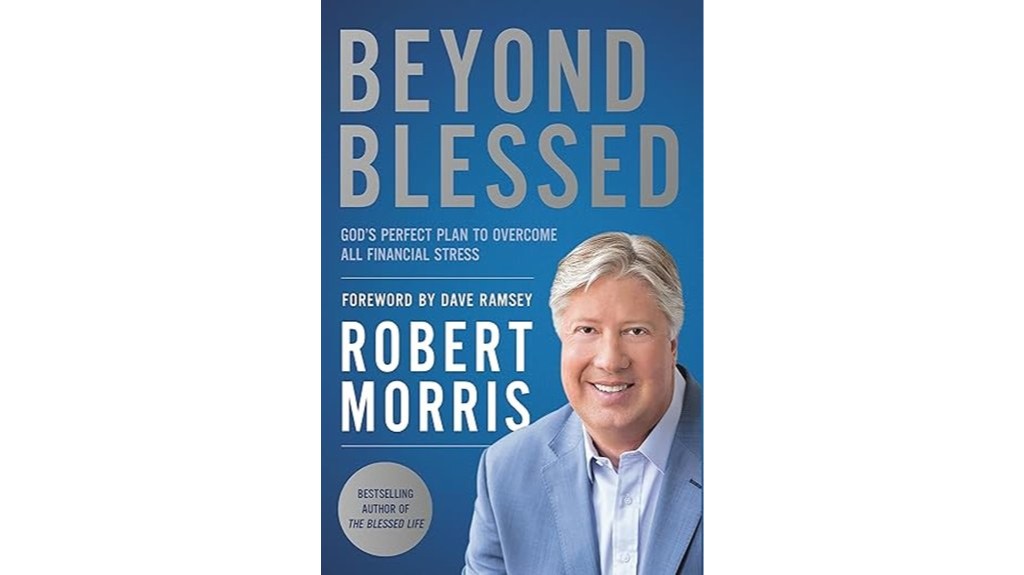
“Beyond Blessed: God’s Perfect Plan to Overcome All Financial Stress” is a must-read for Christians seeking to align their financial practices with their faith. Robert Morris emphasizes stewardship, reminding you that God owns everything, and you’re called to manage His resources wisely. He tackles debt management by providing practical budgeting advice, helping you live within your means. As you embrace stewardship, you’ll discover transformative blessings in your finances. Many readers share testimonies of financial miracles after committing to these principles. This engaging book not only offers insights but also encourages community discussions, making it an invaluable resource for your financial journey.
Best For: Christians seeking to improve their financial management and align their spending habits with their faith.
Pros:
- Provides practical advice on budgeting and debt management to help live within one’s means.
- Encourages a transformational mindset shift towards stewardship and generous giving.
- Inspires community discussions and sharing of testimonies, enhancing the learning experience.
Cons:
- May not resonate with those outside the Christian faith or those who do not prioritize stewardship principles.
- Some readers might find the concepts challenging to implement in their current financial situations.
- The focus on faith may not appeal to individuals looking for secular financial advice.
Burde Christian Planner 2025 with Bible Quotes

The Burde Christian Planner 2025 is perfect for anyone looking to blend faith with daily organization. Covering December 2024 to February 2025, this 160-page planner features a streamlined Scandinavian design that’s user-friendly. You’ll find illustrated scenes and uplifting Bible quotes to inspire you throughout your day. Track your daily, weekly, and monthly obligations with ease, and use the habit trackers and gratitude spaces to nurture your spiritual growth. Weighing just 13.4 ounces, it’s a practical companion for students, professionals, and families alike. Plus, with a hardback cover and elastic closure, it’s both durable and stylish.
Best For: Individuals looking to integrate their faith into daily life while effectively managing their schedules and personal goals.
Pros:
- Inspirational Content: Features uplifting Bible quotes and illustrated scenes that motivate and encourage reflection.
- Versatile Tracking: Offers daily, weekly, and monthly tracking options along with habit trackers and gratitude spaces.
- Durable Design: Hardback cover with an elastic closure ensures longevity and style, making it suitable for on-the-go use.
Cons:
- Limited Duration: Covers only a few months (December 2024 to February 2025), which may not suit long-term planners.
- Weight: At 13.4 ounces, it may be heavier compared to other planners, potentially impacting portability.
- Availability: First available on August 7, 2024, which may delay access for those looking to start planning sooner.
How Much Money Do I Need to Retire? Financial Planning Wisdom for Retirement
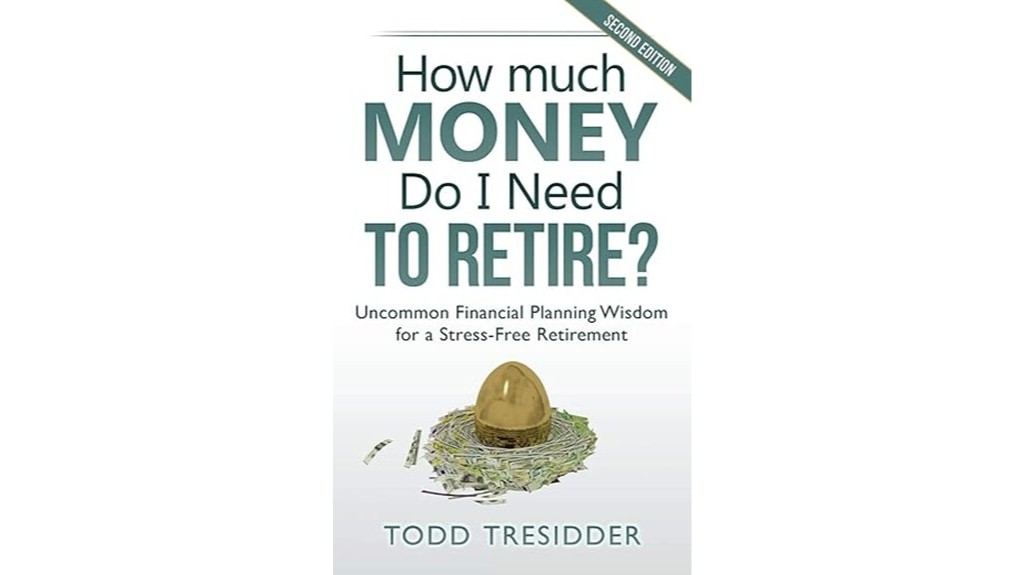
Wondering how much money you really need to retire comfortably? “How Much Money Do I Need to Retire?” by Todd Tresidder offers practical insights tailored for those seeking financial independence. He critiques traditional planning methods that often lead to unreliable predictions, emphasizing the need for a personalized approach. Tresidder introduces three robust retirement models and encourages you to find your “magic savings number” through seven guiding questions. With tools like the Ultimate Retirement Calculator, you can analyze scenarios and create a plan that adapts to economic changes, ensuring your retirement is secure and fulfilling.
Best For: Individuals seeking a personalized and practical approach to retirement planning and financial independence.
Pros:
- Offers a critique of traditional financial planning methods, highlighting their limitations.
- Introduces three robust retirement models that adapt to personal financial situations.
- Provides tools like the Ultimate Retirement Calculator for scenario analysis and tailored retirement planning.
Cons:
- May require a significant time investment to fully understand and implement the proposed models.
- Initial calculations for the “magic savings number” may be inaccurate, requiring adjustments.
- Some readers may find the emphasis on discipline and high savings rates challenging to maintain.
Complete Financial Guide for Young Couples (Christian Financial Concept)

If you’re a newly married Christian couple looking to establish a solid financial foundation, “Complete Financial Guide for Young Couples” is an essential read. Larry Burkett emphasizes the importance of managing finances to prevent stress and potential marital issues. The book provides practical budgeting guidelines and debt reduction strategies tailored for your needs. With biblical wisdom woven throughout, you’ll gain insights into smart money management, investing, and saving. Many couples have found that applying these principles empowers them to take control of their finances. While some critiques exist, this guide remains a crucial resource for building a financially sound marriage.
Best For: Newly married Christian couples seeking to build a strong financial foundation and manage their finances effectively.
Pros:
- Offers practical budgeting guidelines and debt reduction strategies tailored for individual needs.
- Incorporates biblical wisdom, encouraging responsible money management aligned with Christian values.
- Many couples report feeling empowered and in control of their finances after applying the principles taught in the book.
Cons:
- Some readers find the content repetitive and criticize its traditional approach to gender roles.
- Lacks depth for those seeking advanced investment strategies and comprehensive financial planning.
- The age of the book means some information may be outdated compared to current financial standards.
Money, Possessions, and Eternity: A Guide to Biblical Financial Stewardship

For anyone seeking a deeper understanding of financial stewardship rooted in Christian principles, “Money, Possessions, and Eternity” by Randy Alcorn stands out as an essential guide. Alcorn emphasizes that you’re a steward of God’s resources, not an owner, and your financial choices reflect your character. He warns against materialism and urges you to adopt a steward’s mindset while maneuvering earthly possessions. The book offers practical applications on tithing, giving, and investing in eternity, inspiring you to align your financial practices with your faith. Many readers attest to its transformative impact, leading to financial freedom and joy in giving.
Best For: Christians seeking to enhance their understanding of financial stewardship and align their money management with biblical principles.
Pros:
- Provides a comprehensive biblical perspective on financial stewardship and character.
- Offers practical applications and real-life examples for tithing, giving, and investing.
- Inspires readers to achieve financial freedom and joy in giving through a transformative mindset.
Cons:
- May challenge deeply ingrained cultural views on materialism, which some readers might resist.
- The depth of the content may require multiple readings for full comprehension and application.
- Some readers might find the focus on accountability and stewardship overwhelming or guilt-inducing.
100 Envelopes Money Saving Challenge Binder with Envelopes and Tracker

The Envelopes Money Saving Challenge Binder is perfect for anyone looking to cultivate better financial habits while incorporating their faith into the process. With this A5 leather binder, you’ll find 100 pre-printed cash envelopes and three challenge trackers, designed to help you save up to $5,050. Choose from various savings options, like saving $500 in 30 days or $10,000 in 52 weeks, tailored to your goals. You’ll also enjoy inspirational quotes and a Bible verse from Philippians 4:13 to motivate you. This binder not only builds savings but also instills discipline and confidence in your financial journey.
Best For: Individuals and families looking to improve their savings habits while incorporating motivational and faith-based elements into their financial management.
Pros:
- Encourages disciplined savings through structured challenges with clear financial goals.
- Includes inspirational quotes and a Bible verse to motivate users throughout their savings journey.
- Versatile savings options cater to different financial needs, such as emergency funds or holiday expenses.
Cons:
- The size of the binder (A5) may be too small for users who prefer larger organization tools.
- Limited to cash envelope savings, which may not suit everyone’s financial management style.
- Some users may find the pre-printed envelopes restrictive if they want to customize their savings experience.
Factors to Consider When Choosing Christian Financial Planning Books
When choosing Christian financial planning books, you should consider how practical the principles are and if they fit your life. Look into the author’s background to guarantee they have the expertise to guide you, and think about whether the content aligns with your spiritual values. Finally, make certain the material is clear and accessible so you can easily apply what you learn.
Practical Application of Principles
As you explore Christian financial planning books, consider how effectively they translate biblical principles into practical actions. Look for books that offer step-by-step guidance tailored to your financial situation. Many successful titles emphasize budgeting techniques, like establishing a cash flow plan, helping you track spending and identify areas for improvement. Authors often share personal testimonies and real-life examples, motivating you to adopt similar practices. Additionally, practical tools such as worksheets and challenge trackers can assist you in applying these concepts, ensuring tangible results. By integrating biblical teachings into financial strategies, these books encourage you to align your decisions with your faith, fostering a mindset of stewardship and responsible resource management.
Author’s Background and Expertise
Three key factors can help you evaluate the author’s background and expertise when choosing Christian financial planning books. First, check their qualifications and industry experience; credible authors often have relevant financial certifications or a successful track record in financial planning. Next, consider the author’s personal financial journey; if they’ve overcome significant challenges, their insights may resonate more deeply and inspire trust. Finally, look for authors who’ve worked directly with clients, as they typically offer practical advice grounded in real-world experience. Additionally, verify the author can explain complex concepts clearly, catering to various levels of financial literacy. Endorsements from reputable sources can further validate their expertise and the effectiveness of their principles.
Target Audience Suitability
Choosing the right Christian financial planning book involves understanding the specific needs and backgrounds of your target audience. First, assess their financial knowledge level; some may need beginner-friendly guidance, while others seek advanced strategies. Next, consider their unique financial situations—newly married couples might benefit from debt management advice, while older adults may focus on retirement planning.
Evaluate the accessibility of the book’s language to guarantee it’s relatable and easy to digest. Look for practical tools like budgeting worksheets or savings challenges that align with their financial goals. Finally, determine if the book’s motivational aspects resonate with your audience; personal stories and testimonials can inspire meaningful financial action. This tailored approach guarantees the book truly meets their needs.
Spiritual and Biblical Alignment
Understanding your audience’s financial needs is just the beginning; you also want to guarantee that the financial planning book aligns with their spiritual beliefs. Look for books that emphasize biblical teachings on stewardship, generosity, and money management. Authors should highlight God as the ultimate owner of resources, fostering a stewardship mindset instead of an ownership perspective. Many guides stress living within one’s means and avoiding debt, echoing biblical warnings about financial irresponsibility. Seek resources that challenge materialism while promoting eternal values, emphasizing how financial choices impact one’s spiritual life. Practical applications like tithing, budgeting, and saving should reinforce the integration of faith and financial management, making the teachings both relevant and actionable for your audience.
Clarity and Accessibility of Content
When diving into Christian financial planning books, clarity and accessibility of content are essential for making the material relatable and actionable. Look for books that use straightforward language, allowing readers with varying financial literacy to grasp concepts easily. Titles that incorporate relatable anecdotes and practical examples enhance your understanding and retention. Also, seek out resources that include worksheets and step-by-step guides; these tools facilitate hands-on learning and help you apply principles to your personal circumstances. Clear definitions of financial terms can demystify complex ideas, making it easier to engage with the content. Finally, an organized structure featuring headings and bullet points improves readability, ensuring you can quickly reference key information when needed.