Choosing the best audio mixer for church sound means matching your worship team, room, volunteers, and sound system—not simply buying the mixer with the most channels. The right model should make microphones clear, music balanced, and weekly setup manageable.
This roundup includes compact analog and powered mixers alongside flexible digital options, so you can compare practical choices for small chapels, larger sanctuaries, live streaming, rehearsals, and mobile ministry setups.
Best 10 Audio Mixer for Church Sound Picks for 2026
Best Digital Control
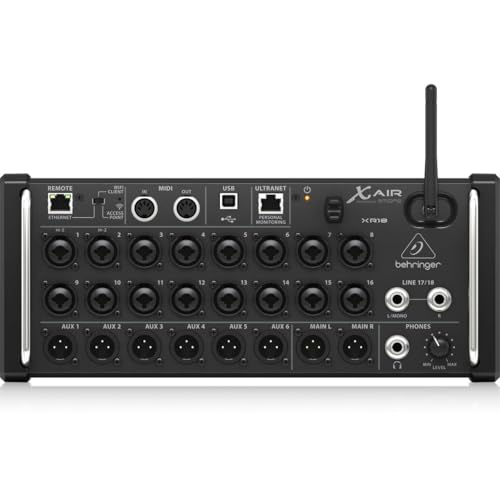
- 18 channels and 12 buses
- Tablet control with built-in Wi-Fi
- 18 x 18 USB recording interface
Best For: Tablet-controlled church mixing and recording
Best Powered Option

- 6000W peak powered mixer
- 14 mic preamps with phantom power
- Bluetooth, USB, and SD playback
Best For: Larger events needing integrated amplification
Best Slim Versatility

- 16-channel mixing with Bluetooth
- USB recording and media playback
- Slim build with phantom power
Best For: Compact worship, streaming, and recording setups
Best Small Powered Mixer
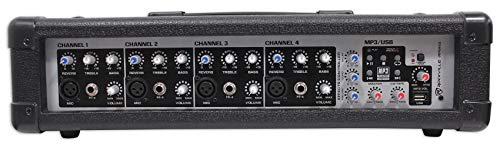
- Four-channel powered design
- 1800W peak output
- USB, AUX, effects, and phantom power
Best For: Small churches and compact presentation systems
Compact Church Mixer
6-Channel Bluetooth Audio Mixer

- Six inputs for microphones and instruments
- 48V phantom power on four XLR channels
- Bluetooth, USB playback, EQ, and 16 DSP effects
Best For: Small church services and worship rehearsals
Large-Service Control
W IN-MIX DX16 16-Channel Mixer

- Sixteen channels for microphones, instruments, and stereo sources
- 99 DSP effects, USB recording, and Bluetooth playback
- 48V phantom power on every channel
Best For: Large worship teams and church sound teams
Flexible Mid-Size Option

- Eight XLR and 1/4-inch input channels
- USB, Bluetooth, and flash-drive playback or recording
- Per-channel EQ, gain, PFL, faders, and monitoring
Best For: Small-to-medium services and streaming setups
Flexible 16-Channel Control
Professional Mixer for Church Sound

- 16 channels for microphones, instruments, and line sources
- 99 DSP effects with 7-band main EQ
- USB recording, Bluetooth, mute, and 48V phantom power
Best For: Multi-microphone worship services and expandable church audio systems
Compact Church Setup Pick

- Eight-channel design for smaller systems
- Bluetooth 5.0, USB/MP3 playback, and LED display
- Slim 1.57-inch profile with 48V phantom power
Best For: Small churches and portable conference or worship setups
Live Worship Mixing Choice
16-Channel Digital Sound Console

- 16 channels with individual mute and channel controls
- 99 DSP effects and 7-band master graphic EQ
- Bluetooth, U-disk playback, and 48V phantom power
Best For: Live worship teams needing hands-on control and multiple inputs
Best Digital Control – Behringer X AIR XR18
For churches seeking an audio mixer for church sound with flexible remote control, the Behringer X AIR XR18 combines 18 channels, tablet operation, and programmable MIDAS-designed preamps in a compact digital format. Its built-in Wi-Fi and bidirectional USB interface also support recording and playback workflows.
Best For: Churches that want tablet-controlled mixing, multiple microphone inputs, and USB recording capability.
Pros:
- 18-channel, 12-bus digital mixing platform.
- 16 programmable MIDAS-designed mic preamps with +48V phantom power support.
- Built-in tri-mode Wi-Fi router avoids requiring an external router.
- 18 x 18 bidirectional USB interface supports direct recording.
Cons:
- Requires a tablet or compatible device for its intended control workflow.
- Its digital configuration may be less immediate for users who prefer physical faders.
- Automatic microphone gain sharing is listed as a future firmware feature.
The XR18 is a strong fit when remote mixing and channel capacity matter more than a traditional control surface. It is especially practical for worship teams that need flexible routing and recording in one unit.
Best Powered Option – Rockville RPM1470
The Rockville RPM1470 is a practical audio mixer for church sound when you need an integrated powered solution for larger events. It combines 14 XDR2 mic preamps, dual graphic EQs, built-in effects, and speaker-driving power in one corded mixer.
Best For: Larger church gatherings and events requiring amplified output, multiple microphones, and onboard playback or recording.
Pros:
- 6000W peak rating, with 750W RMS per channel at 4 ohms.
- 14 low-noise mic preamps with +48V phantom power.
- USB and SD support for playback and recording, plus Bluetooth streaming.
- Dual 7-band graphic EQs and 16 preset 24-bit effects.
Cons:
- At 28.9 pounds, it is less portable than compact mixers.
- Its powered design may be unnecessary if the church already uses separate amplifiers.
- The supplied details identify the output connector type as RCA, so connection requirements should be checked before purchase.
With integrated amplification and straightforward tone-shaping controls, the RPM1470 suits churches that want fewer separate components. Its Bluetooth, USB, and SD features add convenient options for worship tracks and event playback.
Best Slim Versatility – XTUGA CT160
The XTUGA CT160 offers a flexible audio mixer for church sound in a slim, feature-packed format. It supports 16 inputs, Bluetooth playback, USB recording, MP3/WAV/WMA media handling, and +48V phantom power for compatible microphones.
Best For: Smaller worship setups, streaming services, podcasts, and churches that need a compact mixer with wireless playback.
Pros:
- 16-channel design supports multiple external audio sources.
- Bluetooth works with iOS, Android, tablets, and MP3 players.
- USB audio interface supports recording, editing, and exporting to a computer.
- Includes balanced XLR inputs, insert points, +48V phantom power, and 3-band EQ.
Cons:
- The supplied dimensions are inconsistent, so physical measurements should be verified before installation.
- It uses a corded power source rather than battery operation.
- Its feature set may require more setup than a basic analog mixer.
The CT160 is appealing when space, media connectivity, and computer recording are priorities. Its slim construction and broad device support make it adaptable for worship, streaming, and smaller live-production environments.
Best Small Powered Mixer – Rockville RPM45
For a small congregation or presentation space, the Rockville RPM45 provides an approachable audio mixer for church sound with four channels and built-in amplification. It includes XLR and TRS inputs, USB and AUX connectivity, basic channel controls, and adjustable echo, delay, and reverb.
Best For: Small churches, meetings, presentations, karaoke, and compact live setups using a limited number of microphones.
Pros:
- 1800W peak output with 225W RMS per channel at 8 ohms.
- Four XLR and four TRS inputs accommodate microphones and instruments.
- USB, RCA AUX, recording output, and effect-loop connections provide flexibility.
- Includes phantom power, fan cooling, and adjustable echo, delay, and reverb.
Cons:
- Four channels may not be enough for larger worship teams.
- Its 19-pound weight and wooden enclosure are less compact than a small unpowered mixer.
- The listed phantom power is +15V, so microphone compatibility should be confirmed.
The RPM45 is best viewed as a straightforward powered solution for smaller setups. It can simplify a compact church sound system by combining mixing, effects, and amplification in one unit.
Compact Church Mixer – 6-Channel Bluetooth Audio Mixer
For churches seeking an audio mixer for church sound in a compact format, this six-channel board combines microphone and instrument inputs with Bluetooth, USB playback, phantom power, and built-in effects. It is suited to smaller services, worship rehearsals, karaoke, and basic recording setups.
Best For: Small church services, worship teams, spoken-word events, and users who need Bluetooth or USB playback.
Pros:
- Six input channels include four XLR inputs plus 1/4-inch connections for microphones, instruments, and other sources.
- Four XLR channels support switchable 48V phantom power for compatible condenser microphones.
- Bluetooth, USB playback, 3-band EQ, and 16 DSP effects provide useful mixing flexibility.
Cons:
- Six channels may be limiting for larger worship teams or multi-microphone productions.
- The manufacturer describes it as a traditional analog mixer, so users should expect hands-on setup rather than advanced digital routing.
- The listed warranty is 90 days.
This is a practical choice when a church needs essential inputs and convenient music playback without moving to a larger console. Its channel count and analog workflow make it better suited to modest systems than complex sanctuary installations.
Large-Service Control – W IN-MIX DX16 16-Channel Mixer
For larger congregations and more involved worship setups, this 16-channel audio mixer for church sound offers substantial input capacity, per-channel EQ and gain, Bluetooth, USB recording, and extensive DSP effects. Its metal construction and illuminated mute buttons are useful for recurring live events.
Best For: Larger worship teams, church sound teams, live performances, studios, and setups with many microphones or instruments.
Pros:
- Fourteen XLR/6.35mm combination inputs plus two stereo channels accommodate full bands and multiple microphones.
- Each channel provides independent 3-band EQ and gain controls for hands-on source balancing.
- Includes 99 DSP effects, Bluetooth playback, USB recording, a 7-band master EQ, and 48V phantom power on every channel.
Cons:
- Its larger footprint may be excessive for small rooms or simple speech-only systems.
- XLR cables are sold separately.
- The listed return period is 30 days, although the product includes a one-year warranty.
The DX16 is the strongest fit here for churches that need room to grow beyond a few microphones. Its extensive I/O and physical controls can simplify live mixing, though the larger console requires more space and a more deliberate setup.
Flexible Mid-Size Option – 8-Channel USB Audio Mixer
This eight-channel audio mixer for church sound provides a middle ground between compact boards and larger consoles. It supports XLR and 1/4-inch inputs, USB and Bluetooth playback or recording, headphone monitoring, per-channel controls, and basic reverb and delay effects.
Best For: Small-to-medium church services, streaming, podcasting, weddings, and worship setups with several connected sources.
Pros:
- Eight channels accept XLR and unbalanced 1/4-inch connections, with REC and TAPE input/output options.
- USB connectivity, Bluetooth, and flash-drive support enable playback and recording with several common devices.
- Independent gain, FX, PFL, fader, 3-band EQ, and peak controls support hands-on mixing and monitoring.
Cons:
- Eight channels provide less expansion room than a 16-channel board.
- The built-in effects are limited to reverb and delay rather than a larger effects library.
- As a corded mixer, it requires access to mains power during use.
This model is a sensible compromise for churches that need more connectivity than a basic six-channel board but do not require a large-format console. Its USB, Bluetooth, and headphone-monitoring features also suit hybrid services and streaming workflows.
Flexible 16-Channel Control – Professional Mixer for Church Sound
For churches needing an audio mixer for church sound with room to grow, this 16-channel console offers extensive input capacity, channel-level controls, and useful playback options. Its 99 DSP effects, 7-band main-output EQ, USB recording, and Bluetooth support make it adaptable for worship services, music, and spoken-word events.
Best For: Churches running multi-microphone services, live worship, and recorded or streamed events.
Pros:
- 16 channels with XLR and stereo line inputs for microphones, instruments, and other sources.
- 99 built-in DSP effects plus 3-band channel EQ and 7-band main-output EQ.
- Independent 48V phantom power, PAD switch, mute controls, Bluetooth, and USB playback/recording.
Cons:
- The extensive controls and effects may require more setup time for inexperienced volunteers.
- Bluetooth range is listed at approximately 33 feet, which may limit placement flexibility.
This is a strong feature-rich option when a church wants plenty of channels and detailed sound shaping in one console. It is particularly suitable for larger or expanding setups that also need wireless playback and computer recording.
Compact Church Setup Pick – FULUODE 8-Channel Audio Mixer
This FULUODE console is a practical audio mixer for church sound when a smaller, straightforward setup is more important than maximum channel capacity. The 8-channel design includes Bluetooth, USB/MP3 playback, reverb, and 48V phantom power in a slim 1.57-inch profile.
Best For: Small churches, conferences, campus activities, family KTV, and compact live-music systems.
Pros:
- Eight channels support wired, wireless, condenser microphones, and instruments.
- Built-in Bluetooth 5.0, USB/MP3 playback, and an LED display add convenient music-input options.
- Ultra-thin design and listed 3.3 kg weight suit portable or space-conscious installations.
Cons:
- Eight channels provide less expansion room than the 16-channel alternatives.
- The supplied notes mention reverb but do not specify a broader effects library or detailed master EQ.
Choose this model when your church needs essential mixing and playback features without a larger console footprint. Its channel count is best matched to modest services and smaller volunteer-operated systems.
Live Worship Mixing Choice – 16-Channel Digital Sound Console
Churches looking for an audio mixer for church sound with dedicated live-control features may appreciate this 16-channel console. It combines individual channel mute buttons, 99 DSP effects, Bluetooth and U-disk playback, 48V phantom power, and a 7-band master graphic EQ for flexible service mixing.
Best For: Live worship, small venues, rehearsals, karaoke, and church teams managing multiple inputs.
Pros:
- 16 channels provide capacity for multiple microphones, instruments, and line sources.
- Individual mute buttons and channel gain, EQ, and fader controls support quick live adjustments.
- 99 DSP effects, Bluetooth, U-disk playback, 48V phantom power, and 7-band master EQ offer broad functionality.
Cons:
- At 8.26 kg and approximately 18.9 inches wide, it may be less convenient for frequent transport.
- The feature-rich layout may be more than a very small congregation needs.
This mixer is a capable fit for churches that prioritize hands-on live control and multiple input sources. Its mute function and master EQ are especially useful when volunteers need to make quick changes during a service.
How We Picked the Best Audio Mixer for Church Sound
We focused on the features that matter during real services: channel count, microphone preamps, phantom power, EQ, onboard effects, USB or Bluetooth connectivity, monitor outputs, portability, and ease of operation. We also considered whether a mixer can support common church sources such as vocal microphones, instruments, playback devices, wireless microphones, livestream feeds, and stage monitors.
The selection includes powered mixers for straightforward speaker operation, traditional analog consoles for hands-on control, and digital mixers for remote adjustment and more advanced routing. Because church audio needs vary widely, no single format is ideal for every congregation.
Quick Comparison
- Best for flexible digital control: Behringer X AIR XR18, with tablet-based mixing, multiple buses, and programmable Midas preamps.
- Best for powered sound systems: Rockville RPM1470 or RPM45, which combine mixing and amplification in one unit.
- Best for compact worship setups: Six- and eight-channel models with Bluetooth, USB, phantom power, and built-in effects.
- Best for larger input needs: The 16-channel mixers, which provide room for multiple vocalists, instruments, and playback sources.
Key Buying Factors for an Audio Mixer for Church Sound
Input Count and Future Growth
Count every microphone, instrument, playback device, and livestream feed you currently use, then leave several spare channels. A small choir or solo worship leader may be comfortable with six to eight inputs, while a full band, choir, or multiple speaking microphones can quickly require 16 channels or more.
Powered Versus Unpowered Design
A powered mixer includes an amplifier for passive speakers, reducing the number of components required. It can be convenient for portable systems, but an unpowered mixer offers more flexibility when using powered speakers, external amplifiers, or separate monitor systems.
Control, Effects, and Routing
Look for usable channel EQ, a master EQ, aux sends for monitors, and reverb for vocals. Digital models can add scenes, remote control, multibus routing, and more precise adjustments. These features are valuable when the mixer sits away from the seating area or volunteers need saved settings.
Connectivity and Installation
USB recording, Bluetooth playback, and an audio interface can simplify rehearsals and streaming. Confirm that the mixer has the outputs and auxiliary sends needed for your main speakers, monitors, recording device, and hearing-assistance or livestream systems.
Who Should Buy Which Audio Mixer for Church Sound?
Small churches and simple setups should prioritize a compact mixer with clear controls, phantom power, built-in reverb, and enough inputs for modest growth. Portable ministries may prefer a powered model that combines amplification and mixing in one chassis. Churches with bands, choirs, or livestreaming should consider a 16-channel design or the XR18’s digital routing and remote operation. Volunteer-led teams should favor intuitive controls and reliable connections over advanced features they will not use. Before buying, verify speaker compatibility, microphone requirements, power needs, and whether the mixer’s control method suits the people who will operate it each week.