American church history is bigger than dates and denominations. The best books connect theology, culture, politics, revival, migration, and national identity in a way that makes the story come alive.
Whether you want a broad overview, a classroom-ready text, or a more interpretive read, this roundup highlights strong options for different levels of depth and readability.
Best 10 Books on American Church History Picks for 2026
Editor’s Pick
Turning Points in American Church History

- 13 pivotal events across four centuries
- Primary sources, hymns, prayers, and images
- Readable overview with strong historical grounding
Best For: Readers wanting a brisk, well-researched overview
Classic Survey

- 500-year chronological account of religion in America
- Biographical vignettes keep the history lively
- Explores racism, feminism, and utopianism
Best For: Readers wanting a wide-ranging, readable historical survey
Readable Reference
Church History in Plain Language

- Plain-language overview from early church to modern era
- Updated coverage of Asia, India, Africa, and the West
- Narrative structure built around characters, setting, plot
Best For: Readers wanting an accessible global church history overview
Providence Narrative

- Ten modern-era stories framed as providential
- Engaging narrative from a bestselling author
- Includes Lincoln, Midway, and Russian Jewish immigration
Best For: Readers interested in a providence-centered interpretation
Foundations of North American Christianity
The Old Religion in a New World

- Broad survey of North American Christian history
- Focuses on what was new in the American context
- Explains major turning points and interpretive issues
Best For: Readers who want a sweeping overview of North American Christianity
Faith and Nation

- Narrative introduction to American religious history
- Covers major events from Awakening to culture wars
- Useful for classroom or personal study
Best For: Readers seeking an up-to-date introduction to religion’s role in American history
Standard Survey of Church History
A History of Christianity in the United States and Canada

- Standard textbook on North American Christianity
- Revised with updated coverage through 2018
- Covers churches, institutions, and cultural engagements
Best For: Readers who want a comprehensive textbook-style history of Christianity in the United States and Canada
Major American Religion Survey
The Religious History of America

- Revised and expanded modern classic
- Covers pluralism, practice, and social struggle
- Includes African American, Native American, and Eastern traditions
Best For: Readers seeking a comprehensive overview of American religious history
Compact Church Timeline Guide
A Short History of The Church in The United States 1492-1890

- Very brief survey of Christianity in the U.S.
- Chronological chapters cover colonization to 1890
- Includes missions, reform, theology, and denominations
Best For: Readers who want a quick overview of early American church history
Concise Church History Text
The American Church Experience
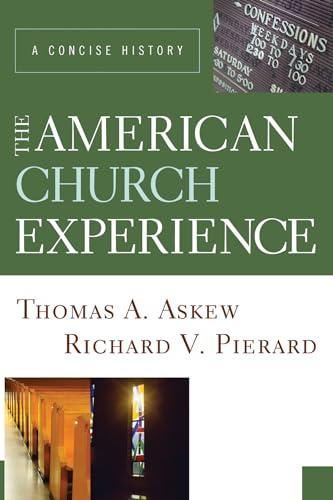
- Readable survey with scholarly balance
- Updated with recent historical scholarship
- Well suited to classes and church study groups
Best For: Students and general readers wanting a concise American church history survey
Editor’s Pick – Turning Points in American Church History
Turning Points in American Church History: How Pivotal Events Shaped a Nation and a Faith
Check Price On AmazonIf you want books on american church history that stay readable without skimping on substance, this introduction is a strong pick. It traces Christianity in the United States through 13 pivotal events from the colonial era to today, with primary sources, hymns, prayers, and historical images that make the big story easier to follow.
Best For: Readers who want a brisk, well-researched overview of American Christianity with teaching-friendly extras.
Pros:
- Focuses on 13 key turning points across four centuries
- Includes hymns, prayers, images, and primary-source excerpts in each chapter
- Written as a lively, highly readable survey with academic grounding
- Highlights women and men from a range of Christian traditions
Cons:
- Broad overview rather than a deep dive into one denomination or era
- May feel fast-moving for readers seeking a very detailed reference work
This is a practical starting point if you want a compact but credible guide to how American history and Christianity have shaped one another. The chapter structure and added resources also make it easy to use for personal study or discussion.
Classic Survey – Pilgrims in Their Own Land
For buyers comparing books on american church history, this classic survey offers a broad, chronological view of religion in America over 500 years. Martin E. Marty organizes the story around migration, biographical sketches, and major social questions, making it useful for readers who want context across many traditions rather than a narrow denominational focus.
Best For: Readers who want a wide-ranging, highly readable history of American religion and its social impact.
Pros:
- Covers 500 years of religion in America in chronological order
- Uses vivid biographical vignettes to keep the narrative engaging
- Addresses major themes like racism, feminism, and utopianism
- Shows respect for a wide range of religious groups
Cons:
- Published in 1985, so it is not the newest survey on the shelf
- More of a broad religion-in-America history than a church-only reference book
This is a strong option if you value breadth, narrative flow, and historical perspective. It remains appealing for readers who want an accessible overview that connects religion with the larger American story.
Readable Reference – Church History in Plain Language
Church History in Plain Language, Fifth Edition: The Story of the Church for Today's Readers
Check Price On AmazonIf you want books on american church history that also place the American story inside the wider Christian timeline, this updated classic is a practical choice. Bruce Shelley’s fifth edition follows church history from the early centuries into the modern era, with a clear chapter structure built around characters, setting, and plot.
Best For: Readers who want an easy-to-read but substantial overview of global church history with updated coverage.
Pros:
- Concise, plain-language approach with intellectual substance
- Updated edition expands coverage of Asia, India, Africa, and the modern era
- Highlights women and non-Europeans often overlooked in older surveys
- Strong fit for readers who prefer a story-driven format
Cons:
- Not limited to American church history specifically
- At 624 pages, it is still a fairly substantial read
This book works well when you want one accessible volume that connects American Christianity to the broader Christian world. It is especially helpful for readers who prefer clarity, narrative structure, and updated historical coverage.
Providence Narrative – God's Hand on America
Among books on american church history with a providential angle, this title stands out for its focus on historical moments the author sees as evidence of divine guidance. Michael Medved presents ten stories from the modern era, including Lincoln, Midway, and Russian Jewish immigration, in a vivid narrative style aimed at readers who enjoy big-picture interpretation.
Best For: Readers interested in a faith-forward, providence-centered interpretation of modern American history.
Pros:
- Explores ten historical episodes from the modern era
- Connects major events to a providential theme
- Written in an engaging narrative style by a bestselling author
- Covers well-known figures and turning points such as Lincoln, TR, and Midway
Cons:
- More interpretive than neutral in its historical framing
- Centers on America’s destiny theme rather than a full church history survey
This is best approached as a perspective-driven history rather than a standard academic overview. If you want a book that argues for a purposeful pattern in American events, it offers a confident and readable case.
Foundations of North American Christianity – The Old Religion in a New World
If you want books on american church history that explain how Christianity took shape in the New World, this history gives you a broad, readable starting point. Mark A. Noll focuses on what was new about organized Christian life in North America compared with Europe, while tracing the major turning points that shaped the immigrant church and its lasting diversity.
Best For: Readers who want a sweeping overview of how North American Christianity developed and changed over time.
Pros:
- Written by one of the field’s foremost historians of religion
- Highlights key turning points in the development of the immigrant church
- Compares North American Christianity with European Christianity
- Offers a broad outline of the major events behind today’s diversity
Cons:
- Focuses on broad historical development rather than a narrow case study
- Best suited to readers seeking a survey, not a devotional guide
This is a strong choice if you need historical context before diving into more specialized church history topics. It balances major events with interpretive issues, making it useful for both general readers and serious students.
Faith and Nation – America's Religious History
For buyers comparing books on american church history, this title works well if you want a narrative introduction that connects faith with the larger story of the United States. Thomas S. Kidd covers major moments such as the Great Awakening, the Revolution, slavery and the Civil War, civil rights, and church-state controversy in a balanced format.
Best For: Readers seeking an up-to-date, classroom-friendly introduction to religion’s role in American history.
Pros:
- Up-to-date, narrative-based introduction to American religious history
- Interweaves faith with major events in U.S. history
- Covers topics from the Great Awakening to the culture wars
- Useful for both classroom and personal study
Cons:
- Broad coverage means it won’t go deep into every topic
- More focused on religious history in general than on one denomination or church tradition
Overall, this is a practical pick if you want a clear, current overview that ties religious developments to politics and society. It should suit readers who prefer a balanced survey over a narrowly specialized study.
Standard Survey of Church History – A History of Christianity in the United States and Canada
If you’re looking for books on american church history that are detailed enough for serious study, this revised survey is a strong contender. Mark Noll presents the Christian experience in North America from the colonial period through 2018, adding updated material on the last 30 years and covering churches, institutions, and cultural engagement.
Best For: Readers who want a comprehensive textbook-style history of Christianity in the United States and Canada.
Pros:
- Widely regarded as a standard text in North American Christian history
- Thoroughly revised and expanded with updated coverage through 2018
- Includes churches, institutions, and cultural engagements
- Well suited to scholars and general readers alike
Cons:
- At 592 pages, it is a substantial read
- Textbook-like scope may feel more academic than casual
This is the deepest survey in the group for readers who want a long-form historical reference. If you need a classic, comprehensive account of Christianity in North America, it stands out as a dependable choice.
Major American Religion Survey – The Religious History of America
The Religious History of America: The Heart of the American Story from Colonial Times to Today
Check Price On AmazonIf you want books on american church history that also place church life inside the wider religious story, this revised classic is a strong pick. It offers a broad, readable narrative of American religion from colonial times to today, with updated emphasis on pluralism, religious practice, spiritual seeking, and the connection between faith and social or political struggle.
Best For: Readers who want a comprehensive, well-illustrated overview of American religious history with broad coverage of church life and beyond.
Pros:
- Fully revised and expanded version of a modern classic
- Strong attention to African American and Native American religious life
- Includes Eastern religions and recent spirituality trends
- Readable narrative with literary grace and updated historical framing
Cons:
- Broad scope means it is less focused on a narrow church-only history
- Better suited to overview reading than deep denomination study
This is the kind of title that works well when you need a single volume to orient yourself to the full sweep of religion in America. It is especially useful if you value balance, accessibility, and updated scholarship in one place.
Compact Church Timeline Guide – A Short History of The Church in The United States 1492-1890
For buyers looking for books on american church history in a very compact format, this short volume covers Christianity in the United States from 1492 to 1890. Its chapter structure shows a survey approach that moves through colonization, the colonies, revival, denominational growth, reform movements, missions, and theology.
Best For: Readers who want a brief, chaptered overview of early American church history and major movements through the nineteenth century.
Pros:
- Very concise historical survey with a clear chronological structure
- Covers colonial, revolutionary, and nineteenth-century developments
- Touches many topics: worship, missions, theology, reform, and denominations
- Easy to scan thanks to detailed chapter titles
Cons:
- At 90 pages, it is much shorter than a full textbook
- Focuses on Christianity rather than the wider religious landscape
- May feel too brief for readers wanting depth or analysis
This is a practical choice if you want a quick orientation or a lightweight reference on the early American church. It is best treated as a fast survey rather than an in-depth academic history.
Concise Church History Text – The American Church Experience
If you are comparing books on american church history for classroom use or general study, this concise survey is designed to be approachable without losing scholarly balance. It presents the origins, expansion, and struggles of Christianity in America in a readable style, while also reflecting recent historical scholarship and a global perspective.
Best For: Students, church study groups, and readers who want a succinct but thoughtful survey of American church history.
Pros:
- Brief, clear, and evenhanded presentation of church history
- Updated to include more recent historical developments
- Accessible for both specialists and general readers
- Recommended for classes, study groups, and church libraries
Cons:
- Concise format means less detail than fuller histories
- More focused on survey learning than exhaustive reference use
This book is a strong fit when you want a compact text that still feels academically responsible. It is especially useful if you need a readable introduction that can serve both teaching and personal study.
How We Picked These Books on American Church History
We focused on books that offer accurate historical coverage, clear organization, and lasting value for different kinds of readers. Priority went to titles that balance readability with substance, cover major eras from the colonial period to the modern United States, and help readers understand both institutions and ideas.
We also favored books with strong reputations for teaching and reference use, since Books on American Church History often need to work for students, pastors, and general readers alike.
Quick Comparison
Some books in this roundup work best as sweeping surveys of American religion, while others lean more academic or more devotional in tone. If you want a broad narrative, look for titles that cover colonial foundations through contemporary developments. If you want a classroom resource, choose a more structured history with clear chronology and terminology. For readers interested in faith and national identity, the more interpretive titles may be the best fit.
Key Buying Factors for Books on American Church History
Scope and Time Period
Check whether the book covers the full arc of American Christianity or focuses on a particular era. Some readers need a concise overview of the church in the United States, while others want a wider North American or religion-in-America perspective.
Level of Detail
Introductory readers usually benefit from plain-language overviews, while seminary students and researchers may prefer denser works with more context and argumentation. The right amount of detail depends on whether you want orientation, study, or deeper analysis.
Perspective and Emphasis
These books can differ in tone: some emphasize institutional church developments, some focus on revival and theology, and others examine how faith shaped politics and culture. Choose the perspective that best matches your interest.
Readability
Even strong histories can vary in accessibility. If you are not already familiar with church history terminology, a clearer, more conversational style will make the subject easier to follow.
Who Should Buy Which Books on American Church History?
Newcomers should start with a readable survey that explains major movements without assuming prior background. Pastors, teachers, and ministry leaders may want a more comprehensive reference they can revisit over time. Students should look for books that are chronological, well structured, and suitable for citation. If your main interest is the relationship between Christianity and the American story, choose a title that treats religion, politics, and culture together rather than in isolation.
In short, the best choice depends on whether you want an accessible overview, a more academic text, or a focused narrative about how the church helped shape America.